Supply Chain Attacks 2026: Protecting US Organizations from New Software Dependency Vulnerabilities
The year 2026 looms large on the horizon, bringing with it an increasingly complex and perilous landscape for cybersecurity, particularly concerning the integrity of the software supply chain. For US organizations, the stakes have never been higher. The pervasive reliance on third-party software components, open-source libraries, and cloud-based services has created a fertile ground for sophisticated adversaries to launch devastating Software Supply Chain Security attacks. These are not merely theoretical threats; they represent a fundamental shift in how cyber warfare is waged, moving beyond direct attacks on organizational perimeters to target the very foundations upon which modern digital infrastructure is built.
In this comprehensive analysis, we delve into the projected evolution of supply chain attacks by 2026, focusing on the insidious nature of software dependency vulnerabilities. We will identify and dissect the 7 newest and most critical types of vulnerabilities that US organizations must prepare for, offering a comparative perspective on their impact, detection, and mitigation. Our goal is to equip decision-makers, security professionals, and IT architects with the knowledge and strategies necessary to fortify their digital ecosystems against these advanced threats, ensuring resilience and maintaining operational continuity in an increasingly hostile digital environment.
The Escalating Threat Landscape: Why 2026 is Critical for Software Supply Chain Security
The trajectory of cyber threats indicates a clear and alarming trend: a migration towards targeting the software supply chain. This isn’t just about injecting malicious code; it’s about exploiting the intricate web of dependencies that underpin virtually every piece of modern software. As organizations accelerate their digital transformation journeys, the number of dependencies, both direct and transitive, explodes. Each new dependency introduces a potential new attack vector, a new point of failure that can be exploited by adversaries.
By 2026, we anticipate several factors will converge to make Software Supply Chain Security an even more pressing concern for US organizations:
- Increased Sophistication of Adversaries: Nation-state actors, well-funded criminal organizations, and even highly skilled individual hackers are continuously refining their techniques. They are moving beyond simple phishing attempts to highly targeted, stealthy attacks designed to compromise software at its source.
- Proliferation of Open-Source Software (OSS): While OSS offers immense benefits in terms of innovation and cost-effectiveness, its widespread adoption also means that vulnerabilities in a single popular library can cascade across thousands, if not millions, of applications globally. The sheer volume makes comprehensive vetting a monumental challenge.
- Complex Cloud-Native Architectures: The shift to cloud-native development, microservices, and containerization, while agile, introduces new layers of complexity. Managing dependencies across numerous container images, Kubernetes clusters, and serverless functions amplifies the attack surface.
- Automation and AI in Attack Campaigns: Adversaries are increasingly leveraging automation and artificial intelligence to identify vulnerabilities, craft exploits, and execute attacks at scale, making traditional, manual defense mechanisms insufficient.
- Regulatory and Compliance Pressures: Governments and regulatory bodies are recognizing the severity of these threats, leading to increased scrutiny and mandates for enhanced software supply chain security, placing a greater burden on organizations to demonstrate due diligence.
Understanding these macro trends is crucial for contextualizing the specific vulnerabilities we will explore. Proactive investment in Software Supply Chain Security is no longer an option but a strategic imperative for survival in the digital age.
Dissecting the 7 Newest Software Dependency Vulnerabilities of 2026
As the threat landscape evolves, so too do the methods of attack. Here, we identify and elaborate on seven emerging or significantly amplified software dependency vulnerabilities that US organizations must prioritize in their 2026 cybersecurity strategies.
1. "Phantom Package" Injections
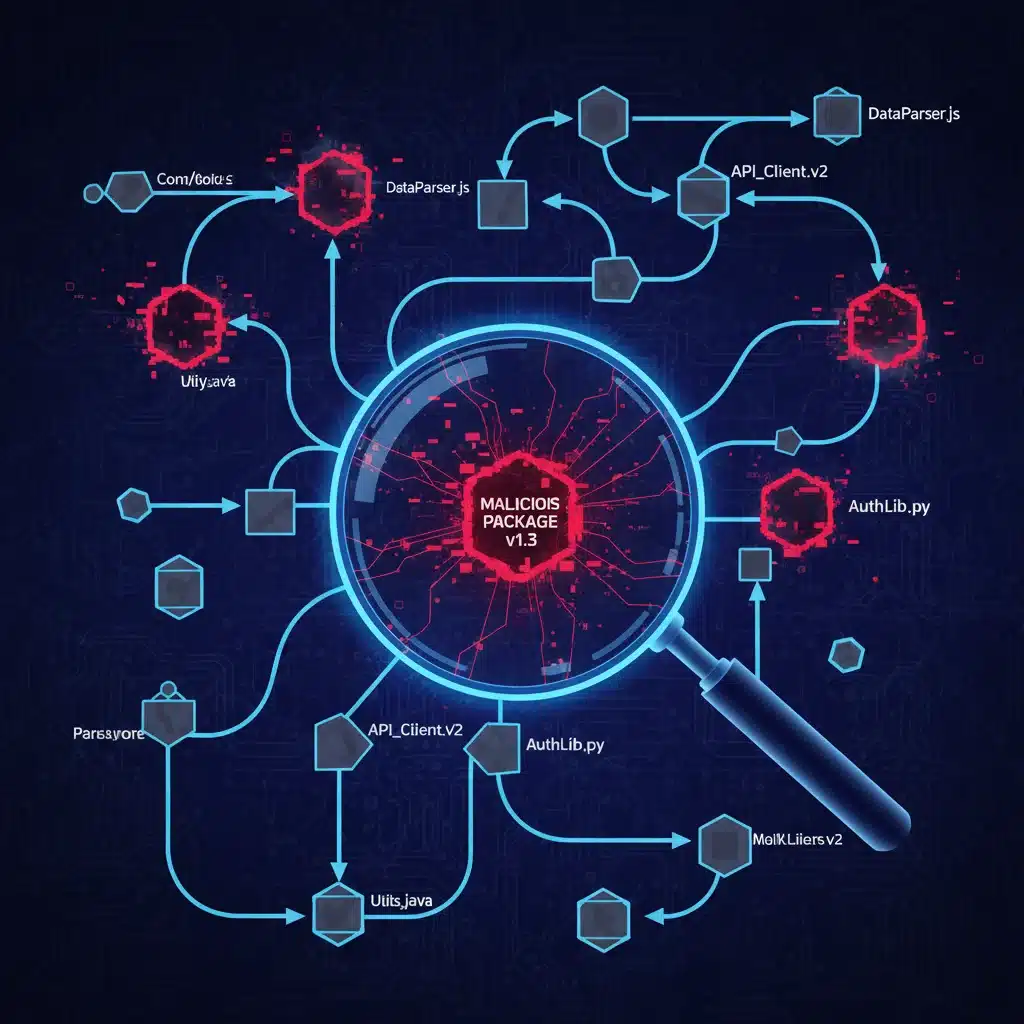
Description: This advanced attack vector involves the creation of malicious packages that mimic legitimate, often widely used, but slightly misspelled or outdated library names. Attackers register these "phantom packages" in public repositories. When a developer or automated build system accidentally references the misspelled name, or if an old build script has a typo, the malicious package is downloaded and integrated into the application. This is a subtle evolution of typosquatting, focusing on transitive dependencies or less common build configurations that might slip through automated checks.
Impact: Ranging from data exfiltration and credential theft to remote code execution (RCE) and complete system compromise. The stealthy nature of the injection means it can remain undetected for extended periods, allowing adversaries to establish persistent footholds.
Mitigation: Strict package naming conventions, mandatory dependency integrity checks (e.g., hash verification against trusted sources), robust dependency resolution policies, and advanced static application security testing (SAST) tools capable of identifying deviations from expected dependency graphs. Automated tools for detecting similar package names in public repositories can also provide early warnings.
2. "Adversarial AI Model Poisoning" in ML/AI Dependencies
Description: With the explosion of AI-powered applications, many organizations rely on pre-trained models or AI/ML libraries as dependencies. Adversarial AI model poisoning involves injecting subtly malicious data into the training datasets of these models or directly manipulating the model weights. The goal is to cause the deployed AI system to make incorrect predictions, generate biased outputs, or even execute malicious actions under specific, often rare, input conditions, without altering the underlying code.
Impact: Can lead to severe business logic flaws, financial fraud, reputational damage, and in critical systems, potentially life-threatening consequences (e.g., in autonomous vehicles or medical diagnostics). Detection is extremely difficult as the model appears to function normally under most circumstances.
Mitigation: Rigorous validation of AI/ML model provenance, secure training data pipelines, continuous monitoring of model behaviour for anomalies, using explainable AI (XAI) techniques to understand model decisions, and employing "AI firewalls" that monitor inputs and outputs for adversarial patterns.
3. "Supply Chain Backdoor-as-a-Service" (SCBaaS)
Description: The commoditization of cybercrime now extends to the supply chain. SCBaaS involves malicious actors offering services to inject backdoors or vulnerabilities into popular open-source projects or commercial software components. These services could be sold to nation-states, corporate spies, or other criminal groups, allowing them to gain access to organizations that use the compromised software. This shifts the attack from a one-off effort to a scalable, professionalized criminal enterprise.
Impact: Widespread and difficult to trace, as the backdoors are professionally implemented and often designed to evade detection. Organizations become unwitting hosts for malicious access points, leading to espionage, data theft, and sabotage.
Mitigation: Enhanced software composition analysis (SCA) with behavioural analysis, "zero-trust" principles applied to all dependencies (even trusted ones), threat intelligence sharing on known SCBaaS operations, and investing in advanced threat hunting capabilities within the software itself.
4. "Transitive Dependency Confusion via Environment Variables"
Description: An evolution of the classic dependency confusion attack, this vulnerability exploits the way build systems resolve transitive dependencies, particularly when influenced by environment variables or configuration files that might be inadvertently exposed or manipulated. Attackers publish a malicious package with the same name as a private transitive dependency, but at a higher version number, in a public repository. If the build environment’s configuration or a compromised environment variable causes it to prioritize public repositories or misinterpret versioning, the malicious package is pulled instead of the intended private one.
Impact: Similar to direct dependency confusion, leading to RCE, data exfiltration, or the introduction of persistent malware. This variant is harder to detect as it targets deeper, less obvious parts of the dependency tree and build process.
Mitigation: Strict control over build environment variables, explicit configuration of package sources (private registry prioritization), comprehensive software bill of materials (SBOM) generation and validation at every build stage, and automated checks for dependency resolution conflicts.
5. "Side-Channel Timing Attacks on Build Systems"
Description: This highly sophisticated attack involves observing the precise timing of build processes to infer sensitive information about private dependencies, build configurations, or even cryptographic keys used during compilation. Attackers might trigger numerous builds with subtly different inputs and analyze the time taken for each, looking for tell-tale variations that leak information. While not directly injecting malware, it provides critical intelligence for subsequent, more direct supply chain attacks.
Impact: Indirect but potentially devastating, leading to the compromise of private repositories, intellectual property theft, or the ability to craft highly targeted exploits against specific build environments.
Mitigation: "Noise injection" into build times to obscure timing signals, use of secure enclaves for sensitive build operations, randomizing build processes where possible, and strict access controls and monitoring of build infrastructure to prevent unauthorized observation.
6. "Compromised Firmware/Hardware in Development Toolchains"
Description: Moving beyond pure software, this vulnerability targets the underlying hardware or firmware of development machines, build servers, or even specialized development tools (e.g., hardware security modules, debuggers). A compromised BIOS, network card firmware, or a malicious USB device used by a developer could inject vulnerabilities at a foundational level, affecting all subsequent software built on that compromised platform. This is a "root-level" supply chain attack that bypasses many software-centric defenses.
Impact: Extremely high impact, as the compromise is below the operating system level, making detection and remediation exceptionally difficult. Can lead to persistent backdoors, data exfiltration, and complete subversion of the software development lifecycle (SDLC).
Mitigation: Hardware attestation, secure boot mechanisms, rigorous supply chain vetting for all hardware components, regular firmware updates from trusted sources, isolation of build environments, and physical security measures for development infrastructure.
7. "Cryptographic Key Lifecycle Attack in CI/CD"
Description: This vulnerability focuses on the compromise of cryptographic keys used throughout the Continuous Integration/Continuous Delivery (CI/CD) pipeline for signing code, authenticating to repositories, or encrypting sensitive data. Attackers target weaknesses in key generation, storage, rotation, or revocation processes. For instance, exploiting a misconfigured key management system or a leaked private key used for code signing could allow attackers to sign malicious code with a legitimate organizational signature, making it appear trustworthy.
Impact: Catastrophic. A compromised code-signing key can be used to distribute malware that appears legitimate, undermining trust in all software releases. It can also lead to unauthorized access to sensitive systems and data.
Mitigation: Hardware Security Modules (HSMs) for key storage, automated key rotation policies, multi-factor authentication (MFA) for key access, strict access controls to key management systems, continuous auditing of key usage, and robust incident response plans specifically for key compromise scenarios.
Comparative Analysis: Detection and Mitigation Strategies
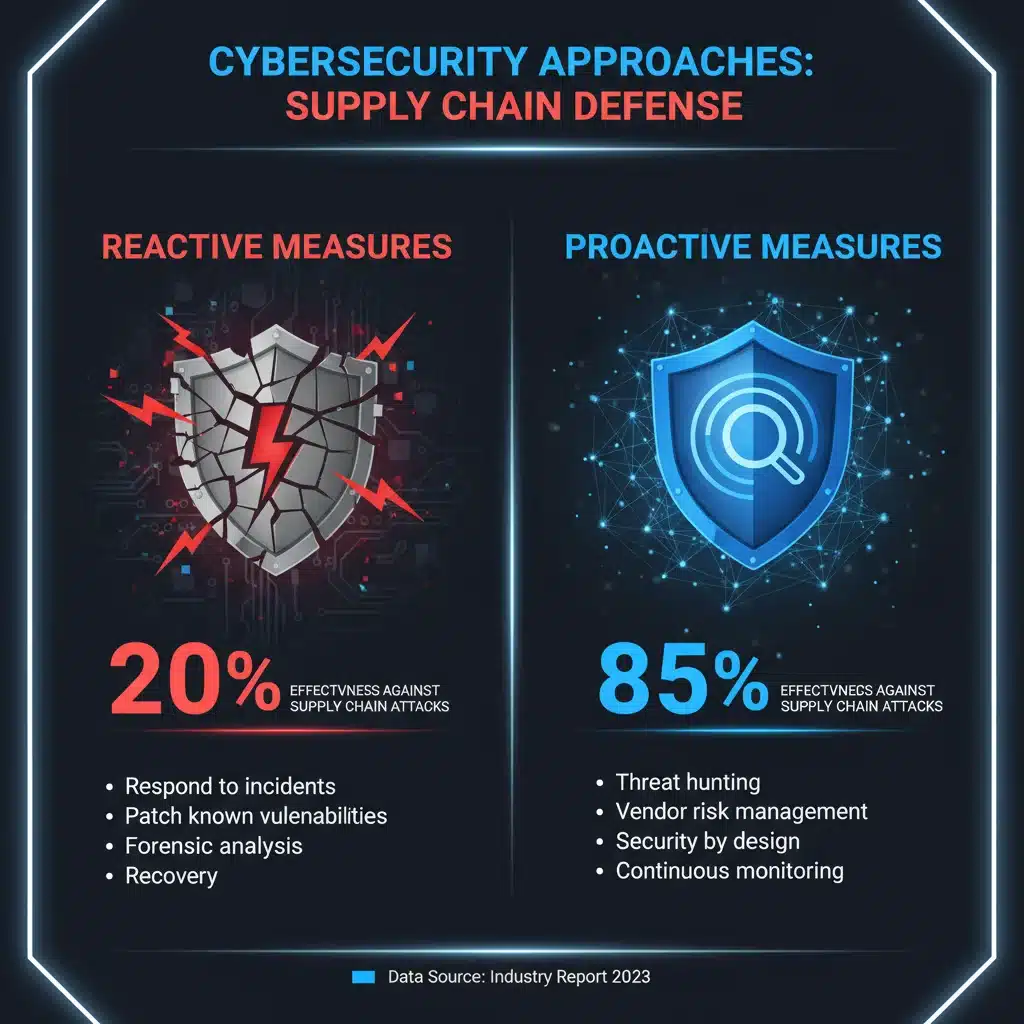
While the specific nature of these vulnerabilities varies, a common thread runs through their detection and mitigation: a shift from reactive perimeter defense to proactive, integrated security across the entire software development lifecycle (SDLC). US organizations must adopt a multi-layered approach to Software Supply Chain Security.
The "Shift Left" Imperative
The concept of "shifting left" in security means integrating security practices and tools earlier in the development process, rather than leaving them as a final check. For supply chain vulnerabilities, this is paramount. Detecting a "Phantom Package" during development is infinitely easier and cheaper than discovering it in production.
- Early Dependency Scanning: Implementing Software Composition Analysis (SCA) tools from the very beginning of a project to identify known vulnerabilities in open-source components.
- Developer Training: Educating developers on secure coding practices, the risks of dependency confusion, and the importance of verifying package sources.
- Automated Code Review: Using Static Application Security Testing (SAST) tools to analyze source code for potential vulnerabilities, including those related to how dependencies are handled.
Robust CI/CD Pipeline Security
The CI/CD pipeline is the heart of modern software delivery and a prime target for supply chain attacks. Securing this pipeline is non-negotiable.
- Pipeline Integrity Checks: Implementing cryptographic signing for all artifacts at each stage of the pipeline, ensuring that no unauthorized modifications occur between build and deployment.
- Ephemeral Build Environments: Using clean, isolated, and ephemeral environments for every build to prevent persistent compromises.
- Secrets Management: Centralized and secure management of all secrets, API keys, and cryptographic material used within the CI/CD pipeline, ideally with Hardware Security Modules (HSMs).
- Dynamic Application Security Testing (DAST): Running DAST tools against deployed applications to identify vulnerabilities that might emerge during runtime, including those introduced via dependencies.
Advanced Threat Intelligence and Monitoring
Staying ahead of sophisticated adversaries requires continuous vigilance and access to up-to-the-minute threat intelligence.
- Dependency Monitoring: Continuous monitoring of all direct and transitive dependencies for new vulnerabilities, suspicious changes in package maintainers, or unusual activity in public repositories.
- Behavioural Analysis: Employing advanced security analytics and machine learning to detect anomalous behaviour in applications, build systems, and network traffic that could indicate a compromise.
- Threat Hunting: Proactively searching for signs of compromise within the software supply chain, rather than waiting for alerts.
Building a Resilient Software Supply Chain for US Organizations
Protecting US organizations from the evolving threat of Software Supply Chain Security in 2026 demands a strategic, holistic, and continuous effort. It’s about building resilience, not just erecting static defenses.
1. Implement a Comprehensive Software Bill of Materials (SBOM) Strategy
An SBOM is a formal, machine-readable inventory of all software components, including open-source and commercial, that are incorporated into a product. By 2026, generating, managing, and validating SBOMs at every stage of the SDLC will be fundamental. This transparency is crucial for identifying known vulnerabilities, understanding licensing obligations, and responding rapidly to newly discovered threats in any component.
- Automated SBOM Generation: Integrate tools that automatically generate SBOMs as part of the build process.
- SBOM Validation: Continuously validate SBOMs against trusted vulnerability databases and internal policies.
- Supply Chain Mapping: Understand the origin and pedigree of every component, including its maintainers and their security practices.
2. Embrace "Zero-Trust" Principles for Dependencies
The traditional model of implicitly trusting all upstream dependencies is no longer viable. "Zero-trust" principles must extend to the software supply chain.
- Explicit Verification: Never implicitly trust a dependency. Always verify its integrity, authenticity, and security posture.
- Least Privilege: Ensure that build systems and development environments operate with the minimum necessary privileges to perform their functions.
- Segmentation: Isolate critical build systems and development infrastructure from less trusted networks and systems.
3. Invest in Advanced Security Tooling and Automation
Manual processes cannot keep pace with the scale and sophistication of modern supply chain attacks. Automation is key.
- Integrated Security Platforms: Adopt platforms that seamlessly integrate SCA, SAST, DAST, IAST (Interactive Application Security Testing), and runtime protection into the SDLC.
- AI-Powered Anomaly Detection: Leverage AI and machine learning to detect subtle anomalies in code changes, build processes, and runtime behaviour that might indicate a compromise.
- Automated Remediation: Implement automated workflows for patching known vulnerabilities and rolling back compromised builds.
4. Foster a Culture of Security Throughout the Organization
Technology alone is insufficient. Human factors play a critical role in Software Supply Chain Security.
- Security Champions: Designate and empower security champions within development teams to embed security best practices from within.
- Regular Training: Provide continuous, up-to-date training for all personnel involved in the SDLC on emerging threats and secure practices.
- Incident Response Planning: Develop and regularly test incident response plans specifically tailored for supply chain compromises, including communication protocols with affected stakeholders.
5. Collaborate and Share Threat Intelligence
Cybersecurity is a collective challenge. Collaboration is essential for staying ahead of adversaries.
- Industry Partnerships: Engage with industry peers, information sharing and analysis centers (ISACs), and government agencies to share threat intelligence and best practices.
- Open-Source Community Engagement: Actively participate in and support the security initiatives of the open-source projects your organization relies upon.
Conclusion: A Proactive Stance for 2026 and Beyond
The landscape of Software Supply Chain Security is undergoing a profound transformation. By 2026, the threats posed by "Phantom Package" injections, "Adversarial AI Model Poisoning," "Supply Chain Backdoor-as-a-Service," "Transitive Dependency Confusion via Environment Variables," "Side-Channel Timing Attacks on Build Systems," "Compromised Firmware/Hardware in Development Toolchains," and "Cryptographic Key Lifecycle Attacks in CI/CD" will challenge US organizations like never before.
However, by adopting a proactive stance, embracing the "shift left" philosophy, fortifying CI/CD pipelines, leveraging advanced tooling, fostering a strong security culture, and engaging in collaborative threat intelligence, organizations can build robust defenses. The future of digital trust and operational continuity hinges on our collective ability to secure the intricate web of software dependencies. The time to act is now, to ensure that 2026 is a year of resilience, not regret, in the ongoing battle for Software Supply Chain Security.