Mastering the 90-Day Patch Cycle: Federal Agencies Combat Zero-Days
Mastering the 90-Day Patch Cycle: How US Federal Agencies Are Combatting Zero-Day Exploits
In the relentless digital battleground, the term ‘zero-day exploit’ sends shivers down the spines of even the most seasoned cybersecurity professionals. These are vulnerabilities in software or hardware that are unknown to the vendor, meaning there’s ‘zero days’ for them to fix it before attackers exploit it. For US federal agencies, protecting critical infrastructure, sensitive data, and national security from such insidious threats is not merely a priority; it’s an imperative. This comprehensive article delves into the proactive strategies, particularly the rigorous 90-day patch cycle, that federal agencies employ to combat these elusive and dangerous exploits, offering insider knowledge and practical solutions.
The landscape of cyber threats is constantly evolving, with adversaries ranging from state-sponsored actors to sophisticated criminal organizations. These entities are perpetually searching for weaknesses, and zero-day exploits represent the holy grail for their malicious campaigns. The stakes for federal agencies are astronomically high. A successful zero-day attack could compromise classified information, disrupt essential government services, or even impact national defense capabilities. Therefore, the adoption of stringent patch management protocols, epitomized by the federal patch cycle, is a cornerstone of their defensive posture.
Understanding the Zero-Day Threat Landscape for Federal Agencies
Before we dissect the 90-day patch cycle, it’s crucial to grasp the unique challenges zero-day exploits pose to federal entities. Unlike known vulnerabilities for which patches already exist, zero-days exploit previously undiscovered flaws. This means that traditional defense mechanisms, such as signature-based intrusion detection systems, are often ineffective until the exploit is identified and signatures are updated. The initial detection of a zero-day is often reactive, occurring only after an attack has been launched or a security researcher uncovers the flaw.
The High Stakes of Federal Cybersecurity
- National Security Implications: Compromise of defense systems, intelligence networks, or military communications.
- Economic Disruption: Attacks on financial systems, energy grids, or transportation networks.
- Sensitive Data Exposure: Leakage of citizen data, classified government documents, or intellectual property.
- Erosion of Public Trust: Damage to the government’s credibility and public confidence in its ability to protect vital information.
The sheer volume and complexity of IT systems within federal agencies further complicate matters. From legacy mainframes to cutting-edge cloud infrastructure, the attack surface is vast and heterogeneous. Managing vulnerabilities across such a diverse environment requires a highly coordinated and disciplined approach, which is precisely where the federal patch cycle comes into play.
The Genesis of the 90-Day Federal Patch Cycle
The concept of a structured patch cycle isn’t new, but the emphasis on a 90-day window for federal agencies has gained significant traction, driven by mandates from bodies like the Cybersecurity and Infrastructure Security Agency (CISA) and the Office of Management and Budget (OMB). These directives often stem from lessons learned from past breaches and the escalating sophistication of cyber adversaries.
Key Drivers for a Strict Patch Cycle:
- Rapid Exploit Development: Once a vulnerability is publicly disclosed, attackers move incredibly fast to weaponize it. A shorter patching window reduces the opportunity for successful exploitation.
- Regulatory Compliance: Federal agencies are subject to numerous regulations (e.g., FISMA, NIST guidelines) that mandate robust vulnerability management programs.
- Supply Chain Security: Many federal systems rely on commercial off-the-shelf (COTS) software. The 90-day cycle often aligns with vendor patch releases and aims to apply them promptly.
- Proactive Defense: Moving from a reactive ‘fix-it-when-it-breaks’ mentality to a proactive ‘patch-it-before-it’s-broken’ strategy.
The 90-day deadline isn’t arbitrary; it reflects a balance between the urgency of applying security updates and the practical challenges of testing and deploying patches across large, complex environments. It represents a commitment to maintaining a continuously hardened security posture against known and emerging threats, including zero-day exploits once they are identified and patched by vendors.
Deconstructing the 90-Day Federal Patch Cycle: A Phased Approach
Implementing a 90-day patch cycle for zero-day exploits (once a patch is available) is a multi-faceted process that involves several critical stages. It’s not just about hitting a deadline; it’s about establishing a repeatable, efficient, and secure workflow.
Phase 1: Vulnerability Identification and Prioritization
The cycle begins long before a patch is released. Federal agencies invest heavily in threat intelligence, vulnerability scanning, and penetration testing to identify potential weaknesses. When a zero-day exploit is publicly disclosed or a vendor releases an out-of-band patch, it triggers an immediate response.
- Threat Intelligence Feeds: Subscribing to government and commercial threat intelligence sources (e.g., CISA advisories, vendor security bulletins).
- Continuous Monitoring: Utilizing Security Information and Event Management (SIEM) systems and Endpoint Detection and Response (EDR) tools to detect anomalous behavior that might indicate a zero-day attack.
- Vulnerability Assessments: Regular scanning of networks and applications to identify known vulnerabilities that could be precursors or related to zero-day attack vectors.
- Risk Scoring: Prioritizing vulnerabilities based on severity, exploitability, and potential impact on agency operations. Zero-day exploits, by their nature, often receive the highest priority.
Phase 2: Patch Acquisition and Testing
Once a patch is available, federal agencies must acquire it and rigorously test it before deployment. This is a crucial step to prevent new vulnerabilities or system instability caused by the patch itself.
- Vendor Coordination: Establishing strong relationships with software and hardware vendors to receive patches promptly and understand their implications.
- Staging Environments: Deploying patches in isolated test environments that mirror production systems. This allows agencies to identify potential conflicts, performance degradation, or new security flaws introduced by the patch.
- Regression Testing: Ensuring that the patch does not break existing functionalities or introduce regressions in critical applications.
- Security Validation: Re-scanning patched systems in the test environment to confirm the vulnerability has been remediated and no new weaknesses have been introduced.
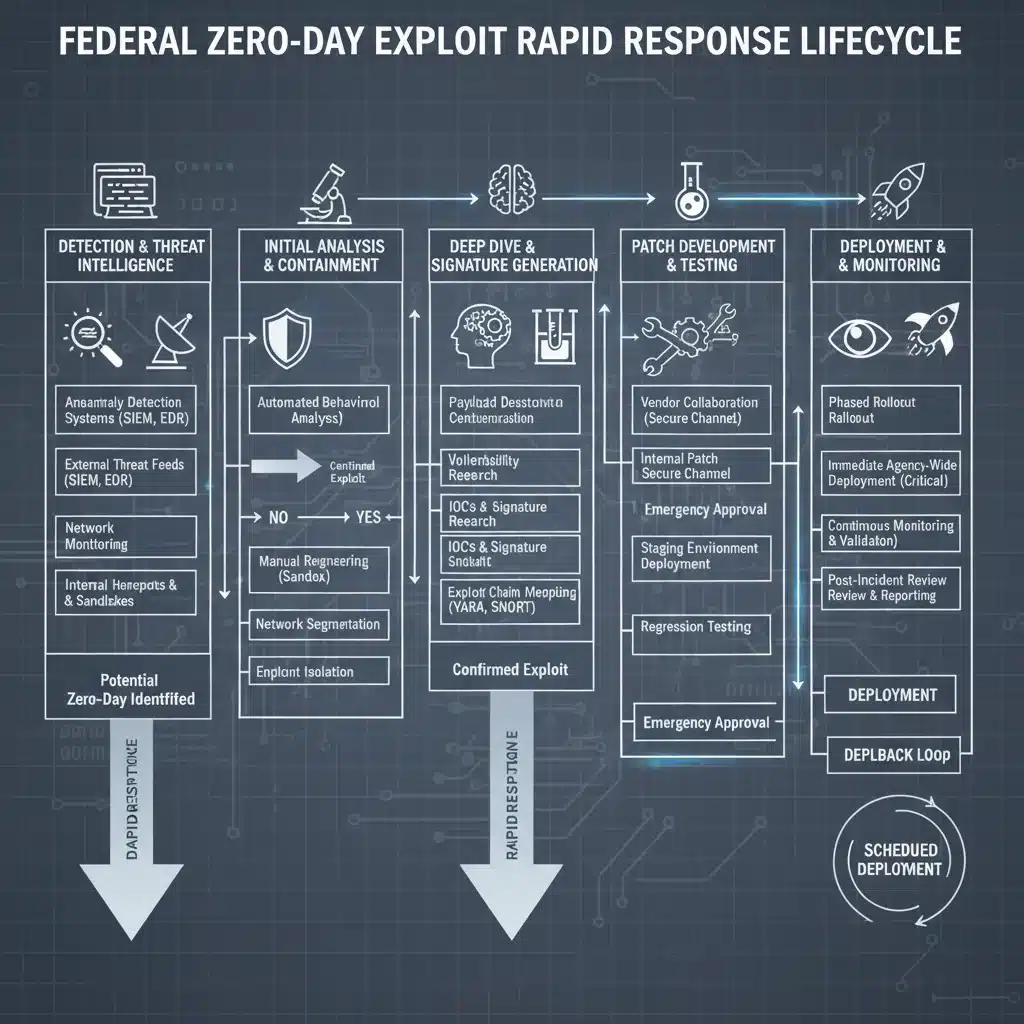
Phase 3: Deployment and Verification
After successful testing, the patch is rolled out to production systems. This phase requires careful planning and execution to minimize disruption and ensure comprehensive coverage.
- Phased Rollouts: Often, patches are deployed in stages, starting with a small group of non-critical systems, then expanding to larger segments of the network. This ‘canary deployment’ approach allows for early detection of unforeseen issues.
- Automated Patch Management Tools: Leveraging tools like Microsoft SCCM, Ansible, or custom scripts to automate patch distribution and installation across thousands of endpoints and servers.
- Change Management: Adhering to strict change management protocols to document deployments, approve changes, and ensure proper fallback plans are in place.
- Post-Deployment Verification: Re-scanning production systems after patching to confirm successful application of the patch and remediation of the vulnerability. This also includes monitoring system performance and user feedback.
Phase 4: Continuous Monitoring and Reporting
The 90-day cycle doesn’t end with deployment. Continuous monitoring ensures the effectiveness of the patch and identifies any new or emerging threats.
- Security Operations Center (SOC) Monitoring: Constant vigilance by SOC analysts, correlating logs and alerts for any signs of exploitation attempts against the patched vulnerability.
- Compliance Reporting: Regularly reporting on patch status and compliance with the 90-day mandate to oversight bodies and agency leadership. This transparency is key to accountability.
- Feedback Loop: Gathering lessons learned from each patch cycle to refine processes, improve automation, and enhance overall incident response capabilities. This iterative improvement is vital for strengthening the federal patch cycle.
Challenges and Obstacles in Adhering to the 90-Day Federal Patch Cycle
While the 90-day mandate is a powerful driver for cybersecurity hygiene, federal agencies face significant hurdles in consistently meeting this target, especially concerning zero-day exploits where the clock starts ticking the moment a patch is available.
Legacy Systems and Technical Debt:
Many federal agencies operate with decades-old IT infrastructure that is difficult to patch, integrate, or even fully understand. These legacy systems often run critical applications that cannot tolerate downtime, making patching a delicate and risky operation. The lack of vendor support for older software also means that patches for zero-day vulnerabilities might not even be available, forcing agencies to implement costly and complex workarounds.
Resource Constraints:
Cybersecurity talent is a global shortage, and federal agencies often struggle to compete with the private sector for top professionals. This leads to understaffed security teams, stretched thin across numerous responsibilities. The rigorous testing and deployment required by the 90-day federal patch cycle demand significant human resources, time, and expertise, which are not always readily available.
Complexity of Federal Networks:
Federal networks are incredibly vast and intricate, often spanning multiple geographic locations, diverse operating systems, and a myriad of specialized applications. Coordinating patch deployments across such a complex ecosystem, ensuring all systems are identified and updated, is a monumental task. The interdependencies between systems can also lead to unforeseen complications during patching, where an update to one system might negatively impact another.
Inter-Agency Coordination:
While individual agencies strive to meet their patch cycles, the broader federal landscape often requires inter-agency coordination, especially for shared services or common platforms. Discrepancies in patching schedules or security policies between agencies can create weak points in the collective defense. Effective communication and standardized protocols are essential to overcome this challenge.
The Zero-Day Dilemma:
The very nature of zero-days presents a unique challenge. By definition, they are unknown. While the 90-day cycle applies once a patch is released, the period *before* a patch is available is a particularly vulnerable time. Agencies must rely on advanced detection, behavioral analysis, and proactive threat hunting to identify and mitigate zero-day attacks before official patches are issued. This requires sophisticated tools and highly skilled analysts.

Innovative Solutions and Best Practices to Enhance the Federal Patch Cycle
Despite the challenges, federal agencies are continuously innovating and adopting best practices to strengthen their 90-day federal patch cycle and improve their overall cybersecurity posture against zero-day exploits.
Automation and Orchestration:
Automating patch management, vulnerability scanning, and even parts of the testing process can significantly reduce the manual effort and time required. Orchestration tools can coordinate these automated tasks across diverse IT environments, ensuring consistency and efficiency. This frees up human analysts to focus on more complex tasks like threat hunting and incident response.
Enhanced Threat Intelligence Sharing:
Improving the speed and quality of threat intelligence sharing, both within the government and with trusted private sector partners, is paramount. Platforms like CISA’s Automated Indicator Sharing (AIS) program help disseminate machine-readable cyber threat indicators, enabling quicker defensive actions against emerging threats, including potential zero-day intelligence.
Zero Trust Architecture:
Implementing a Zero Trust security model means that no user, device, or application is inherently trusted, regardless of its location. This significantly limits the blast radius of a successful zero-day exploit, as attackers would still need to authenticate and gain further permissions to move laterally within the network, even if they bypass an initial vulnerability.
Security by Design and DevSecOps:
Shifting left in the development lifecycle by embedding security considerations from the very beginning (Security by Design) and integrating security into DevOps practices (DevSecOps) can reduce the number of vulnerabilities introduced into new systems. This proactive approach aims to minimize the attack surface and thus the potential for zero-day exploits in newly developed or updated government software.
Continuous Diagnostics and Mitigation (CDM):
The CDM program, mandated by DHS, provides federal agencies with capabilities to identify cybersecurity risks on an ongoing basis, prioritize these risks based on potential impact, and mitigate them. This includes continuous vulnerability management, which directly supports the 90-day patch cycle by providing real-time visibility into the patching status of systems.
Proactive Threat Hunting:
Beyond traditional reactive security measures, federal agencies are increasingly investing in proactive threat hunting teams. These teams actively search for signs of compromise or unusual activity that might indicate an unknown zero-day exploit in action, rather than waiting for alerts. This involves deep analysis of network traffic, endpoint data, and system logs.
Cybersecurity Workforce Development:
Addressing the talent gap through dedicated training programs, recruitment initiatives, and partnerships with academic institutions is crucial. A skilled workforce is the backbone of any effective cybersecurity strategy, enabling agencies to implement, manage, and continuously improve their federal patch cycle.
The Broader Impact of a Robust Federal Patch Cycle
The commitment of federal agencies to a stringent 90-day patch cycle has implications that extend far beyond their immediate networks. It sets a precedent for cybersecurity best practices across industries and contributes to a more secure digital ecosystem for everyone.
Setting Industry Standards:
Federal mandates and guidelines often influence private sector cybersecurity practices. As federal agencies demonstrate the feasibility and effectiveness of a rapid patch cycle, it encourages other organizations to adopt similar rigorous approaches to vulnerability management.
Enhancing Supply Chain Security:
By demanding prompt patching from their vendors, federal agencies indirectly improve the security posture of the entire supply chain. This pressure encourages software and hardware manufacturers to be more responsive to vulnerability disclosures and to provide timely patches.
Fostering a Culture of Security:
The emphasis on continuous patching and vulnerability management helps to embed a culture of security within federal organizations. It reinforces the idea that cybersecurity is an ongoing responsibility, not a one-time fix, and that every individual plays a role in maintaining digital defenses.
Protecting Critical Infrastructure:
Many federal agencies are responsible for segments of the nation’s critical infrastructure. A robust patch cycle directly contributes to the resilience of these vital systems against cyberattacks, thereby protecting public services and economic stability.
Conclusion: The Future of the Federal Patch Cycle in a Zero-Day World
The 90-day federal patch cycle is a testament to the US government’s unwavering commitment to mitigating the existential threat posed by zero-day exploits. It represents a dynamic and evolving strategy, constantly adapting to the ingenuity of adversaries and the complexities of modern IT environments. While significant challenges remain, the continuous pursuit of automation, improved threat intelligence, workforce development, and a proactive security posture are paving the way for a more resilient federal cybersecurity landscape.
For organizations looking to bolster their own defenses, the federal approach offers invaluable lessons: prioritize vulnerability management, embrace automation, foster collaboration, and never underestimate the importance of continuous improvement. In the high-stakes game of cybersecurity, especially against the unseen dangers of zero-day exploits, diligence, speed, and strategic patching are not just best practices – they are essential for survival.
The journey to absolute security is perpetual, but with structured approaches like the 90-day federal patch cycle, agencies are not just reacting to threats; they are actively shaping a more secure digital future, one patch at a time.