US Data Breach Fines 2026: Navigating Compliance and Avoiding Penalties
US Data Breach Fines 2026: Navigating Compliance and Avoiding Penalties
The digital age has brought unprecedented opportunities for businesses, but with great power comes great responsibility, particularly concerning data. For US businesses, the year 2026 looms large with the specter of potentially hefty US data breach fines. The regulatory landscape is continuously shifting, becoming more stringent, and the financial ramifications of non-compliance are escalating dramatically. Understanding these dynamics is not merely a legal obligation; it’s a critical component of risk management, reputation protection, and sustained business operations.
Data breaches are no longer a rare occurrence; they are an unfortunate reality of operating in a connected world. From sophisticated cyber-attacks to human error, the pathways to data compromise are numerous and varied. What has changed, however, is the intensity of regulatory scrutiny and the severity of penalties for failing to adequately protect sensitive information. This comprehensive guide will delve into the anticipated changes for 2026, explore the existing and emerging legal frameworks, and provide actionable strategies for US businesses to fortify their defenses and avoid crippling US data breach fines.
The Evolving Landscape of Data Protection Regulations in the US
Unlike the European Union’s consolidated GDPR, the United States operates under a complex patchwork of federal and state-specific data protection laws. This fragmented approach can make compliance particularly challenging for businesses operating across multiple jurisdictions. However, the trend is unequivocally towards greater consumer data privacy and more severe penalties for transgressions. As we approach 2026, several key legislative and regulatory developments are shaping the future of US data breach fines.
Federal Initiatives and Their Impact
While a comprehensive federal data privacy law akin to GDPR has yet to materialize, various federal agencies and legislative efforts are pushing for increased accountability. The Federal Trade Commission (FTC) continues to be a primary enforcer of data security standards under Section 5 of the FTC Act, which prohibits unfair and deceptive practices. The FTC has demonstrated a willingness to impose significant fines and consent decrees on companies that fail to protect consumer data adequately. Furthermore, sector-specific regulations, such as HIPAA for healthcare and GLBA for financial services, are undergoing continuous updates, expanding their scope and strengthening their enforcement mechanisms. These federal frameworks lay a foundational layer of compliance that all US businesses must adhere to, and any lapse can contribute to substantial US data breach fines.
State-Level Data Privacy Laws: A Growing Maze
The most significant drivers of change in the US data privacy landscape are arguably the state-level laws. California’s CCPA (California Consumer Privacy Act) and its successor, CPRA (California Privacy Rights Act), set a precedent for robust consumer rights and stringent compliance requirements. Following California’s lead, states like Virginia (VCDPA), Colorado (CPA), Utah (UCPA), and Connecticut (CTDPA) have enacted their own comprehensive data privacy laws. While these laws share common principles, they also contain unique nuances regarding consumer rights, business obligations, and, crucially, penalties for non-compliance. The sheer number of these laws means that a business operating nationally must navigate a complex web of potentially conflicting requirements. A single data breach could trigger investigations and fines from multiple state authorities, compounding the financial impact and driving up the total US data breach fines.
Anticipated Regulatory Trends Towards 2026
Looking ahead to 2026, several trends suggest an intensification of regulatory pressure:
- Increased Enforcement Budget: State regulatory bodies are likely to receive increased funding and resources, enabling them to conduct more thorough investigations and pursue more enforcement actions.
- Harmonization (or Lack Thereof): While calls for federal harmonization persist, the reality is that states may continue to develop their own laws, potentially leading to even more complex compliance challenges for businesses. This fragmentation will likely lead to higher aggregate US data breach fines.
- Focus on AI and Emerging Technologies: As businesses increasingly leverage AI, machine learning, and other advanced technologies, regulators will likely focus on how these technologies handle and protect personal data, introducing new compliance hurdles and potential areas for fines.
- Supply Chain Accountability: There’s a growing emphasis on holding businesses accountable for the data security practices of their third-party vendors and partners. A breach originating from a vendor could still result in significant US data breach fines for the primary business.
The Financial Impact of Data Breaches: Beyond Direct Fines
When considering US data breach fines, it’s crucial to understand that the direct regulatory penalties are often just one component of a much larger financial burden. The true cost of a data breach can be astronomical, impacting a business’s bottom line in myriad ways.
Direct Fines and Penalties
As mentioned, regulatory bodies at both federal and state levels have the authority to impose substantial fines. These fines can be calculated based on the number of affected individuals, the nature of the data compromised, the severity of the breach, and the company’s prior compliance record. For instance, under the CPRA, civil penalties for intentional violations can be up to $7,500 per violation, and for breaches involving minors, the penalties are even higher. Multiply this by millions of affected individuals, and the numbers quickly become staggering. These direct US data breach fines can easily run into the millions of dollars, especially for larger breaches affecting a significant portion of a customer base.
Legal Costs and Litigation
Beyond regulatory fines, businesses face the immediate threat of legal action. Class-action lawsuits from affected individuals are common after a major data breach, seeking compensation for damages such as identity theft, financial losses, and emotional distress. Defending against such lawsuits involves considerable legal fees, settlement costs, and potential judgments. The legal process can drag on for years, draining resources and diverting management attention from core business activities. This litigation aspect significantly contributes to the overall cost of a breach, often dwarfing the initial regulatory US data breach fines.
Reputational Damage and Loss of Customer Trust
Perhaps the most insidious and long-lasting cost of a data breach is the damage to a company’s reputation. Public perception of a company’s ability to protect sensitive data directly impacts customer trust and loyalty. A breach can lead to a significant loss of customers, decreased sales, and difficulty attracting new business. Rebuilding a damaged reputation requires substantial investment in public relations and marketing efforts, with no guarantee of full recovery. The intangible cost of lost goodwill can be far greater than any direct financial penalty or US data breach fines.
Operational Disruptions and Recovery Costs
Responding to a data breach is an intensive and disruptive process. It involves:
- Forensic Investigation: Hiring cybersecurity experts to identify the source of the breach, assess its extent, and recommend remediation steps.
- Remediation and System Hardening: Implementing new security measures, patching vulnerabilities, and upgrading infrastructure to prevent future incidents.
- Customer Notification: Fulfilling legal obligations to notify affected individuals, which often includes providing credit monitoring services or identity theft protection.
- Business Interruption: Downtime, reduced productivity, and diversion of resources can all lead to significant operational losses.
These recovery costs, combined with the lost revenue from operational disruptions, add another layer to the financial burden, making the total cost of a breach far exceed the headline figure of US data breach fines.
Proactive Strategies to Mitigate Risk and Avoid US Data Breach Fines
Given the escalating costs and regulatory pressures, a proactive and robust approach to data security and privacy is no longer optional for US businesses; it is imperative. Here are key strategies to mitigate risk and safeguard against substantial US data breach fines.
1. Comprehensive Data Mapping and Classification
You cannot protect what you don’t know you have. The first step in any effective data protection strategy is to conduct a thorough data inventory. This involves:
- Identifying all data assets: Where is personal data stored? What types of data are collected (e.g., PII, financial, health)?
- Mapping data flows: How does data move within your organization and with third parties?
- Classifying data sensitivity: Categorizing data based on its sensitivity and the potential harm if compromised.
Understanding your data landscape is fundamental to applying appropriate security controls and ensuring compliance with various regulations, thereby reducing exposure to US data breach fines.
2. Robust Cybersecurity Infrastructure and Practices
Technical safeguards are the frontline defense against breaches. This includes:
- Next-generation firewalls and intrusion detection/prevention systems: To monitor and block malicious traffic.
- Endpoint protection: Securing all devices that access your network.
- Data encryption: Encrypting sensitive data both in transit and at rest.
- Multi-factor authentication (MFA): Implementing MFA for all critical systems and user accounts.
- Regular security audits and penetration testing: Proactively identify vulnerabilities before attackers do.
- Patch management: Ensuring all software and systems are up-to-date with the latest security patches.
Investing in and maintaining a strong cybersecurity posture is paramount to preventing breaches that could lead to significant US data breach fines.
3. Employee Training and Awareness
Human error remains a leading cause of data breaches. A strong security culture, fostered through continuous training, is essential. Employees should be educated on:
- Phishing and social engineering: How to identify and report suspicious emails and requests.
- Strong password practices: The importance of unique, complex passwords and MFA.
- Data handling policies: Proper procedures for storing, accessing, and sharing sensitive information.
- Incident reporting: Knowing how to report potential security incidents immediately.
A well-informed workforce acts as an additional layer of defense, significantly reducing the likelihood of incidents that could trigger US data breach fines.
4. Vendor Risk Management
Third-party vendors often handle sensitive data on behalf of businesses, making them a potential weak link in the security chain. Effective vendor risk management involves:
- Due diligence: Thoroughly vetting vendors’ security practices before engagement.
- Contractual obligations: Including strong data protection clauses and auditing rights in contracts.
- Ongoing monitoring: Regularly assessing vendors’ compliance and security posture.
Failing to manage vendor risk can lead to breaches originating from third parties, for which your business could still be held liable, potentially incurring substantial US data breach fines.
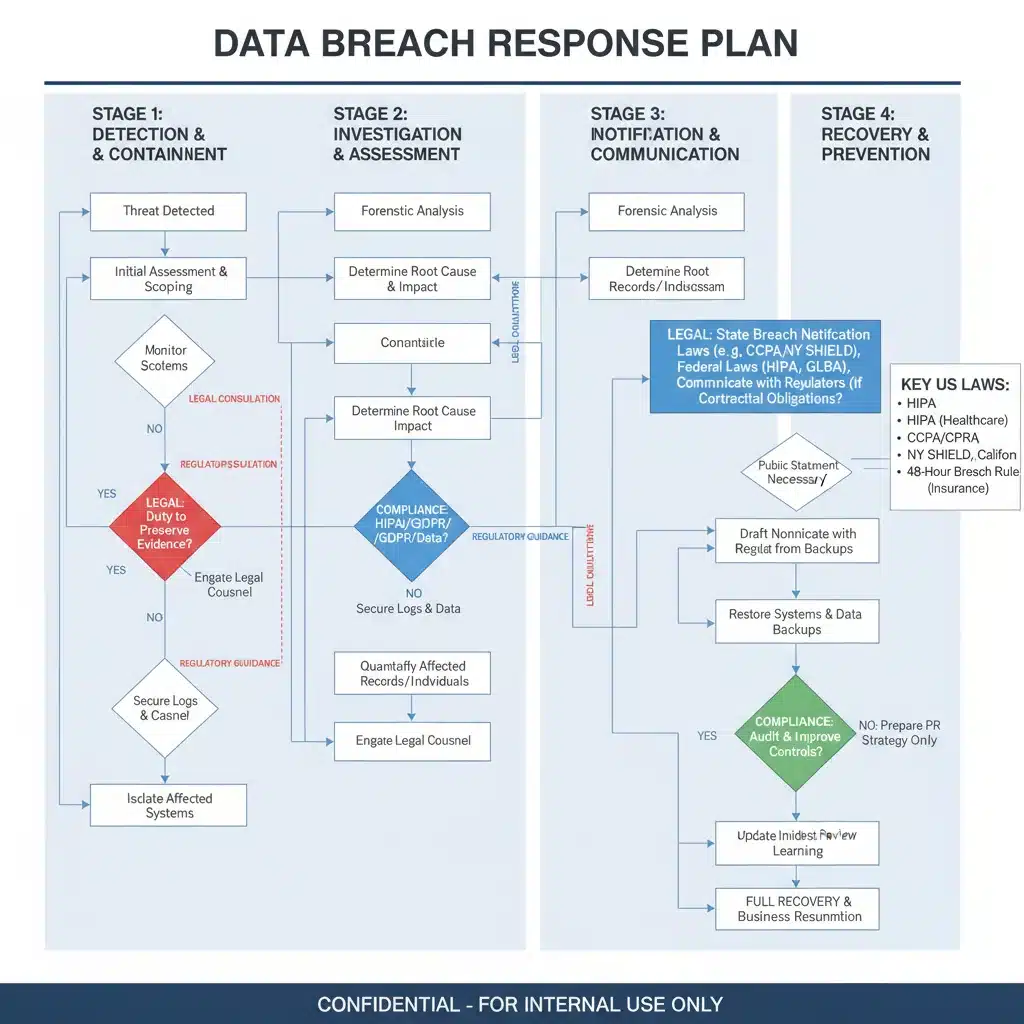
5. Incident Response Plan Development and Testing
Despite best efforts, breaches can still occur. A well-defined and regularly tested incident response plan is critical for minimizing damage and ensuring compliance with notification requirements. This plan should outline:
- Roles and responsibilities: Who does what during a breach.
- Detection and containment procedures: Steps to quickly identify, isolate, and stop a breach.
- Notification protocols: How and when to inform affected individuals, regulators, and other stakeholders, adhering to specific timelines required by various laws.
- Recovery and remediation: Steps to restore systems and data, and learn from the incident.
A swift and effective response can significantly reduce the severity of a breach and potentially mitigate the extent of US data breach fines.
6. Data Minimization and Retention Policies
The less sensitive data you collect and retain, the less risk you face. Implementing data minimization principles involves:
- Collecting only necessary data: Limiting data collection to what is essential for specific business purposes.
- Anonymization/Pseudonymization: Transforming personal data so it cannot identify individuals without additional information.
- Strict data retention schedules: Deleting data once it is no longer needed, in compliance with legal and business requirements.
Reducing your data footprint inherently reduces your attack surface and the potential impact of a breach, thereby lessening the risk of high US data breach fines.
The Role of Data Privacy Officers and Legal Counsel
Navigating the intricate landscape of data protection requires specialized expertise. Many US businesses, particularly those handling large volumes of personal data or operating in regulated sectors, benefit immensely from appointing a dedicated Data Privacy Officer (DPO) or engaging specialized legal counsel. A DPO can oversee compliance programs, act as a point of contact for regulatory bodies, and ensure that data protection best practices are embedded throughout the organization. Legal counsel, especially those well-versed in US data privacy laws, can provide invaluable guidance on interpreting complex regulations, drafting compliant policies, and advising during a breach response, helping to minimize exposure to US data breach fines.
Their expertise is crucial not only in proactive compliance but also in managing the aftermath of a breach. They can guide the company through the legal requirements for notification, assist in communications with regulatory bodies, and defend against potential litigation. Their involvement can significantly impact the financial and reputational outcome of a data security incident, potentially saving the business from devastating US data breach fines and legal battles.
Preparing for 2026: A Call to Action for US Businesses
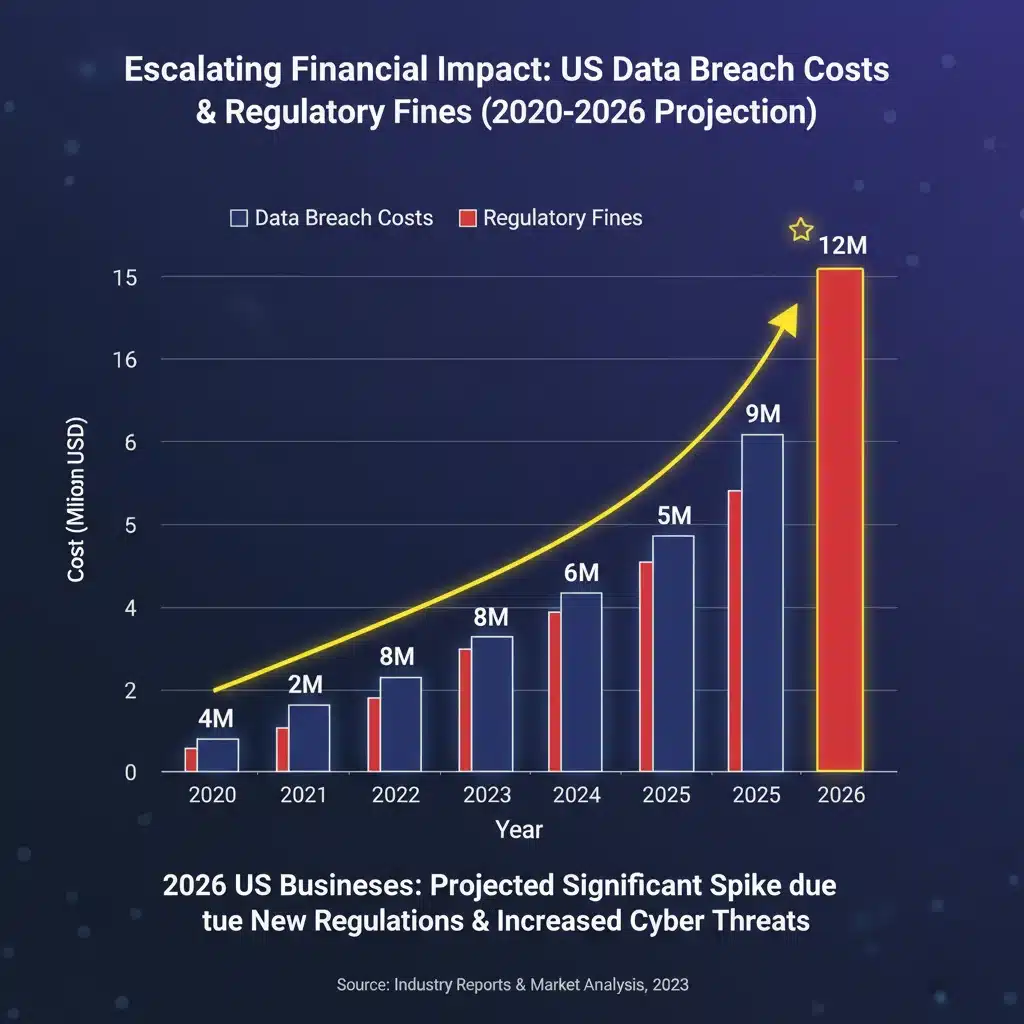
The year 2026 is not far off, and the trajectory of data protection regulation and enforcement in the US is clear: stricter rules and higher penalties. For US businesses, procrastination is no longer an option. A comprehensive review and enhancement of current data security and privacy practices are essential. This isn’t merely about avoiding US data breach fines; it’s about building resilience, protecting customer trust, and ensuring long-term business viability in an increasingly data-driven world.
Start by conducting a thorough risk assessment to identify vulnerabilities and compliance gaps. Develop a clear roadmap for addressing these issues, prioritizing areas of highest risk and greatest regulatory exposure. Allocate adequate resources – both financial and human – to implement necessary technical safeguards, conduct employee training, and establish robust incident response capabilities. Engage with legal and cybersecurity experts to ensure your strategies are aligned with the latest regulatory requirements and best practices.
The cost of non-compliance in 2026 could be catastrophic for businesses, potentially reaching into the millions of dollars in US data breach fines, legal fees, and reputational damage. By taking proactive, strategic steps now, US businesses can transform potential threats into opportunities for strengthening their security posture, enhancing customer trust, and securing their future in the digital economy.
Key Takeaways for Businesses
- Understand the fragmented US regulatory landscape: Be aware of both federal and state-specific data privacy laws.
- Invest in robust cybersecurity: Technical safeguards are your first line of defense.
- Prioritize employee training: A well-informed workforce reduces human error.
- Manage third-party risk: Your vendors’ security is your responsibility.
- Develop and test an incident response plan: Be prepared for the inevitable.
- Practice data minimization: Collect and retain only what is necessary.
- Seek expert advice: DPOs and legal counsel are invaluable resources.
By embedding these principles into your operational DNA, your business can navigate the complexities of data protection in 2026 and beyond, turning potential liabilities into competitive advantages and successfully avoiding the hefty burden of US data breach fines.