APTs: Early Detection for US Critical Infrastructure in 2026

Advanced Persistent Threats (APTs): Early Detection Frameworks for US Critical Infrastructure in 2026 (INSIDER KNOWLEDGE)
The digital landscape is a battlefield, and at its forefront are Advanced Persistent Threats (APTs) – sophisticated, stealthy, and highly dangerous adversaries. For the United States’ critical infrastructure, the stakes couldn’t be higher. By 2026, the need for robust APT Early Detection frameworks will not merely be a strategic advantage; it will be an absolute necessity. This deep dive offers insider knowledge into the evolving threat landscape and the innovative solutions being developed to safeguard our nation’s most vital systems.
Critical infrastructure – encompassing sectors like energy, water, transportation, healthcare, and finance – forms the backbone of modern society. A successful APT attack on any of these could lead to catastrophic economic disruption, societal panic, and even loss of life. Unlike conventional cyberattacks, APTs are not about quick hits; they are about methodical, long-term infiltration, data exfiltration, and maintaining persistent access, often for espionage, sabotage, or financial gain. This insidious nature demands a paradigm shift in our defensive strategies, moving from reactive responses to proactive, predictive APT Early Detection.
The Evolving APT Threat Landscape by 2026
Understanding the enemy is the first step towards victory. By 2026, APT groups will have further refined their tactics, techniques, and procedures (TTPs). We anticipate several key trends:
- Increased Sophistication of AI/ML-Driven Attacks: Adversaries will leverage artificial intelligence and machine learning to automate reconnaissance, bypass traditional security controls, and adapt their attack vectors in real-time. This includes AI-powered phishing campaigns that are virtually indistinguishable from legitimate communications and polymorphic malware that constantly changes its signature to evade detection.
- Supply Chain Compromises as a Primary Vector: The SolarWinds attack was a stark precursor. APT actors will increasingly target third-party vendors and supply chains to gain access to critical infrastructure organizations, exploiting trusted relationships and weaker security postures upstream.
- Focus on Operational Technology (OT) and Industrial Control Systems (ICS): While IT systems remain a target, the direct impact on critical infrastructure comes from compromising OT/ICS. Expect more tailored malware designed to manipulate industrial processes, leading to physical damage or widespread outages.
- "Living Off the Land" Techniques: APTs will continue to rely heavily on legitimate system tools and processes to perform malicious activities, making their presence harder to distinguish from normal network activity. This significantly complicates APT Early Detection.
- Advanced Evasion and Stealth: Techniques like steganography, fileless malware, and encrypted command-and-control (C2) channels will become more prevalent, designed to bypass traditional intrusion detection systems and firewalls.
- Quantum Computing Threats (Emerging): While still in its nascent stages, the potential for quantum computing to break current encryption standards by 2026 will begin to cast a shadow, necessitating a proactive shift towards quantum-resistant cryptography in critical infrastructure.
Pillars of an Effective APT Early Detection Framework for US Critical Infrastructure
To counter these advanced threats, a multi-layered, integrated approach is essential. Our APT Early Detection framework for 2026 rests on several crucial pillars:
1. Enhanced Threat Intelligence and Sharing
Timely and actionable threat intelligence is the bedrock of proactive defense. By 2026, this will move beyond simple indicator-of-compromise (IOC) sharing to include:
- Predictive Threat Intelligence: Leveraging AI and big data analytics to anticipate emerging TTPs and identify potential adversary campaigns before they launch. This involves analyzing geopolitical shifts, dark web chatter, and open-source intelligence (OSINT) to forecast threat trajectories.
- Sector-Specific Intelligence Sharing Platforms: Establishing secure, real-time platforms for critical infrastructure sectors (e.g., energy, water) to share anonymized threat data, attack patterns, and defensive strategies. This fosters a collective defense posture.
- Government-Industry Collaboration: Strengthening partnerships between government agencies (e.g., CISA, NSA, FBI) and private critical infrastructure operators to facilitate bidirectional intelligence flow, including classified threat information where appropriate.
- Automated Threat Feed Integration: Seamless integration of diverse threat intelligence feeds (commercial, open-source, government) into security information and event management (SIEM) and security orchestration, automation, and response (SOAR) platforms for automated correlation and alerting.
2. Advanced Behavioural Analytics and AI/ML
Signature-based detection is increasingly insufficient against polymorphic and "living off the land" APTs. Behavioural analytics, powered by AI and machine learning, is paramount for APT Early Detection:
- User and Entity Behaviour Analytics (UEBA): Continuously monitoring user accounts, network devices, and applications to establish baselines of normal behavior. Any deviation from these baselines – such as unusual login times, access to sensitive data, or abnormal data transfer volumes – triggers alerts.
- Network Traffic Analysis (NTA): Employing AI to analyze network flow data (NetFlow, IPFIX) and packet captures for anomalies that indicate stealthy command-and-control communications, lateral movement, or data exfiltration. This includes detecting covert channels and encrypted traffic analysis for behavioural patterns.
- Endpoint Detection and Response (EDR) with AI: Next-generation EDR solutions that use AI to detect malicious processes, fileless attacks, and attempts to disable security controls at the endpoint level, providing deep visibility into endpoint activities.
- Predictive Analytics for Anomaly Detection: AI models that can learn from historical data to predict potential attack paths and identify subtle precursor activities that might indicate an impending APT campaign.
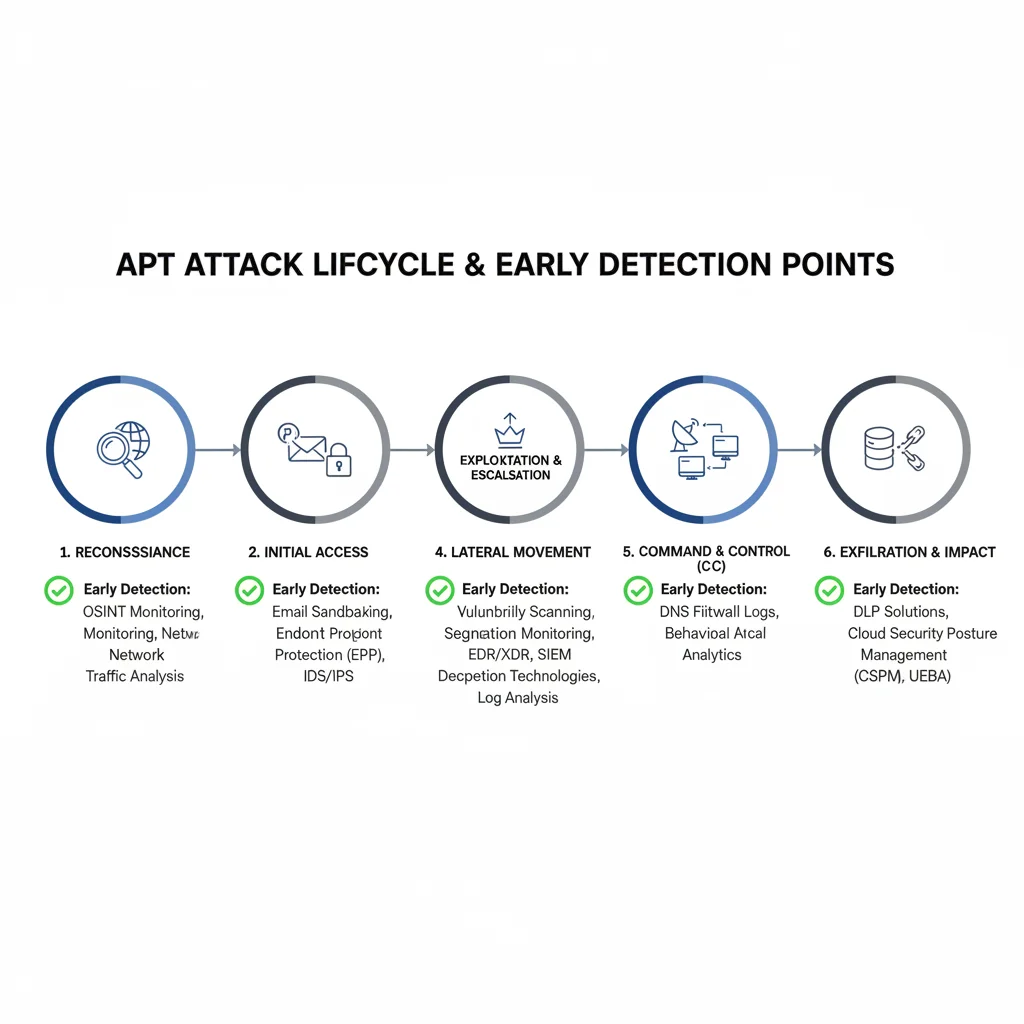
3. Zero Trust Architecture Implementation
The principle of "never trust, always verify" is fundamental. By 2026, Zero Trust will be a pervasive architectural model for critical infrastructure:
- Micro-segmentation: Dividing networks into small, isolated segments, each with its own security controls. This limits lateral movement for APTs even if initial access is gained.
- Continuous Verification: Every user, device, and application attempting to access resources must be continuously authenticated and authorized, regardless of their location (inside or outside the traditional network perimeter).
- Least Privilege Access: Granting users and systems only the minimum necessary permissions to perform their tasks, drastically reducing the potential impact of a compromised account.
- Multi-Factor Authentication (MFA) Everywhere: Implementing adaptive MFA across all critical systems and applications, including for privileged access and remote connections.
4. OT/ICS Specific Security Measures
Securing operational technology requires specialized approaches distinct from traditional IT security:
- Passive Network Monitoring (PNM): Non-intrusive monitoring of ICS networks to detect anomalies in industrial protocols (e.g., Modbus, DNP3, OPC UA) without affecting system operations. This is crucial for APT Early Detection in sensitive environments.
- Anomaly Detection in Process Data: AI-driven analysis of sensor data, control commands, and process variables to identify deviations from normal operational parameters that could indicate malicious manipulation.
- Robust Network Segmentation for OT: Strict air-gapping or logical segmentation between IT and OT networks, with carefully controlled and monitored gateways.
- Vulnerability Management for Legacy Systems: Developing strategies to secure often-outdated OT systems that cannot be easily patched, including virtual patching and compensating controls.
5. Cyber Resilience and Incident Response Automation
Even with the best APT Early Detection, some threats will inevitably penetrate defenses. Resilience and rapid response are critical:
- Automated Incident Response (SOAR): Leveraging SOAR platforms to automate repetitive incident response tasks, reducing reaction times and minimizing damage. This includes automated containment, triage, and data collection.
- Cyber Deception Technologies: Deploying honeypots, deception networks, and decoys to lure and detect APT actors, gather intelligence on their TTPs, and divert them from critical assets.
- Regular Drills and Tabletop Exercises: Conducting frequent, realistic simulations of APT attacks to test detection capabilities, incident response plans, and the coordination between IT and OT teams.
- Immutable Backups and Disaster Recovery: Implementing robust, air-gapped, and immutable backup solutions to ensure rapid recovery from destructive attacks.
The Role of Quantum-Resistant Cryptography and Post-Quantum Security
While 2026 might seem early for widespread quantum computer attacks, the "harvest now, decrypt later" threat is real. APT actors can exfiltrate encrypted data today, intending to decrypt it once quantum computers become powerful enough. Therefore, critical infrastructure must begin the transition to post-quantum cryptography (PQC) standards:
- PQC Research and Development: Investing in and adopting new cryptographic algorithms resistant to quantum attacks.
- Inventory of Cryptographic Assets: Identifying all cryptographic assets and dependencies within critical infrastructure to plan for a systematic migration to PQC.
- Hybrid Cryptographic Solutions: Implementing hybrid approaches that combine classical and PQC algorithms during the transition phase to ensure continued security. This foresight is part of a comprehensive APT Early Detection and prevention strategy.
Challenges and Considerations for 2026
Implementing these advanced frameworks is not without its hurdles:
- Talent Gap: A severe shortage of skilled cybersecurity professionals, particularly those with expertise in OT/ICS security and advanced AI/ML analytics.
- Integration Complexities: Integrating disparate legacy systems with new, advanced security technologies, especially in brownfield critical infrastructure environments.
- Regulatory and Compliance Burden: Navigating an increasingly complex web of cybersecurity regulations and compliance requirements while maintaining operational efficiency.
- Cost of Implementation: The significant financial investment required for advanced technologies, training, and ongoing maintenance.
- Alert Fatigue: The risk of an overwhelming number of alerts from advanced detection systems, leading to missed critical threats if not properly managed with intelligent correlation and prioritization.

The Human Element: Training and Culture
Technology alone is insufficient. The human element remains a critical vulnerability and a powerful defense:
- Continuous Security Awareness Training: Educating employees – from executives to frontline operators – about the latest phishing techniques, social engineering tactics, and the importance of cybersecurity hygiene.
- Specialized OT Security Training: Providing in-depth training for OT engineers on cybersecurity best practices, secure configuration, and incident response specific to industrial environments.
- Developing a Culture of Security: Fostering an organizational culture where cybersecurity is everyone’s responsibility, embedded in daily operations and decision-making. This includes encouraging reporting of suspicious activities without fear of reprisal.
- Cross-Functional Teams: Creating integrated teams comprising IT, OT, physical security, and business continuity experts to ensure a holistic approach to threat detection and response.
Government Initiatives and Policy Directions
The US government plays a pivotal role in driving the adoption of robust APT Early Detection frameworks. By 2026, we expect to see:
- Mandatory Cybersecurity Standards: Increased mandates for critical infrastructure sectors to adopt specific cybersecurity frameworks (e.g., NIST CSF) and implement advanced detection capabilities.
- Incentives for Cybersecurity Investment: Tax breaks, grants, and other financial incentives to encourage organizations to invest in cutting-edge security technologies and training.
- Enhanced Information Sharing Directives: Further legislation and executive orders to streamline and mandate the sharing of threat intelligence between government and critical infrastructure operators.
- National Cyber Force Development: Continued investment in national capabilities for offensive and defensive cyber operations, including threat hunting and attribution for APT actors.
- International Collaboration: Strengthening alliances with international partners to share intelligence and coordinate responses against state-sponsored APTs.
Conclusion: A Proactive Stance for 2026 and Beyond
The threat of Advanced Persistent Threats to US critical infrastructure is not diminishing; it is evolving. By 2026, a purely reactive security posture will be synonymous with vulnerability. The imperative is clear: invest in sophisticated APT Early Detection frameworks that leverage the power of AI, advanced analytics, Zero Trust principles, and specialized OT security. This must be coupled with robust threat intelligence sharing, continuous training, and a pervasive culture of security. The future of our nation’s critical services depends on our collective ability to anticipate, detect, and neutralize these formidable cyber adversaries before they can inflict irreparable harm. This is not just about technology; it’s about national resilience and security.