Maximising Threat Intelligence Platforms: US Cybersecurity for Future Threats

Maximising Threat Intelligence Platforms: US Cybersecurity for Future Threats
In the rapidly evolving landscape of cyber warfare, the ability to anticipate and neutralise threats before they materialise is no longer a luxury but a fundamental necessity. For US cybersecurity teams, the imperative to stay ahead of malicious actors is particularly acute, given the sophisticated and persistent nature of threats targeting critical infrastructure, government entities, and private sector innovation. This comprehensive guide delves into how organisations can effectively maximise Threat Intelligence Platforms (TIPs) to not only react to but proactively anticipate a significant proportion of emerging threats – aiming for an ambitious 75% in the next six months. By integrating practical solutions and strategic insights, we will explore how TIPs can transform a reactive defence into a predictive, resilient cybersecurity posture.
The digital frontier is a constant battleground, with new vulnerabilities discovered daily and attack vectors diversifying at an alarming rate. Traditional perimeter defences, while still essential, are increasingly insufficient against advanced persistent threats (APTs) and zero-day exploits. This is where Threat Intelligence Platforms become indispensable. They offer a structured approach to collecting, processing, and disseminating actionable intelligence about current and future threats, enabling cybersecurity professionals to make informed decisions and deploy resources effectively.
The goal of anticipating 75% of emerging threats within a six-month window is ambitious but achievable with the right strategy and tools. It requires a shift from a purely defensive mindset to one that embraces predictive analytics, proactive threat hunting, and a deep understanding of the adversary’s tactics, techniques, and procedures (TTPs). This article will provide a roadmap for US cybersecurity teams to leverage TIPs to their fullest potential, ensuring a robust and adaptive defence against the ever-present cyber menace.
Understanding the Core of Threat Intelligence Platforms
At its heart, a Threat Intelligence Platform is a system designed to aggregate, normalise, and analyse vast quantities of raw threat data from diverse sources. This data, once processed, becomes actionable intelligence that security teams can use to understand the threat landscape, identify potential risks, and implement preventative measures. Without a TIP, organisations often drown in a sea of alerts and disparate information, making it challenging to prioritise and respond effectively.
The Components of a Robust TIP
A high-performing TIP typically comprises several key components:
- Data Ingestion: This involves collecting threat data from various internal and external sources. Internal sources might include SIEMs, firewalls, endpoint detection and response (EDR) systems, and vulnerability scanners. External sources could be open-source intelligence (OSINT), commercial threat feeds, industry ISACs (Information Sharing and Analysis Centers), government agencies (such as CISA), and dark web monitoring.
- Data Normalisation and Enrichment: Raw threat data often arrives in various formats and lacks context. A TIP normalises this data, removing redundancies and enriching it with additional information like geolocation, associated malware families, and known attacker groups. This process ensures consistency and adds depth to the intelligence.
- Analysis and Correlation: This is where the magic happens. TIPs employ advanced analytics, machine learning, and artificial intelligence to identify patterns, correlations, and anomalies within the enriched data. This helps in understanding attacker methodologies, predicting future attacks, and identifying emerging threats.
- Contextualisation: Threat intelligence is most valuable when it is relevant to the organisation’s specific environment and risk profile. A TIP contextualises the intelligence, linking it to the organisation’s assets, vulnerabilities, and business functions.
- Dissemination and Integration: Actionable intelligence needs to reach the right people and systems at the right time. TIPs integrate with existing security tools (e.g., firewalls, SIEMs, SOAR platforms) to automate threat blocking, alert generation, and incident response workflows.
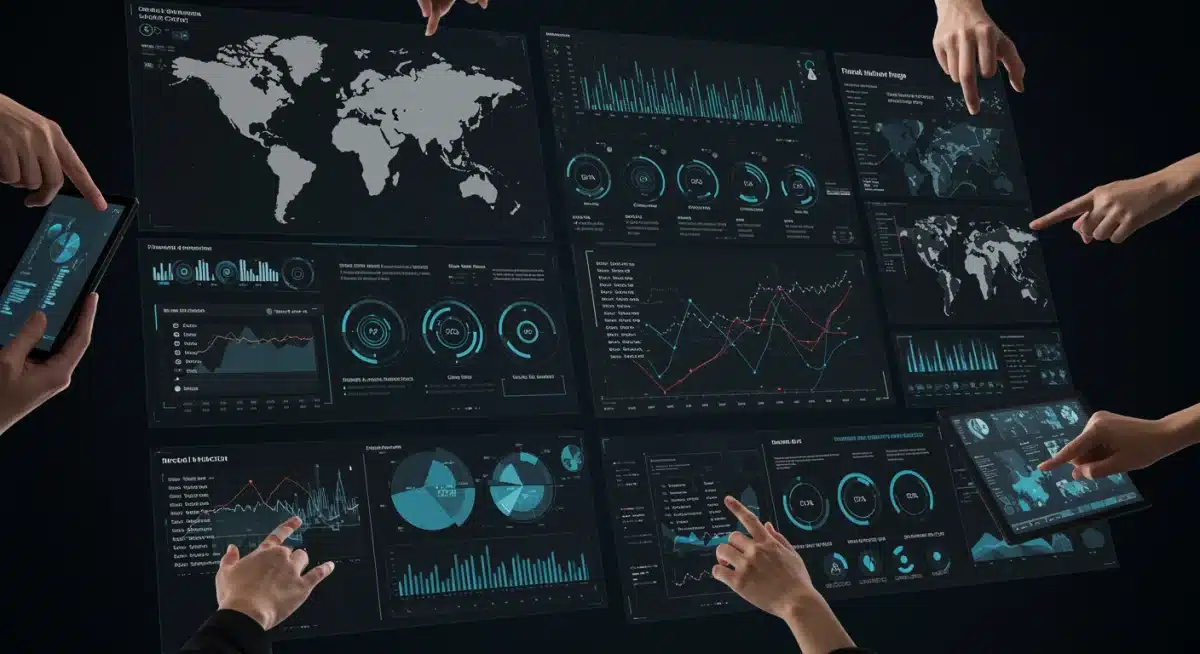
- Reporting and Visualisation: Effective reporting and visualisation tools are crucial for communicating threat insights to various stakeholders, from security analysts to executive leadership. Dashboards and reports provide a clear overview of the threat landscape and the organisation’s security posture.
Strategic Implementation: Beyond Basic Integration
Simply deploying a Threat Intelligence Platform is not enough. To truly maximise its value and achieve the goal of anticipating 75% of emerging threats, US cybersecurity teams must adopt a strategic approach to implementation and ongoing operation. This involves more than just technical integration; it requires a cultural shift towards proactive security and intelligence-driven decision-making.
Defining Clear Objectives and Use Cases
Before selecting and deploying a TIP, organisations must clearly define their cybersecurity objectives and specific use cases for threat intelligence. What types of threats are most concerning? Which assets are most critical? Are you looking to improve threat detection, enhance incident response, or inform strategic risk management? Clear objectives will guide the selection of the right platform and the configuration of its capabilities. For US cybersecurity teams, this often includes protecting intellectual property, critical infrastructure, and sensitive government data.
Selecting the Right TIP for Your US Cybersecurity Needs
The market for Threat Intelligence Platforms is diverse, with various vendors offering different features and capabilities. When making a selection, consider the following factors:
- Data Sources and Feeds: Does the platform integrate with a wide range of reputable threat intelligence feeds, including those relevant to your industry and geographic region (e.g., US-specific threat actors and campaigns)?
- Integration Capabilities: Can the TIP seamlessly integrate with your existing security ecosystem (SIEM, SOAR, EDR, firewalls, etc.)? Automation of threat blocking and response is key.
- Analytical Capabilities: Does the platform offer advanced analytics, machine learning, and AI to identify complex attack patterns and predict future threats?
- Customisation and Flexibility: Can the platform be customised to your organisation’s specific needs, including custom indicators of compromise (IOCs) and threat models?
- Usability and User Interface: Is the platform intuitive and easy for your security analysts to use, allowing them to quickly access and act on intelligence?
- Vendor Support and Reputation: Evaluate the vendor’s reputation, customer support, and commitment to ongoing development.
Building a Dedicated Threat Intelligence Team
While a TIP automates many processes, human expertise remains crucial. Establishing a dedicated threat intelligence team, or at least assigning specific roles within the security operations center (SOC), is vital. This team will be responsible for:
- Curating and validating threat feeds.
- Performing in-depth analysis of emerging threats.
- Developing custom threat models and hunting queries.
- Collaborating with other security functions (e.g., incident response, vulnerability management).
- Communicating threat intelligence to relevant stakeholders.
Practical Solutions for Anticipating 75% of Emerging Threats
Achieving a high level of threat anticipation requires a multi-faceted approach, leveraging the full capabilities of Threat Intelligence Platforms in conjunction with skilled personnel and well-defined processes. Here are practical solutions for US cybersecurity teams:
1. Proactive Threat Hunting with Enriched Data
Instead of waiting for alerts, proactively hunt for threats within your network using the enriched data from your TIP. This involves:
- Leveraging IOCs and TTPs: Use indicators of compromise (IOCs) and adversary tactics, techniques, and procedures (TTPs) from your TIP to search for signs of intrusion that might have bypassed automated defences.
- Developing Custom Hunting Queries: Based on intelligence about emerging threats, create specific queries for your SIEM and EDR systems to detect novel attack patterns.
- Focusing on High-Value Assets: Prioritise threat hunting efforts on critical systems and data identified through your asset inventory and risk assessments.
2. Integrating Threat Intelligence into the Incident Response Lifecycle
Threat intelligence should not be a standalone function. It must be deeply integrated into your incident response (IR) plan to accelerate detection, analysis, and containment:
- Pre-Incident Planning: Use intelligence to identify likely attack scenarios and develop playbooks for specific threat actors or attack types.
- During an Incident: Rapidly enrich incident data with threat intelligence to understand the scope, impact, and potential origin of an attack. This helps in faster containment and eradication.
- Post-Incident Review: Analyse incident data against historical threat intelligence to identify gaps in defences and improve future prevention strategies.
3. Enhancing Vulnerability Management with Contextualised Intelligence
Not all vulnerabilities pose the same risk. Threat Intelligence Platforms can help prioritise vulnerability remediation efforts:
- Threat-Based Prioritisation: Identify vulnerabilities that are actively being exploited by known threat actors or are associated with emerging attack campaigns.
- Contextual Risk Scoring: Combine vulnerability data with threat intelligence and asset criticality to assign a more accurate risk score, guiding remediation efforts.
- Proactive Patching: Prioritise patching for systems that are vulnerable to threats identified as highly probable or impactful by your TIP.
4. Strengthening Security Awareness Training
The human element remains a critical vulnerability. Threat intelligence can inform and improve security awareness training:
- Targeted Training: Use intelligence on prevalent phishing campaigns, social engineering tactics, and common malware delivery methods to create targeted training modules for employees.
- Real-World Examples: Incorporate anonymised examples of recent or emerging threats relevant to your organisation to make training more impactful and relatable.
5. Collaborative Intelligence Sharing
No organisation operates in a vacuum. Participating in threat intelligence sharing initiatives is crucial for staying ahead:
- Industry ISACs/ISAOs: Join relevant Information Sharing and Analysis Centers/Organisations to exchange threat data with peers in your sector.
- Government Partnerships: Collaborate with government agencies like CISA (Cybersecurity and Infrastructure Security Agency) to share and receive actionable intelligence on national and sector-specific threats.
- Trusted Circles: Establish private threat intelligence sharing groups with trusted partners to exchange sensitive information more freely.
6. Leveraging Automation and Orchestration (SOAR)
To operationalise threat intelligence at scale, integration with Security Orchestration, Automation, and Response (SOAR) platforms is paramount:
- Automated Enrichment: SOAR playbooks can automatically enrich alerts with threat intelligence data from the TIP, providing analysts with immediate context.
- Automated Response Actions: Based on threat intelligence, SOAR can trigger automated response actions, such as blocking malicious IPs at the firewall, isolating infected endpoints, or revoking access for compromised accounts.
- Workflow Optimisation: Automate routine tasks associated with threat intelligence consumption and application, freeing up analysts to focus on more complex analysis.
Measuring Success: Quantifying Anticipation
To determine if US cybersecurity teams are truly anticipating 75% of emerging threats, it’s essential to establish metrics and regularly assess the effectiveness of your Threat Intelligence Platforms and processes. Key performance indicators (KPIs) can include:
- Reduction in Mean Time To Detect (MTTD): A decrease in the time it takes to detect a threat, often directly attributable to proactive hunting and improved early warning from TIPs.
- Reduction in Mean Time To Respond (MTTR): Faster response times due to readily available and actionable threat intelligence.
- Number of Threats Blocked Proactively: Track the number of malicious activities (e.g., C2 communications, malware downloads) that were prevented before they could impact the organisation, based on TIP-driven rules.
- Improvement in Threat Coverage: Measure the percentage of known and emerging threat categories that your TIP and associated controls can effectively address.
- Accuracy of Threat Predictions: Evaluate how often the intelligence provided by the TIP accurately predicts actual attack attempts or campaigns.
- Reduction in False Positives: A well-tuned TIP should help reduce the noise from irrelevant alerts, allowing analysts to focus on genuine threats.
Challenges and Considerations for US Cybersecurity Teams
While the benefits of maximising Threat Intelligence Platforms are clear, US cybersecurity teams must also navigate several challenges:
- Information Overload: The sheer volume of threat data can be overwhelming. Effective filtering, normalisation, and contextualisation are critical.
- Data Quality: Not all threat intelligence is created equal. Ensuring the ingestion of high-quality, relevant, and timely feeds is paramount.
- Integration Complexity: Integrating a TIP with a diverse ecosystem of existing security tools can be complex and time-consuming.
- Talent Gap: Finding and retaining skilled threat intelligence analysts who can effectively leverage TIPs remains a significant challenge.
- Budget Constraints: Commercial TIPs and high-quality threat feeds can be expensive, requiring careful justification and ROI analysis.
- Evolving Threat Landscape: Adversaries are constantly innovating, requiring continuous adaptation and update of TIP configurations and intelligence sources.
- Regulatory Compliance: Adhering to various US federal and industry-specific cybersecurity regulations while implementing and operating TIPs adds another layer of complexity.
The Future of Threat Intelligence in US Cybersecurity
Looking ahead, the role of Threat Intelligence Platforms in US cybersecurity is set to become even more critical. Advancements in artificial intelligence and machine learning will further enhance predictive capabilities, allowing for even greater anticipation of emerging threats. The integration of TIPs with nascent technologies like quantum-resistant cryptography and advanced deception technologies will create multi-layered, resilient defences. Furthermore, increased collaboration between government, industry, and academia will foster a more robust national cybersecurity posture, enabling shared understanding and collective defence against sophisticated state-sponsored and criminal cyber groups.
The journey towards anticipating 75% of emerging threats within six months is continuous. It demands constant vigilance, adaptation, and investment in both technology and human capital. By strategically implementing and diligently managing Threat Intelligence Platforms, US cybersecurity teams can transform their defensive capabilities, shifting from a reactive stance to a proactive, intelligence-driven force capable of safeguarding national interests and digital assets.
Conclusion
In conclusion, maximising Threat Intelligence Platforms is an indispensable strategy for US cybersecurity teams aiming to proactively combat the ever-growing wave of cyber threats. By meticulously selecting, implementing, and integrating TIPs into every facet of the security operations lifecycle – from proactive threat hunting and vulnerability management to incident response and security awareness training – organisations can significantly enhance their ability to anticipate and neutralise emerging threats. The goal of anticipating 75% of these threats in the next six months is ambitious, yet entirely attainable through a combination of cutting-edge technology, skilled personnel, and a commitment to continuous improvement and collaborative intelligence sharing. The investment in robust threat intelligence is not merely a cost but a strategic imperative, ensuring the resilience and security of critical digital assets against the sophisticated adversaries of today and tomorrow. Embrace the power of predictive defence, and empower your cybersecurity teams to stay one step ahead.