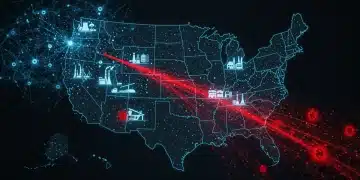
Geopolitical Cyber Warfare: US Threats by Mid-2025
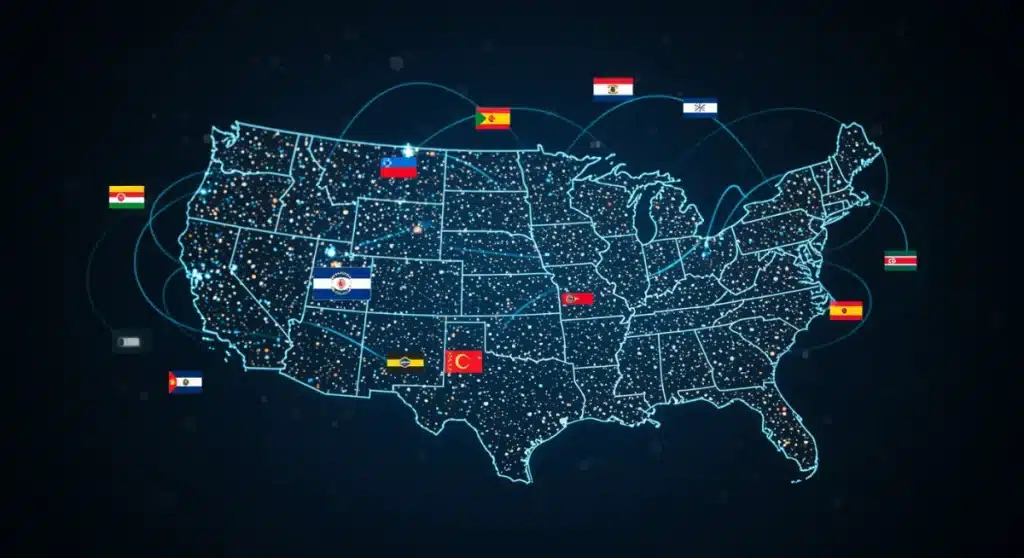
The United States is confronting significant geopolitical cyber warfare threats by mid-2025, necessitating advanced defensive measures against state-sponsored espionage, critical infrastructure attacks, and pervasive disinformation campaigns.
As the digital landscape evolves, the concept of geopolitical cyber warfare has moved from speculative fiction to an undeniable reality, shaping international relations and national security. By mid-2025, the United States is poised to face an unprecedented array of sophisticated digital threats, demanding immediate attention and proactive countermeasures. This article delves into the three most pressing emerging threats, offering insider knowledge on their nature and effective strategies for defence.
The rise of state-sponsored advanced persistent threats (APTs)
State-sponsored advanced persistent threats (APTs) represent a formidable challenge in the realm of geopolitical cyber warfare. These sophisticated groups, often backed by nation-states, possess extensive resources and time, enabling them to execute highly complex and sustained cyber campaigns against strategic targets within the US.
Their primary objectives often include espionage, intellectual property theft, and disruption of critical national functions. The stealth and persistence of APTs make them particularly dangerous, as they can reside undetected within networks for extended periods, gathering intelligence or positioning themselves for future attacks.
Evolving APT tactics and techniques
The methods employed by APTs are continuously evolving, leveraging zero-day exploits, supply chain compromises, and advanced social engineering tactics. These groups are increasingly adept at blending into normal network traffic, making detection difficult for even the most advanced security systems.
- Supply Chain Compromise: Injecting malicious code into legitimate software updates or hardware components, affecting numerous downstream users.
- Zero-Day Exploits: Exploiting previously unknown vulnerabilities in software or hardware before patches are available.
- Sophisticated Phishing: Highly targeted spear-phishing campaigns tailored to specific individuals or organisations, often leveraging deepfake technology for enhanced credibility.
- Living Off the Land (LotL): Utilising legitimate system tools and processes to perform malicious activities, making their presence harder to distinguish from normal operations.
Understanding these evolving tactics is crucial for developing effective defence mechanisms. The US government and private sector must collaborate to share threat intelligence and develop adaptive security frameworks that can detect and respond to these dynamic threats.
The long-term nature of APT campaigns means that a single successful breach can have cascading effects, compromising multiple systems and data reservoirs over time. Proactive threat hunting and continuous monitoring are essential to identify and mitigate these persistent intrusions before they escalate into major incidents.
Targeting critical infrastructure: a growing vulnerability
Critical infrastructure, encompassing sectors such as energy, water, telecommunications, and financial services, remains a prime target for geopolitical cyber warfare. Attacks on these systems can have devastating real-world consequences, disrupting essential services, causing economic turmoil, and even endangering public safety.
By mid-2025, the convergence of increasingly sophisticated cyber capabilities with geopolitical tensions will elevate the risk of such attacks. Adversaries seek to exploit vulnerabilities in operational technology (OT) and industrial control systems (ICS) that underpin these vital services.
The convergence of IT and OT risks
The integration of information technology (IT) with operational technology (OT) environments, while offering efficiency benefits, has also expanded the attack surface for critical infrastructure. Traditional IT security measures are often insufficient for protecting OT systems, which require specialised protocols and considerations.
- Legacy Systems: Many OT systems rely on outdated hardware and software, making them difficult to patch and inherently vulnerable.
- Air-Gap Erosion: The historical ‘air-gapped’ isolation of OT networks is increasingly being eroded for remote access and data analytics, creating new pathways for cyber infiltration.
- Lack of Visibility: Limited visibility into OT network traffic and device behaviour hinders early detection of malicious activity.
Protecting critical infrastructure demands a holistic approach that addresses both IT and OT security challenges. This includes implementing robust network segmentation, continuous vulnerability assessments, and establishing incident response plans specifically tailored for industrial environments.
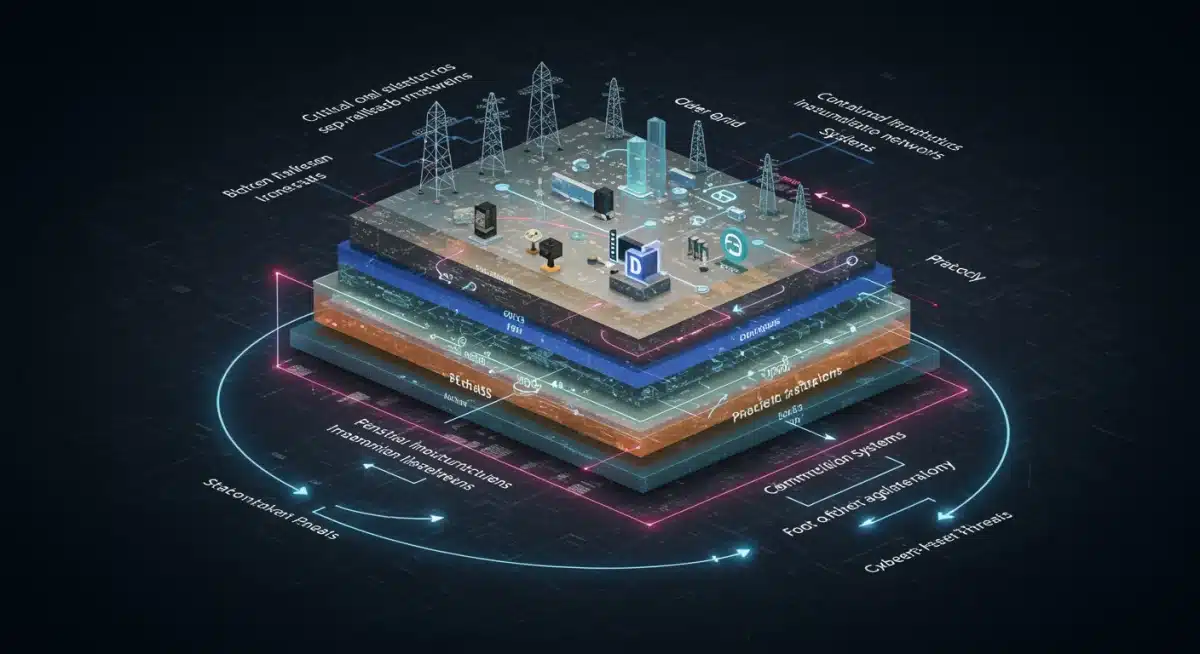
The potential for physical damage and widespread societal disruption makes critical infrastructure a high-stakes battleground in geopolitical cyber warfare. Strengthening these defences is not merely a matter of cybersecurity but a fundamental component of national security.
The proliferation of sophisticated disinformation campaigns
Beyond direct digital attacks, geopolitical cyber warfare increasingly leverages sophisticated disinformation campaigns to sow discord, influence public opinion, and undermine democratic processes. These campaigns are designed to manipulate perceptions, erode trust in institutions, and create societal divisions, often with long-term strategic objectives.
By mid-2025, the advent of advanced artificial intelligence (AI) and deepfake technologies will amplify the reach and credibility of these campaigns, making it harder for the average citizen to distinguish fact from fiction. This poses a significant threat to social cohesion and national stability within the US.
AI-powered propaganda and deepfakes
AI is revolutionising the creation and dissemination of disinformation. Generative AI models can produce highly realistic text, images, and videos that are virtually indistinguishable from authentic content. This capability enables adversaries to craft compelling narratives that resonate with specific audiences.
- Hyper-realistic Deepfakes: AI-generated videos and audio recordings of public figures saying or doing things they never did, used to spread false information or create scandals.
- Automated Content Generation: AI bots can rapidly produce vast amounts of persuasive text for social media posts, articles, and comments, overwhelming legitimate discourse.
- Targeted Messaging: AI-driven analytics can identify vulnerable demographic groups and tailor disinformation messages for maximum psychological impact.
Countering these campaigns requires a multi-faceted approach, including media literacy education, fact-checking initiatives, and collaboration with social media platforms to identify and remove malicious content. The government also plays a crucial role in providing accurate and timely information to the public.
The battle against disinformation is fundamentally a struggle for truth and trust. As adversaries refine their tactics, society must develop greater resilience and critical thinking skills to navigate an increasingly complex information environment.
Defending against geopolitical cyber warfare: a multi-layered approach
Effectively countering the evolving threats of geopolitical cyber warfare requires a comprehensive, multi-layered defence strategy. No single solution will suffice; rather, a combination of technological advancements, policy frameworks, and international cooperation is essential to safeguard the US.
This approach must integrate both proactive measures to prevent attacks and robust reactive capabilities to mitigate their impact when they occur. The goal is to build resilience across all sectors, from government and critical infrastructure to private enterprise and individual citizens.
Key pillars of cyber defence
A strong national cybersecurity posture rests upon several foundational elements that must be continuously strengthened and adapted. These pillars work in concert to create a robust defence against sophisticated adversaries.
- Enhanced Threat Intelligence Sharing: Fostering seamless exchange of real-time threat data between government agencies, private companies, and international partners.
- Zero Trust Architecture Implementation: Adopting security models that assume no user or device can be implicitly trusted, regardless of their location, requiring constant verification.
- Cyber Workforce Development: Investing in education and training programmes to address the critical shortage of skilled cybersecurity professionals.
- Advanced Endpoint Detection and Response (EDR): Deploying sophisticated tools that monitor and respond to threats on endpoints, providing deep visibility and automated remediation.
- Regular Penetration Testing and Red Teaming: Proactively identifying vulnerabilities through simulated attacks to strengthen defences before real adversaries exploit them.
These pillars provide the structural integrity for a resilient cyber defence. Continuous investment and adaptation are necessary to keep pace with the rapidly changing threat landscape.
Ultimately, a robust defence against geopolitical cyber warfare is a shared responsibility. Collaboration between the public and private sectors, combined with an informed and vigilant populace, forms the strongest bulwark against these pervasive threats.
International cooperation and policy frameworks
Given the transnational nature of geopolitical cyber warfare, international cooperation and the establishment of clear policy frameworks are indispensable. No single nation can effectively combat these global threats in isolation; coordinated efforts are vital for deterrence, attribution, and response.
By mid-2025, the US must continue to champion international norms of responsible state behaviour in cyberspace and work with allies to develop collective defence mechanisms. This includes diplomatic initiatives, intelligence sharing agreements, and joint cyber defence exercises.
Shaping global cyber norms
Establishing agreed-upon rules of engagement in cyberspace is critical to prevent escalation and maintain stability. The US has a pivotal role in leading discussions and advocating for international adherence to these norms.
- Norms of Non-Interference: Promoting agreements that prohibit states from interfering in the internal affairs of other nations through cyber means.
- Responsible Disclosure: Encouraging states to report vulnerabilities rather than exploit them, fostering a more secure global internet.
- Attribution and Accountability: Developing mechanisms for reliably attributing cyberattacks to their perpetrators and holding them accountable under international law.
These policy efforts are complemented by practical cooperation, such as joint cyber exercises that enhance interoperability and collective response capabilities. Sharing best practices and technical expertise among allied nations strengthens the global cybersecurity ecosystem.
The diplomatic front of geopolitical cyber warfare is as crucial as the technical one. By fostering international partnerships and pushing for clear global cyber norms, the US can build a stronger, more united front against state-sponsored aggression in the digital domain.
Building national cyber resilience: a societal imperative
Beyond governmental and corporate defences, building national cyber resilience extends to every citizen and every organisation. A truly secure nation is one where individuals are educated about cyber risks, businesses adopt strong security practices, and communities are prepared to respond to digital disruptions.
This societal imperative requires a cultural shift towards greater cyber awareness and responsibility. By mid-2025, fostering a ‘cyber-aware’ population will be as critical as deploying advanced security technologies, especially in the face of sophisticated disinformation and social engineering tactics.
Empowering individuals and small businesses
While large corporations and government agencies have dedicated cybersecurity teams, small businesses and individuals often lack the resources and expertise to defend themselves effectively. Empowering these groups is vital for overall national resilience.
- Public Awareness Campaigns: Launching widespread educational initiatives on common cyber threats like phishing, ransomware, and online disinformation.
- Affordable Security Solutions: Promoting access to cost-effective cybersecurity tools and services for small and medium-sized enterprises (SMEs).
- Cyber Hygiene Best Practices: Encouraging fundamental practices such as strong passwords, multi-factor authentication, and regular software updates for everyone.
- Reporting Mechanisms: Establishing clear and accessible channels for reporting suspicious cyber activities and incidents.
By strengthening the weakest links in the cyber defence chain, the entire nation becomes more resilient. This collective effort transforms cybersecurity from a niche technical concern into a shared societal responsibility.
Ultimately, national cyber resilience is a continuous journey, not a destination. It demands ongoing adaptation, education, and collaboration to ensure the US remains secure and prosperous in the face of evolving geopolitical cyber warfare threats.
| Key Threat | Brief Description |
|---|---|
| State-Sponsored APTs | Highly sophisticated and persistent cyber espionage and disruption campaigns by nation-states. |
| Critical Infrastructure Targeting | Attacks on essential services like energy, water, and finance, causing real-world disruption and harm. |
| Disinformation Campaigns | Use of AI and deepfakes to spread false narratives, influence public opinion, and destabilise society. |
Frequently asked questions about geopolitical cyber warfare
Geopolitical cyber warfare refers to the use of cyber means by nation-states to achieve political, economic, or military objectives against other nations. It encompasses espionage, sabotage, and influence operations in the digital domain.
Critical infrastructures are targeted because their disruption can cause widespread societal chaos, economic damage, and loss of life, making them high-impact objectives for adversarial nations seeking to destabilise an opponent.
Deepfakes enhance disinformation campaigns by creating highly convincing fake audio and video content. This makes it easier to spread false narratives, manipulate public opinion, and erode trust in legitimate news sources and institutions.
A Zero Trust Architecture is a security model that requires strict identity verification for every person and device attempting to access resources on a private network, regardless of whether they are inside or outside the network perimeter. It assumes no inherent trust.
Individuals can contribute by practicing good cyber hygiene, such as using strong, unique passwords and multi-factor authentication, being wary of phishing attempts, and staying informed about common cyber threats and disinformation tactics.
Conclusion
The landscape of geopolitical cyber warfare is rapidly evolving, presenting significant and multifaceted threats to the United States by mid-2025. From the stealthy persistence of state-sponsored APTs to the potential for devastating attacks on critical infrastructure and the pervasive influence of AI-powered disinformation, the challenges are substantial. Addressing these threats demands a holistic and adaptive strategy, encompassing technological innovation, robust policy frameworks, and extensive international cooperation. Ultimately, building a resilient national cyber defence is a collective endeavour, requiring vigilance and proactive engagement from government, industry, and every citizen to secure the digital future of the US.