Cloud Security Threats: Essential Detection Tools for Hybrid Environments in 2026
In the rapidly evolving landscape of digital transformation, hybrid cloud environments have emerged as the preferred architectural choice for many enterprises. This strategic adoption, however, brings with it a complex array of hybrid cloud security challenges. As we look towards 2026, the sophistication of cyber threats continues to escalate, making robust detection tools not merely an advantage, but an absolute necessity. Organizations are grappling with the intricacies of managing security across disparate infrastructures – on-premises data centers, private clouds, and multiple public cloud providers – all while maintaining compliance and ensuring data integrity. The sheer volume of potential attack vectors and the dynamic nature of cloud workloads demand a proactive and intelligent approach to security. This article delves into the critical cloud security threats facing hybrid environments and identifies three essential detection tools that will be indispensable for safeguarding your digital assets in the coming years.
The promise of hybrid cloud lies in its flexibility, scalability, and cost-effectiveness. It allows businesses to leverage the best of both worlds: the control and security of a private infrastructure for sensitive data and critical applications, combined with the agility and elasticity of public cloud services for other workloads. However, this architectural flexibility also introduces significant security complexities. The expanded attack surface, inconsistent security policies across environments, and the challenge of unified visibility are just a few of the hurdles security teams must overcome. Furthermore, the rapid pace of innovation in cloud technologies means that security solutions must constantly adapt to new services, configurations, and potential vulnerabilities. Without the right detection tools, organizations risk falling prey to advanced persistent threats, data breaches, and regulatory non-compliance, all of which can have devastating financial and reputational consequences. Understanding these inherent risks is the first step towards building a resilient hybrid cloud security posture.
The Evolving Landscape of Hybrid Cloud Security Threats
Before we explore the essential detection tools, it’s crucial to understand the primary cloud security threats that are projected to dominate hybrid environments in 2026. These threats are not static; they evolve with technological advancements and attacker methodologies. One of the most pervasive threats is misconfiguration. Cloud environments, with their vast array of services and intricate settings, are notoriously difficult to configure securely. A single misstep can expose sensitive data or leave open ports vulnerable to exploitation. As organizations continue to embrace Infrastructure as Code (IaC) and automate deployments, misconfigurations can propagate rapidly, creating widespread vulnerabilities.
Another significant concern for hybrid cloud security is identity and access management (IAM) failures. Weak authentication mechanisms, excessive permissions, and compromised credentials remain prime targets for attackers. In a hybrid setup, managing identities across diverse systems and ensuring consistent access policies can be a monumental task. The risk is amplified by the increasing use of third-party applications and services, each requiring its own set of access controls. A single compromised identity can provide an attacker with a gateway into both on-premises and cloud resources, leading to lateral movement and privilege escalation.
Data breaches, of course, continue to be a top concern. Whether through insider threats, external attacks exploiting vulnerabilities, or inadequate data encryption, the compromise of sensitive information can have catastrophic consequences. In a hybrid environment, data often traverses between on-premises and cloud infrastructures, making it challenging to track, protect, and ensure compliance with data residency and privacy regulations. The distributed nature of data storage and processing in hybrid clouds complicates traditional data loss prevention (DLP) strategies.
Advanced persistent threats (APTs) are also becoming more sophisticated, often leveraging a combination of techniques to bypass traditional security controls. These highly organized attacks can remain undetected for extended periods, exfiltrating data or disrupting operations. Their ability to adapt to defensive measures makes them particularly dangerous in complex hybrid environments where visibility gaps can be exploited. Furthermore, supply chain attacks, where vulnerabilities are introduced through third-party software or services, pose a growing threat. As organizations rely more heavily on external vendors for cloud components and applications, the security posture of the entire hybrid ecosystem becomes dependent on the weakest link in the supply chain.
Finally, the proliferation of Shadow IT – unauthorized cloud services used by employees – continues to present a significant risk. Without proper oversight, these services can introduce unmanaged vulnerabilities and expose corporate data, undermining even the most robust hybrid cloud security strategies. Addressing these diverse and evolving threats requires a multi-layered approach, underpinned by intelligent and integrated detection capabilities that span the entire hybrid infrastructure.
Essential Detection Tool 1: Cloud Security Posture Management (CSPM)
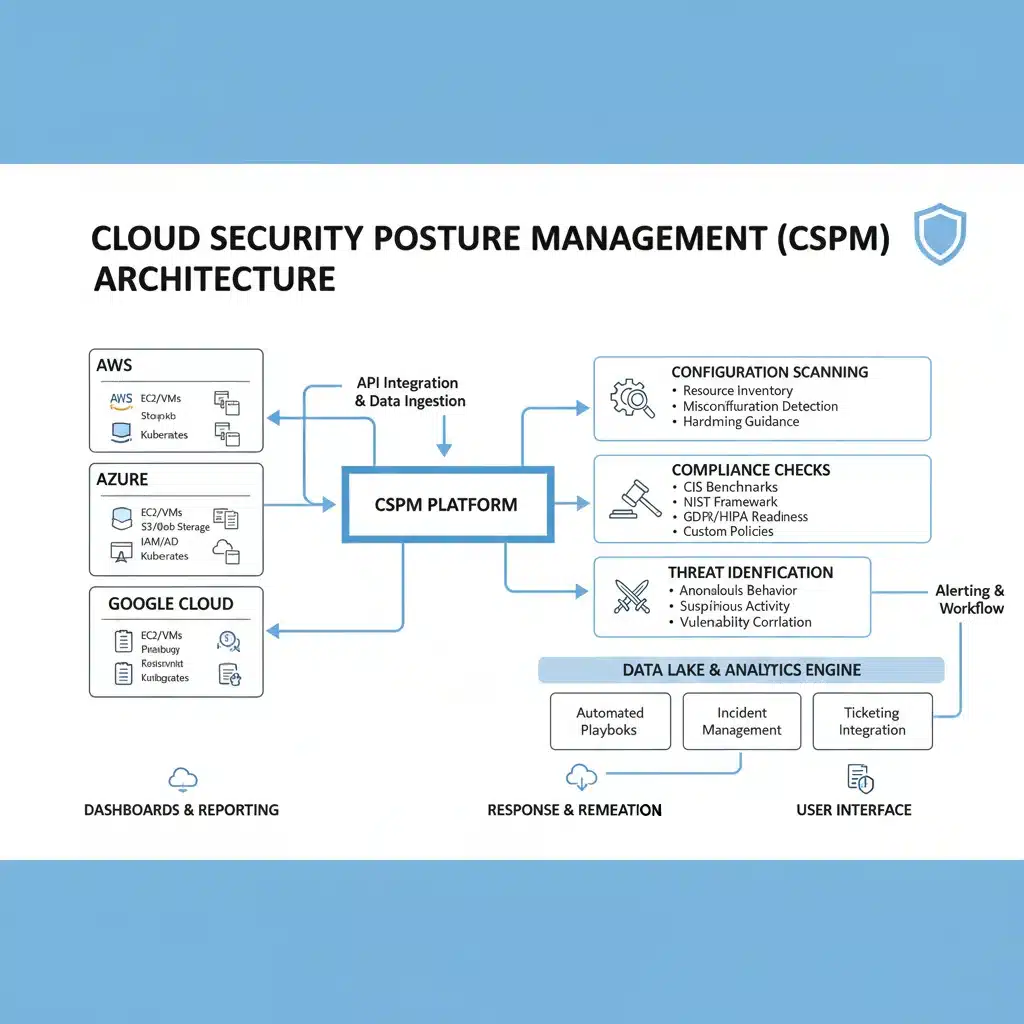
One of the foundational pillars of effective hybrid cloud security in 2026 will be robust Cloud Security Posture Management (CSPM) solutions. CSPM tools are designed to identify and remediate misconfigurations, compliance violations, and security risks across various cloud services. In a hybrid environment, where configurations can be incredibly complex and prone to human error, CSPM acts as an automated guardian, ensuring that your cloud infrastructure adheres to best practices and regulatory requirements.
The core functionality of a CSPM tool involves continuous monitoring and assessment of your cloud resources. This includes scanning for misconfigured storage buckets, overly permissive IAM roles, unencrypted data stores, public-facing resources that should be private, and adherence to security benchmarks like CIS (Center for Internet Security) or NIST (National Institute of Standards and Technology). For hybrid environments, the value of CSPM is amplified because it provides a unified view of security posture across multiple public cloud providers (AWS, Azure, Google Cloud, etc.) and, increasingly, extends its capabilities to private cloud components and even on-premises infrastructure.
By 2026, advanced CSPM solutions will go beyond mere detection. They will incorporate AI and machine learning to prioritize alerts, identify anomalous configurations that deviate from established baselines, and even suggest automated remediation actions. This proactive stance is critical for managing the scale and dynamism of hybrid clouds. Imagine a scenario where a developer accidentally exposes an S3 bucket with sensitive customer data. A sophisticated CSPM tool would not only detect this misconfiguration in real-time but could also trigger an automated workflow to restrict public access, alert the security team, and even roll back the change, all within minutes. This level of automation significantly reduces the window of opportunity for attackers.
Furthermore, CSPM tools are indispensable for maintaining compliance. With an ever-growing list of regulations such as GDPR, HIPAA, and PCI DSS, organizations need to demonstrate continuous adherence. CSPM solutions provide automated compliance reporting and evidence collection, simplifying audits and reducing the burden on security and compliance teams. They can map cloud configurations to specific regulatory controls, ensuring that your hybrid cloud security posture aligns with legal and industry mandates.
When selecting a CSPM solution for your hybrid environment, consider its ability to integrate seamlessly with your existing CI/CD pipelines. Security should be shifted left, meaning it should be integrated earlier in the development lifecycle. A CSPM that can scan IaC templates for misconfigurations before deployment can prevent vulnerabilities from ever reaching production. Look for features like policy-as-code capabilities, customisable rulesets, and deep integration with cloud-native security services. The goal is to achieve comprehensive visibility and control over your security posture, regardless of where your workloads reside within the hybrid cloud.
Essential Detection Tool 2: Cloud Workload Protection Platforms (CWPP)
Complementing CSPM, Cloud Workload Protection Platforms (CWPP) are another critical component for bolstering hybrid cloud security in 2026. While CSPM focuses on the configuration of the underlying cloud infrastructure, CWPP zeroes in on protecting the workloads themselves – meaning virtual machines, containers, serverless functions, and Kubernetes clusters – regardless of where they are running in your hybrid environment. This distinction is vital because even a perfectly configured cloud infrastructure can host vulnerable applications or operating systems.
CWPP solutions provide multi-layered protection for workloads, encompassing vulnerability management, runtime protection, and host-based intrusion detection. They offer visibility into the security posture of individual workloads, identifying unpatched vulnerabilities, insecure configurations within applications, and suspicious activities. For containers and serverless functions, CWPPs are particularly important as these ephemeral and highly distributed workloads present unique security challenges that traditional endpoint protection solutions are not equipped to handle.
In a hybrid cloud context, CWPPs offer consistent security policies and enforcement across on-premises servers, private cloud VMs, and public cloud instances. This consistency is paramount for preventing security gaps that attackers can exploit when moving between different parts of your hybrid infrastructure. For example, a CWPP can ensure that all your Linux servers, whether in AWS EC2 or your private data center, adhere to the same security baseline, have the same agents installed for monitoring, and are protected by the same runtime policies.
Key features of advanced CWPPs include host-based intrusion prevention and detection (HIPS/HIDS), which monitor system calls, file integrity, and process activity for signs of compromise. They can detect zero-day exploits, rootkits, and other advanced malware that might bypass traditional perimeter defenses. For containerized environments, CWPPs provide image scanning to identify vulnerabilities in container images before deployment, as well as runtime protection that monitors container behavior for deviations from expected patterns, such as unauthorised network connections or attempts to access sensitive files.
Looking ahead to 2026, CWPPs will increasingly leverage behavioral analytics and machine learning to detect sophisticated threats. Instead of relying solely on signature-based detection, they will build a baseline of normal workload behavior and flag any anomalies. This is crucial for identifying fileless malware, polymorphic attacks, and insider threats that might otherwise go unnoticed. Furthermore, integration with orchestration tools like Kubernetes will become even more seamless, allowing CWPPs to provide granular security controls and policy enforcement at the pod and namespace level, ensuring that containerized applications are secure throughout their lifecycle.
When integrating CWPP into your hybrid cloud security strategy, consider solutions that offer broad platform support, covering various operating systems, container runtimes, and serverless platforms. Look for strong API integration capabilities to automate security tasks and integrate with your existing security information and event management (SIEM) systems. A comprehensive CWPP should provide deep visibility into workload activity, robust threat detection capabilities, and the ability to enforce security policies consistently across your entire hybrid footprint, providing a strong defense against evolving threats at the workload level.
Essential Detection Tool 3: Extended Detection and Response (XDR)
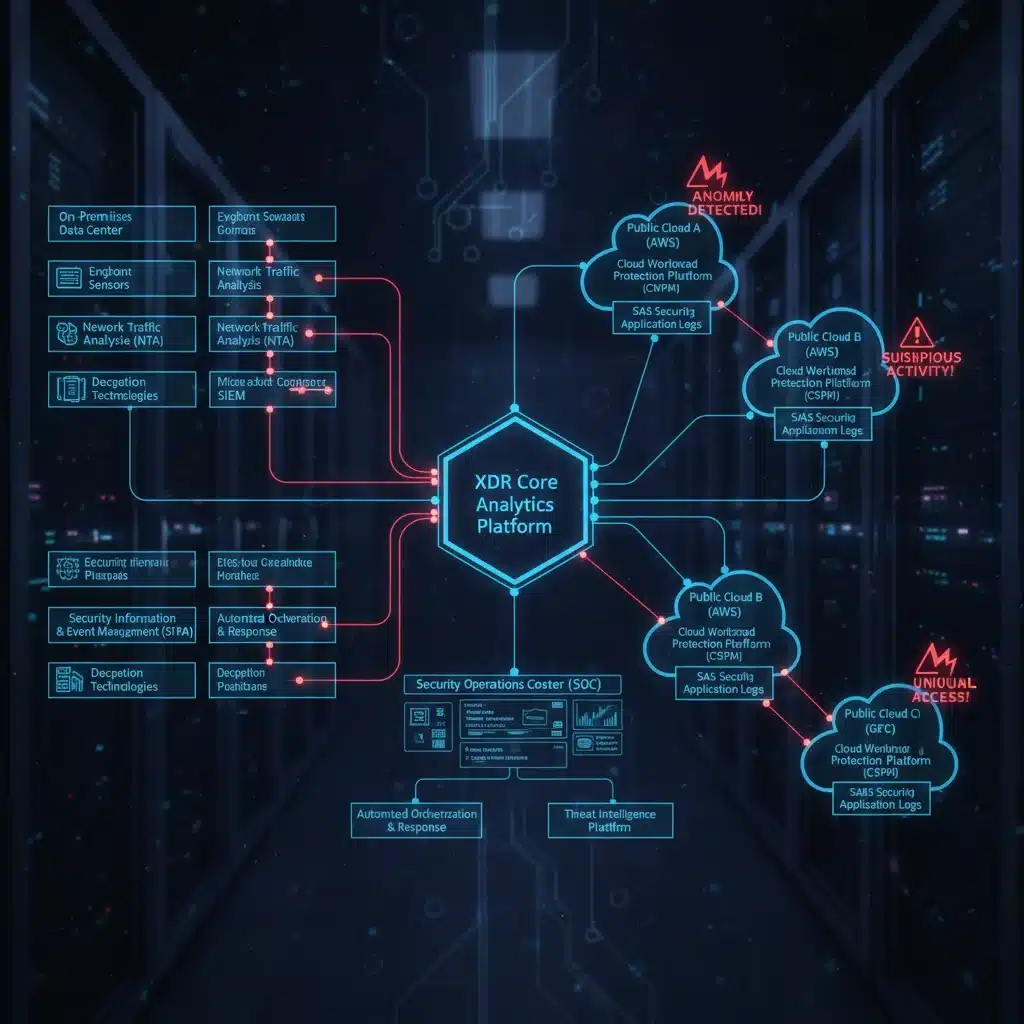
The third essential detection tool for robust hybrid cloud security in 2026 is Extended Detection and Response (XDR). XDR represents the evolution of Endpoint Detection and Response (EDR), expanding its scope to integrate and correlate security data across multiple security layers, including endpoints, networks, cloud environments, email, and identities. In a hybrid cloud world, where threats can originate from almost anywhere and traverse multiple systems, a unified and holistic detection and response capability is paramount.
Traditional security tools often operate in silos, generating a deluge of alerts that security analysts struggle to manage and correlate. This fragmented approach leads to alert fatigue, missed threats, and slower response times. XDR addresses this by providing a comprehensive platform that collects and normalizes data from various sources across the hybrid environment. It then applies advanced analytics, artificial intelligence, and machine learning to correlate these disparate data points, identify complex attack patterns, and provide contextualized insights into potential threats.
For hybrid cloud security, XDR’s ability to pull data from public cloud logs (e.g., AWS CloudTrail, Azure Monitor), on-premises network traffic, endpoint telemetry, and identity provider logs is a game-changer. Imagine an attack scenario where an attacker compromises a user’s credentials on an on-premises workstation (detected by EDR), then uses those credentials to access a public cloud resource (detected by cloud security logs), and finally attempts to exfiltrate data through a network gateway (detected by network telemetry). A traditional SIEM might generate three separate, uncorrelated alerts. An XDR system, however, would ingest all this data, correlate it into a single, high-fidelity incident, and provide a complete narrative of the attack, along with recommended response actions.
By 2026, XDR solutions will feature even more sophisticated behavioral analytics, capable of detecting subtle deviations from normal activity across the entire hybrid estate. They will leverage graph databases to map relationships between users, devices, applications, and cloud resources, making it easier to identify lateral movement and privilege escalation attempts. Automated response capabilities will also become more prevalent, allowing XDR platforms to automatically isolate compromised endpoints, revoke access credentials, or block suspicious network traffic, thereby significantly reducing the impact of an attack.
The benefits of XDR for hybrid environments extend beyond just detection. It dramatically improves the efficiency of security operations centers (SOCs) by reducing alert volume, providing richer context for investigations, and accelerating incident response. Instead of chasing down individual alerts, analysts can focus on high-priority, correlated incidents, leading to faster mean time to detect (MTTD) and mean time to respond (MTTR). This consolidation and correlation capability is especially valuable in hybrid environments, where the sheer volume and diversity of security data can overwhelm even experienced security teams.
When evaluating XDR solutions for your hybrid cloud security strategy, look for platforms that offer broad integration capabilities with your existing security stack, including SIEM, SOAR (Security Orchestration, Automation, and Response), and threat intelligence feeds. The ability to ingest and process data from diverse sources across both cloud and on-premises environments is crucial. Prioritize solutions with strong AI/ML capabilities for threat correlation, automated investigation playbooks, and flexible deployment options that cater to the unique requirements of your hybrid infrastructure. XDR is not just a tool; it’s a paradigm shift in how organizations approach threat detection and response in complex, multi-faceted environments.
Integrating and Optimizing Your Hybrid Cloud Security Tools
Implementing these three essential detection tools – CSPM, CWPP, and XDR – is a significant step towards securing your hybrid cloud environment. However, their true power is unleashed when they are integrated and optimized to work cohesively. A fragmented security posture, even with advanced tools, can still leave exploitable gaps. The goal is to create a unified security fabric that provides end-to-end visibility, consistent policy enforcement, and rapid response capabilities across your entire hybrid infrastructure.
Integration begins with data sharing. Ensure that your CSPM, CWPP, and XDR solutions can exchange information seamlessly. For instance, a misconfiguration detected by CSPM might highlight a potential vulnerability that a CWPP can then monitor for exploitation attempts at the workload level. Similarly, an anomaly detected by CWPP on a specific server should feed into the XDR platform to be correlated with network traffic, identity logs, and other security events to build a complete picture of an attack.
Centralized visibility is another critical aspect. While each tool provides its own dashboard, a next-generation SIEM or a dedicated security orchestration and automation platform (SOAR) can serve as a central hub for aggregating alerts, logs, and telemetry from all your security tools. This allows security analysts to have a single pane of glass for monitoring, investigation, and incident response, significantly improving efficiency and reducing the time to detect and respond to threats in your hybrid cloud security environment.
Automation and orchestration are also key to optimizing these tools. As the scale and complexity of hybrid clouds grow, manual security processes become unsustainable. Leverage automation to respond to routine alerts, enforce security policies, and even initiate remediation actions. For example, if a CSPM detects a non-compliant resource, an automated workflow can be triggered to either correct the configuration or quarantine the resource. XDR platforms, with their built-in response capabilities, can automatically contain threats, reducing the manual burden on security teams.
Regular auditing and testing are equally important. The threat landscape is constantly changing, and so should your security posture. Conduct regular penetration testing, vulnerability assessments, and red team exercises that specifically target your hybrid cloud environment. These exercises will help identify weaknesses in your integrated security controls and validate the effectiveness of your detection tools. Furthermore, continuously review and update your security policies and configurations to adapt to new threats and evolving business requirements.
Finally, invest in continuous training for your security team. The tools discussed are powerful, but their effectiveness depends on the expertise of the people operating them. Ensure your team is well-versed in cloud security principles, understands the intricacies of your hybrid environment, and is proficient in using the advanced features of your CSPM, CWPP, and XDR solutions. A well-equipped and knowledgeable security team is your strongest defense against the sophisticated cloud security threats of 2026 and beyond.
The Future of Hybrid Cloud Security: A Proactive Stance
The journey towards robust hybrid cloud security is continuous, not a destination. As we move closer to 2026, the convergence of AI, machine learning, and automation will redefine threat detection and response. The three essential tools – CSPM, CWPP, and XDR – will form the bedrock of a proactive security strategy, enabling organizations to move from a reactive posture to one that anticipates and neutralizes threats before they can cause significant damage.
The future will see even deeper integration between these tools, potentially leading to more consolidated platforms that offer a unified approach to security posture management, workload protection, and extended detection and response. This convergence will simplify security operations, reduce complexity, and provide unparalleled visibility across the entire hybrid attack surface. Predictive analytics, powered by advanced AI, will play a crucial role in identifying emerging threat patterns and vulnerabilities, allowing organizations to implement preventative measures before an attack even materializes.
Furthermore, the adoption of Zero Trust principles will become even more pervasive. In a hybrid environment, assuming no implicit trust and verifying every access request, regardless of origin, is fundamental. CSPM, CWPP, and XDR tools will be instrumental in enforcing these principles by continuously monitoring configurations, workload behavior, and user activities, ensuring that only authorized and secure interactions occur.
The increasing focus on supply chain security also means that organizations will demand greater transparency and security assurances from their cloud providers and third-party vendors. Security tools will need to extend their reach to assess the security posture of external dependencies, ensuring that vulnerabilities introduced upstream do not compromise the integrity of the hybrid environment.
In conclusion, the landscape of cloud security threats in hybrid environments is complex and dynamic. However, by strategically implementing and integrating essential detection tools like CSPM, CWPP, and XDR, organizations can build a resilient and adaptive security framework. These tools, when combined with a strong security culture, continuous training, and a commitment to automation, will provide the necessary defenses to protect critical assets and ensure business continuity in the face of evolving cyber challenges in 2026 and beyond. The time to invest in these practical solutions for robust hybrid cloud security is now, securing your digital future against unforeseen threats.