AI Phishing Scams: Detecting Advanced Threats in the US
The digital landscape is constantly evolving, and with it, the sophistication of cyber threats. Among the most pervasive and dangerous of these threats are phishing attacks. Once relatively easy to spot due to grammatical errors and generic greetings, phishing has undergone a dramatic transformation. The advent of artificial intelligence (AI) has ushered in a new era of cybercrime, giving rise to highly convincing and incredibly effective AI phishing scams. In the United States, individuals and organisations alike are grappling with this escalating challenge, making it crucial to understand the nuances of these advanced attacks and, more importantly, how to detect them.
This insider’s guide delves deep into the world of AI phishing scams, offering a comprehensive look at how cybercriminals are leveraging AI to craft insidious traps. We’ll explore the core technologies driving these attacks, examine real-world examples, and provide actionable strategies for detection and prevention. Our aim is to arm you with the knowledge necessary to navigate this treacherous digital terrain and safeguard your personal and organisational data from these increasingly sophisticated threats. The fight against cybercrime is an ongoing one, and staying informed is your first and most powerful line of defence.
The Evolution of Phishing: From Crude Attempts to AI-Powered Deception
Phishing, at its core, is a social engineering technique designed to trick individuals into divulging sensitive information or performing actions that benefit an attacker. Historically, these attacks were often rudimentary. Think of the classic ‘Nigerian Prince’ scam – easily identifiable by its outlandish claims, poor English, and often improbable scenarios. While these still exist, the majority of phishing attempts have matured considerably.
The first significant leap came with the professionalisation of cybercrime. Attackers started using better templates, more convincing branding, and even basic personalisation. However, even these improved attacks often left tell-tale signs: subtle misspellings in URLs, slight variations in logos, or unusual sender addresses. These were the ‘red flags’ that security-conscious users were trained to look for.
Enter AI. The integration of artificial intelligence, particularly machine learning (ML) and natural language processing (NLP), has fundamentally reshaped the phishing landscape. AI-powered phishing scams are no longer about generic emails; they are about highly targeted, contextually relevant, and grammatically flawless communications that can mimic legitimate interactions with astonishing accuracy. This makes detection significantly more challenging, as the traditional indicators of a phishing attempt are often absent.
Cybercriminals are now using AI to automate and enhance every stage of a phishing campaign, from reconnaissance to payload delivery. This automation allows for attacks to be scaled up rapidly and executed with pinpoint precision, targeting a vast number of potential victims simultaneously without the need for extensive manual effort. The sheer volume and quality of these new attacks represent a paradigm shift in cybersecurity, demanding a more advanced and proactive defence.
How AI is Weaponising Phishing Attacks
The power of AI lies in its ability to process vast amounts of data, learn patterns, and generate new content that is virtually indistinguishable from human-created output. Cybercriminals have quickly realised this potential and are now employing AI in several critical ways to elevate the effectiveness of AI phishing scams:
1. Advanced Spear Phishing and Whaling
Traditional spear phishing involves targeting specific individuals with personalised emails. Whaling takes this a step further, targeting high-value individuals like CEOs or CFOs. Before AI, this required extensive manual research to gather information about the target’s role, interests, and communication style. AI has automated and supercharged this process.
- Data Harvesting and Analysis: AI algorithms can scour publicly available information (social media, corporate websites, news articles) to build detailed profiles of targets. They can identify relationships, recent activities, project involvements, and even personal preferences.
- Contextual Understanding: NLP models can analyse a target’s past communications (if compromised data is available) to understand their typical vocabulary, tone, and common phrases. This allows AI to generate emails that perfectly match the target’s communication style, making them incredibly convincing.
- Dynamic Content Generation: AI can dynamically generate email content that incorporates recent events or activities relevant to the target. For example, an email might reference a recent company acquisition, a project milestone, or even a personal hobby, making the interaction feel highly legitimate and reducing suspicion.
2. Hyper-Realistic Deepfakes and Voice Clones
Beyond text-based phishing, AI is enabling entirely new forms of social engineering. Deepfake technology, which uses AI to create realistic fake videos or audio, is becoming a significant threat.
- Deepfake Video Calls: Imagine receiving a video call from your CEO, instructing you to transfer funds or share sensitive data. If that CEO is a deepfake, generated by AI, the visual and auditory cues can be incredibly convincing, making it almost impossible for an unsuspecting employee to detect the deception. These attacks are particularly dangerous as they bypass traditional email filters.
- Voice Phishing (Vishing) with Voice Clones: AI can clone a person’s voice using only a small audio sample. Attackers can then use these cloned voices to make convincing phone calls, impersonating colleagues, superiors, or even bank representatives. The emotional manipulation possible through voice communication makes these attacks extremely potent, especially when combined with a sense of urgency.
3. Evading Detection with Adaptive AI
Cybercriminals are not just using AI to create attacks; they are also using it to make their attacks harder to detect by traditional security systems.
- Polymorphic Malware and URLs: AI can generate variations of malicious code or phishing URLs that constantly change their signatures, making it difficult for signature-based antivirus and anti-phishing tools to identify them. Each generated variant might be unique, allowing it to bypass detection mechanisms.
- Reinforcement Learning for Evasion: Attackers can use reinforcement learning to train AI models to identify and bypass security controls. The AI learns which patterns or characteristics trigger security alerts and then adapts its attack methods to circumvent those detections. This creates a constantly evolving cat-and-mouse game between attackers and defenders.
- Bypassing Spam Filters: AI can analyse how legitimate emails pass through spam filters and then craft phishing emails that mimic those characteristics. This includes using specific phrasing, sender reputation management, and even timing emails to align with typical business communications, all designed to land directly in the victim’s inbox.
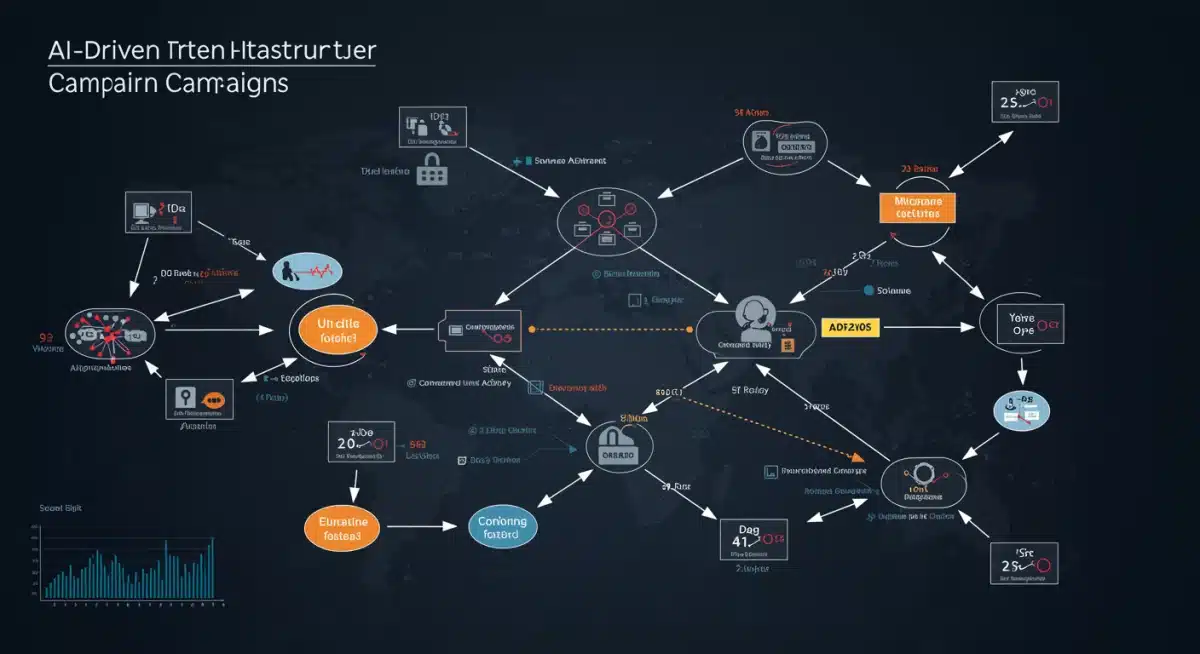
Understanding the Modus Operandi: Common AI Phishing Scams in the US
While the underlying technology is AI, the types of scams seen in the US often leverage familiar human vulnerabilities, now supercharged by AI’s capabilities. Here are some prevalent AI phishing scams:
1. Business Email Compromise (BEC) 2.0
BEC attacks are among the most financially damaging cybercrimes. AI has taken BEC to a new level. Instead of a simple spoofed email, AI-powered BEC attacks can:
- Impersonate Executives Flawlessly: AI generates emails that perfectly match the tone, style, and even specific phrases used by a CEO or CFO, making requests for urgent wire transfers or sensitive data disclosure seem entirely legitimate.
- Mimic Internal Communications: The AI can generate internal-looking emails that appear to come from HR, IT, or other departments, requesting login credentials, personal information, or directing employees to malicious internal-looking portals.
- Supply Chain Attacks: AI can craft convincing emails pretending to be from a trusted vendor or supplier, requesting changes to bank details for payments, leading to significant financial losses.
2. AI-Generated Ransomware Phishing
Ransomware attacks often start with a phishing email. AI enhances this by:
- Crafting Highly Engaging Lures: AI can create email content designed to maximise click-through rates, tailoring the message to the recipient’s perceived interests or current events. This could be a fake invoice, a shipping notification, or an urgent security alert.
- Personalised Malware Delivery: The AI can generate unique malicious attachments or links for each target, making it harder for security tools to detect signature-based threats.
3. Sophisticated Credential Harvesting
The goal is to steal login credentials. AI makes the process more effective:
- Perfectly Replicated Login Pages: AI can generate login pages that are pixel-perfect replicas of legitimate sites, including banking portals, social media, and corporate intranets. These pages often incorporate dynamic elements that make them appear more authentic.
- Multi-Factor Authentication (MFA) Bypass: Some advanced AI phishing kits can even facilitate real-time MFA bypass by acting as a proxy between the victim and the legitimate service, capturing one-time codes as they are entered.
4. AI-Powered Social Engineering for Data Theft
Beyond financial gain, AI phishing scams are used to steal sensitive data for espionage or further attacks.
- Research and Development (R&D) Data Theft: AI can identify key personnel in R&D departments and craft highly convincing emails that appear to be from collaborators or internal teams, requesting access to project files or intellectual property.
- Healthcare Data Breaches: Phishing emails targeting healthcare professionals can be incredibly effective, leading to the compromise of patient data (PHI) by impersonating internal IT support or medical device manufacturers.
Insider’s Guide to Detecting AI Phishing Scams
Detecting AI phishing scams requires a multi-layered approach that combines technological solutions with heightened human awareness. The old rules of thumb still apply, but they need to be augmented with a deeper understanding of AI’s capabilities.
1. Scrutinise Sender Details with Extreme Prejudice
This remains a foundational step, but AI makes it trickier. Don’t just look at the display name; examine the full email address.
- Domain Mismatch: Does the sender’s domain exactly match the legitimate organisation’s domain? AI can generate domains that are very similar (e.g., ‘amaz0n.com’ instead of ‘amazon.com’). Look for subtle typos, extra characters, or different top-level domains (.net instead of .com).
- Reply-To Address: Check the ‘Reply-To’ address. Sometimes, the sender address can be spoofed to look legitimate, but the reply-to address will reveal the attacker’s true destination.
- Unusual Sender Behaviour: Does the email come from an unexpected internal address or a personal email address for official communication?
2. Analyse the Content for Contextual Anomalies
While AI can generate grammatically perfect text, it still struggles with true human nuance and context in all scenarios. Look for:
- Urgency and Threat: Phishing emails often create a sense of urgency, fear, or excitement to bypass rational thought. AI can craft highly persuasive urgent messages. Always question immediate demands for action, especially involving money or sensitive data.
- Unusual Requests: Is the request out of character for the sender or the situation? A CEO asking for gift cards, for example, is a classic red flag, even if the email looks perfect.
- Inconsistent Information: Does the email reference a project or event that you’re not involved in, or that doesn’t align with current company activities? While AI is good at gathering data, it might miss subtle, unpublicised internal details.
- Lack of Personalisation (or Over-Personalisation): While AI excels at personalisation, sometimes it can overdo it or get details slightly wrong. Be wary of emails that feel ‘too perfect’ or use information about you that seems unlikely to be public knowledge, unless it’s from a truly trusted source. Conversely, a lack of specific personalisation in an email that should be highly individualised can also be a sign.
3. Hover Over Links – Don’t Click!
This is a golden rule of cybersecurity. Before clicking any link, hover your mouse over it to reveal the true URL. AI can create highly convincing display text for links, but the underlying destination might be malicious.
- URL Shorteners: Be extremely cautious of shortened URLs (e.g., bit.ly, tinyurl) in unexpected emails, as they mask the true destination.
- Domain Discrepancies: Does the hovered URL match the domain of the legitimate organisation? Look for subtle differences.
- HTTPS vs. HTTP: While not foolproof (phishing sites can use HTTPS), legitimate sites overwhelmingly use HTTPS. If a login page is HTTP, it’s a major red flag.
4. Verify Requests Through an Independent Channel
This is perhaps the most critical defence against AI phishing scams, especially those involving deepfakes or voice clones.
- Phone Call Verification: If you receive an unusual request via email (especially from a superior or a vendor), call the sender back using a known, legitimate phone number (not one provided in the suspicious email).
- Internal Communication Channels: Use secure internal messaging platforms or in-person verification for sensitive requests.
- Never Reply Directly: Do not hit ‘reply’ to a suspicious email. Always initiate a new communication using a verified contact method.

5. Leverage Technology: AI vs. AI
Fortunately, AI is also being used to combat AI. Organisations should deploy advanced security solutions:
- Advanced Email Security Gateways: These systems use AI and machine learning to detect anomalies in email traffic, identify sophisticated spoofing, and analyse URLs and attachments for malicious content. They can often detect polymorphic threats that traditional filters miss.
- Endpoint Detection and Response (EDR): EDR solutions monitor endpoints for suspicious activity, even if a phishing email bypasses initial filters. They can detect the execution of malicious payloads or attempts to access sensitive data.
- Security Awareness Training with AI Context: Regular training that educates employees about the specific threats posed by AI phishing, including deepfakes and voice clones, is paramount. Training should include simulated phishing exercises that reflect current AI-driven attack vectors.
- Multi-Factor Authentication (MFA): While not foolproof against all AI attacks, MFA significantly reduces the risk of credential theft. Ensure it’s enabled for all critical accounts.
- Browser Security Extensions: Some browser extensions can help identify known phishing sites or warn users about suspicious URLs.
6. Stay Informed and Share Knowledge
The threat landscape is dynamic. What worked yesterday might not work tomorrow. Continuously educate yourself and your team about the latest AI phishing scams and techniques. Share information about suspicious emails or incidents within your organisation to build collective resilience.
The Future of AI Phishing and Your Defence Strategy
As AI technology continues to advance, so too will the sophistication of AI phishing scams. We can anticipate even more realistic deepfakes, more adaptive malware, and highly personalised social engineering attacks that leverage even more granular data about individuals. The lines between legitimate and malicious communication will become increasingly blurred, placing a greater burden on both technology and human vigilance.
For individuals, the core principles remain: think before you click, verify before you trust, and never share sensitive information unless absolutely certain of the recipient’s legitimacy. Enable MFA everywhere possible and keep your software updated.
For organisations in the US, a robust cybersecurity strategy must include:
- Proactive Threat Intelligence: Stay abreast of emerging AI-driven threats and adjust defences accordingly.
- Layered Security Architecture: Implement a defence-in-depth strategy that includes advanced email security, endpoint protection, network segmentation, and robust access controls.
- Continuous Security Awareness Training: Regularly train employees on the latest phishing tactics, including AI-specific threats, and conduct simulated attacks to test their readiness.
- Incident Response Plan: Have a well-defined and regularly tested incident response plan to quickly mitigate the impact of a successful attack.
- Investment in AI-Powered Security Solutions: Fight AI with AI. Deploy security tools that leverage machine learning for anomaly detection, threat intelligence, and automated response.
Conclusion
The rise of AI phishing scams presents an unprecedented challenge to cybersecurity in the United States. Cybercriminals are now armed with powerful AI tools, enabling them to craft highly convincing and scalable attacks that bypass traditional defences. However, by understanding these new tactics, fostering a culture of vigilance, and deploying advanced security technologies, we can build robust defences against these evolving threats.
The battle against AI-powered deception is a continuous one, requiring constant adaptation and education. By following the insider’s guide outlined above, individuals and organisations can significantly enhance their ability to detect and neutralise AI phishing scams, protecting their assets and maintaining trust in an increasingly complex digital world.