Advanced Digital Identity Protection: 7 Strategies for 2025
Protecting your digital identity in 2025 requires advanced strategies beyond basic VPNs, incorporating proactive measures like decentralised identity and AI-driven threat detection for comprehensive security.
In an increasingly interconnected world, safeguarding your online presence has become paramount. While traditional methods offer a baseline, truly effective digital identity protection 2025 demands a more sophisticated approach, moving beyond the rudimentary use of VPNs. This article delves into seven advanced strategies, providing insider knowledge and practical solutions to fortify your digital self against emerging threats.
Decentralised Identity Frameworks: The Future of Ownership
The concept of decentralised identity (DID) represents a paradigm shift in how we manage our personal data online. Instead of relying on centralised authorities like social media giants or government databases to verify who we are, DIDs empower individuals to control their own digital credentials. This innovative approach leverages blockchain technology to create self-sovereign identities, putting you firmly in charge of your data.
With DIDs, users can selectively disclose specific pieces of information without revealing their entire identity. Imagine proving your age for an online service without showing your full date of birth, or verifying your professional qualifications without sharing your entire CV. This granular control minimises your digital footprint and reduces the risk of widespread data breaches impacting your personal information.
How Decentralised Identity Works
Decentralised identity systems typically involve three core components: identifiers, verifiable credentials, and decentralised ledgers. Each plays a crucial role in establishing and maintaining a secure, user-controlled identity.
- Decentralised Identifiers (DIDs): These are unique identifiers registered on a blockchain, owned and controlled by the individual. They are globally resolvable and cryptographically verifiable.
- Verifiable Credentials (VCs): Digital attestations issued by trusted authorities (e.g., a university issuing a degree, a bank issuing a loan approval). These credentials are cryptographically signed and stored by the user, not a central database.
- Decentralised Ledgers: The underlying blockchain technology provides an immutable and transparent record of DID registrations, ensuring the integrity and authenticity of identities.
The implementation of DIDs is still evolving, but its potential to revolutionise digital privacy is immense. By shifting power from corporations to individuals, decentralised identity frameworks offer a robust defence against identity theft and data exploitation, laying a solid foundation for future digital interactions.
AI-Powered Threat Detection and Behavioural Analytics
Traditional cybersecurity relies heavily on signature-based detection, identifying known threats. However, the landscape of cybercrime is constantly evolving, with new, sophisticated attacks emerging regularly. This is where AI-powered threat detection and behavioural analytics come into play, offering a proactive and adaptive defence mechanism.
AI algorithms can analyse vast amounts of data, identifying subtle anomalies and patterns that human analysts or rule-based systems might miss. By learning from legitimate user behaviour, these systems can flag unusual activities that could indicate a compromise, such as logging in from an unfamiliar location at an unusual time or attempting to access sensitive data outside of normal working hours.
Predictive Analytics for Proactive Defence
Beyond simply detecting anomalies, AI can also employ predictive analytics to anticipate potential threats before they fully materialise. By analysing global threat intelligence, vulnerability databases, and even dark web chatter, AI systems can forecast attack vectors and recommend pre-emptive countermeasures. This proactive stance is critical in 2025, where zero-day exploits are a constant concern.
- Real-time Monitoring: AI continuously monitors network traffic, user activity, and system logs for suspicious behaviour.
- Anomaly Detection: Algorithms learn normal patterns and flag deviations that could signal a breach, such as unusual data transfers or access attempts.
- Threat Intelligence Integration: AI systems integrate with global threat intelligence feeds to identify known malware, phishing campaigns, and emerging attack techniques.
The ability of AI to adapt and learn makes it an indispensable tool for digital identity protection. It moves security from a reactive model to a highly proactive one, continuously strengthening your defences against an ever-changing threat landscape. Embracing AI in your security stack is no longer optional; it’s a necessity.
Quantum-Resistant Cryptography Adoption
As quantum computing advances, the cryptographic methods we rely on today for secure communication and data encryption are becoming increasingly vulnerable. The threat of quantum computers breaking current encryption standards, such as RSA and ECC, is a serious concern for digital identity protection in the coming years. Adopting quantum-resistant cryptography (QRC) is therefore a critical strategy for 2025.
QRC, also known as post-quantum cryptography, refers to cryptographic algorithms that are secure against attacks by both classical and quantum computers. Research and development in this field are rapidly progressing, with several promising algorithms emerging as potential replacements for current standards. Early adoption and migration to these new standards are crucial to avoid a future where vast amounts of currently encrypted data could be exposed.
Preparing for a Post-Quantum World
The transition to quantum-resistant cryptography will be a significant undertaking, requiring updates to software, hardware, and protocols across various digital infrastructures. Organisations and individuals alike need to start assessing their cryptographic dependencies and planning their migration strategies now.
- Algorithm Evaluation: Research and understand the leading quantum-resistant algorithms being developed by NIST and other bodies.
- Cryptographic Agility: Design systems with cryptographic agility, allowing for easy updates and replacements of cryptographic primitives as QRC standards mature.
- Data Inventory: Identify sensitive data that requires long-term protection and assess its vulnerability to future quantum attacks.
While a fully functional, large-scale quantum computer capable of breaking current encryption may still be some years away, the time to prepare is now. Proactively implementing quantum-resistant cryptography ensures the long-term integrity and confidentiality of your digital identity and sensitive information, safeguarding it against future technological advancements.
Advanced Multi-Factor Authentication (MFA) Beyond SMS
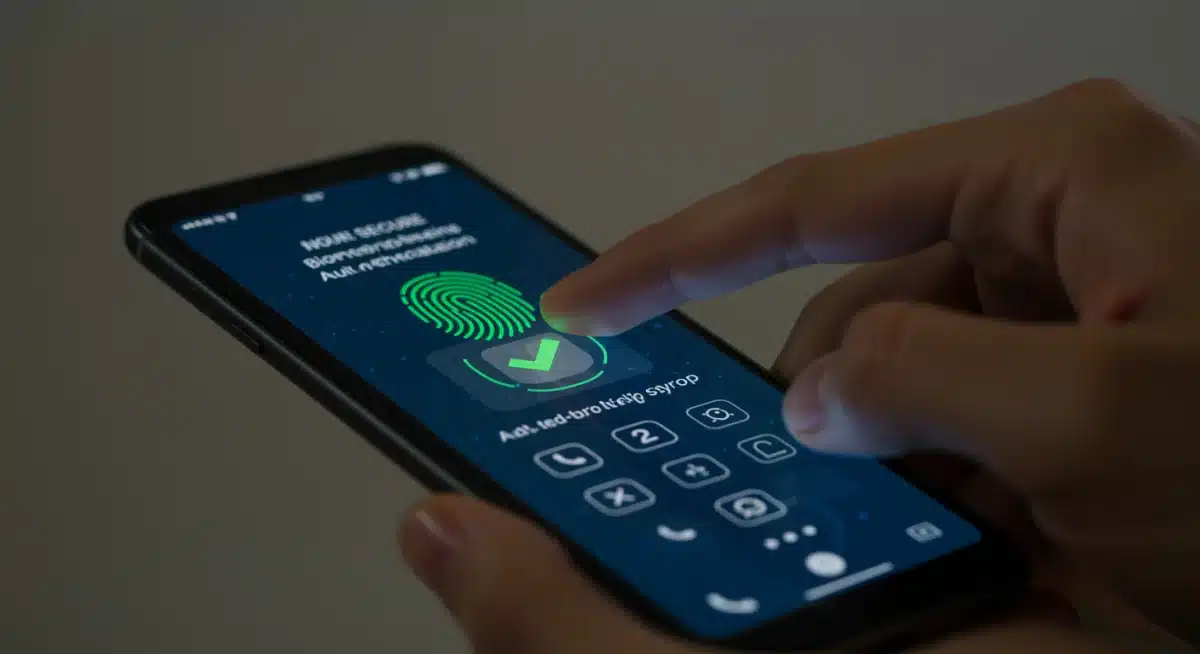
While multi-factor authentication (MFA) is widely recommended, many users still rely on SMS-based codes, which are susceptible to SIM-swapping attacks and other forms of interception. For robust digital identity protection in 2025, it’s imperative to move beyond basic SMS and embrace more advanced MFA methods.
Hardware security keys, such as FIDO2/WebAuthn compliant devices, offer a significantly higher level of security. These physical tokens generate cryptographic keys that are nearly impossible to phish or intercept. Biometric authentication, including fingerprint, facial recognition, and iris scans, also provides a strong layer of defence, leveraging unique biological characteristics for verification.
Implementing Stronger MFA
The choice of advanced MFA depends on the specific use case and the level of security required. However, the general principle remains the same: add multiple, distinct factors of authentication to verify identity, making it much harder for unauthorised users to gain access.
- Hardware Security Keys: Physical devices like YubiKeys provide robust, phishing-resistant authentication. They are ideal for protecting critical accounts.
- Biometric Authentication: Utilise built-in biometrics on devices for convenient and secure access. Ensure these systems are robust against spoofing attempts.
- Authenticator Apps: Time-based One-Time Password (TOTP) apps like Google Authenticator or Authy are more secure than SMS, as codes are generated locally on your device.
By adopting advanced MFA techniques, you create a formidable barrier against account takeovers, significantly strengthening your digital identity protection. It’s a fundamental step that layers multiple forms of verification, ensuring that even if one factor is compromised, others remain secure.
Privacy-Enhancing Technologies (PETs) for Data Minimisation
In an era of pervasive data collection, privacy-enhancing technologies (PETs) are becoming increasingly important for minimising your digital footprint and protecting your identity. PETs are a suite of technologies designed to protect personal data while still allowing for necessary data processing and analysis. They focus on reducing the amount of identifiable information collected, stored, and shared.
Examples include homomorphic encryption, which allows computation on encrypted data without decrypting it, and zero-knowledge proofs, which enable one party to prove that they know a value without revealing any information about the value itself. Differential privacy is another PET that adds noise to datasets to obscure individual data points while still allowing for statistical analysis.
Practical Applications of PETs
While some PETs are complex and primarily used by large organisations, others have direct applications for individual digital identity protection.
- Pseudonymisation: Replacing direct identifiers with artificial identifiers to reduce the linkability of data to an individual.
- Data Masking: Obscuring specific data points to protect sensitive information while maintaining data utility for testing or development.
- Secure Multi-Party Computation (SMC): Allows multiple parties to jointly compute a function over their inputs while keeping those inputs private.
Embracing PETs, both at an individual level through careful data sharing practices and at a systemic level through supporting privacy-conscious services, significantly enhances digital identity protection. These technologies are crucial for navigating a data-driven world without compromising personal privacy or inviting unwarranted scrutiny.
Regular Digital Footprint Audits and De-Googling/De-Facebooking
One of the most potent strategies for digital identity protection is to actively manage and reduce your digital footprint. This involves regularly auditing your online presence and systematically removing unnecessary data from major platforms like Google and Facebook, often referred to as ‘De-Googling’ or ‘De-Facebooking’.
Every interaction online leaves a trace: old accounts, forgotten forum posts, public social media profiles, and data collected by various services. Each piece of information, however innocuous it may seem, can be aggregated by malicious actors to build a comprehensive profile of you, making you vulnerable to identity theft, phishing, and targeted attacks.
Steps for a Comprehensive Digital Audit
Undertaking a thorough audit of your digital footprint requires time and diligence, but the benefits in terms of enhanced privacy and security are substantial.
- Search Yourself: Use various search engines to see what information about you is publicly available.
- Review Social Media: Check privacy settings on all social media platforms. Delete old posts, photos, and accounts you no longer use.
- Account Deletion: Close inactive accounts on websites and services. Use tools like Deseat.me to help find and delete old accounts.
- Data Removal Requests: Exercise your right to request data deletion from companies under regulations like GDPR or CCPA, even if you are not in the EU or California.
By proactively auditing and pruning your digital footprint, you significantly reduce the attack surface for cybercriminals. Less data about you online means fewer opportunities for your identity to be compromised, making this a practical and powerful strategy for effective digital identity protection.
Threat Intelligence Subscription and Dark Web Monitoring
Staying ahead of cyber threats requires more than just reactive security measures; it demands proactive intelligence. Subscribing to reputable threat intelligence services and actively monitoring the dark web for your personal data are advanced strategies for digital identity protection in 2025.
Threat intelligence provides insights into emerging attack trends, vulnerabilities, and the tactics, techniques, and procedures (TTPs) used by cybercriminals. This information allows you to anticipate threats and implement preventative measures before you become a target. Dark web monitoring services, on the other hand, specifically scan illicit marketplaces and forums for any mention of your personal information, such as email addresses, passwords, or credit card numbers.
Leveraging Threat Intelligence for Personal Security
While often associated with corporate security, individuals can also benefit from these advanced tools, albeit often through consumer-focused versions or services.
- Breach Notification Services: Sign up for services like Have I Been Pwned? to be alerted if your email address or password appears in a data breach.
- Reputable Cybersecurity Blogs: Follow leading cybersecurity experts and organisations for updates on new threats and vulnerabilities.
- Identity Theft Protection Services: Many services now include dark web monitoring as part of their offering, proactively alerting you if your data is found.
By actively using threat intelligence and dark web monitoring, you gain an early warning system for potential compromises to your digital identity. This proactive approach allows you to take immediate action, such as changing passwords or cancelling credit cards, significantly mitigating the damage that could result from a data breach or identity theft.
| Key Strategy | Brief Description |
|---|---|
| Decentralised Identity | Empowers users with self-sovereign control over digital credentials via blockchain. |
| AI Threat Detection | Uses AI and behavioural analytics to detect and predict cyber threats proactively. |
| Quantum-Resistant Crypto | Adopting new cryptographic standards secure against future quantum attacks. |
| Advanced MFA | Moving beyond SMS to hardware keys and biometrics for stronger authentication. |
Frequently Asked Questions About Digital Identity Protection
Basic VPNs encrypt your internet connection and mask your IP, but they don’t protect against advanced threats like identity theft, data breaches from compromised services, or sophisticated phishing attacks. Modern protection requires a multi-layered approach.
Decentralised identity (DID) gives you direct control over your digital credentials, using blockchain. Instead of central entities, you decide what personal data to share, minimising your digital footprint and reducing risks associated with centralised data storage.
AI analyses your normal online behaviour to spot unusual patterns indicative of a cyberattack or compromise. It can also predict emerging threats, offering a proactive defence against novel malware and sophisticated hacking attempts that traditional systems might miss.
Yes, while not an immediate threat, quantum computers could eventually break current encryption standards. Adopting quantum-resistant cryptography now is a forward-thinking strategy to ensure your data remains secure in the long term against future technological advancements.
Superior alternatives to SMS include hardware security keys (e.g., FIDO2), trusted authenticator apps (e.g., Authy, Google Authenticator) for time-based one-time passwords, and robust biometric authentication methods like fingerprint or facial recognition.
Conclusion
The digital landscape of 2025 demands a proactive and multi-faceted approach to digital identity protection. Moving beyond the foundational layer of VPNs, incorporating strategies such as decentralised identity, AI-powered threat detection, quantum-resistant cryptography, and advanced MFA is no longer optional but essential. By regularly auditing your digital footprint and leveraging threat intelligence, individuals can create a robust defence against the evolving array of cyber threats. Staying informed and adopting these advanced measures will be critical in safeguarding your digital self in the years to come.