Ransomware 2.0: Double Extortion Tactics & US Company Preparedness by June 2026
In the rapidly evolving landscape of cyber threats, ransomware has long been a notorious adversary. However, the game has changed. We are no longer dealing with the ‘traditional’ ransomware of yesteryear. Welcome to the era of Ransomware 2.0 Tactics, specifically the insidious rise of double extortion. This sophisticated form of cyberattack goes beyond merely encrypting data; it weaponizes the very data it steals, posing a dual threat that can cripple businesses and erode public trust. For US companies, the urgency to adapt and fortify defenses has never been greater. The deadline is looming: June 2026. This article delves deep into understanding these advanced tactics and outlines three immediate, critical steps US companies must take to safeguard their operations and reputation.
The Evolution of Ransomware: From Disruption to Double Extortion
For years, ransomware operated on a relatively straightforward model: compromise a system, encrypt its data, and demand a ransom for the decryption key. The threat was primarily operational disruption. Companies faced a stark choice: pay the ransom and hope for data recovery, or restore from backups and incur significant downtime. While costly, the impact was largely contained to business continuity.
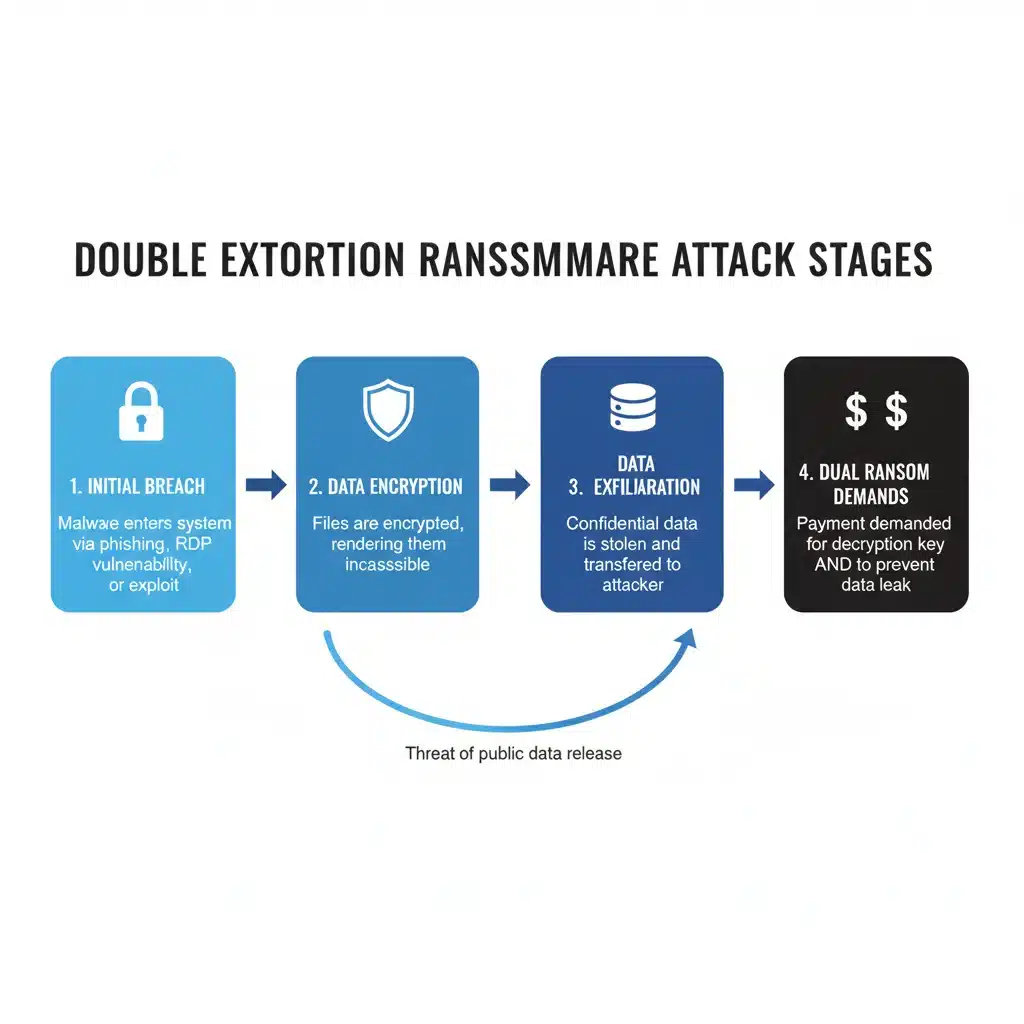
However, cybercriminals are cunning and constantly innovating. They recognized a critical vulnerability: what if a company had robust backups? Their leverage diminished significantly. This realization birthed Ransomware 2.0 Tactics, specifically the “double extortion” model. In this more aggressive approach, attackers not only encrypt a victim’s data but also exfiltrate (steal) a copy of it before encryption. The ransom demand then becomes twofold: one payment for the decryption key and another, often larger, payment to prevent the stolen data from being leaked, sold on the dark web, or used for further malicious activities. This escalation transforms a data availability problem into a severe data privacy and reputation crisis.
The implications of double extortion are far-reaching. Companies now face not only the immediate operational paralysis caused by encrypted systems but also the potential for regulatory fines, legal action from affected individuals, irreparable damage to their brand, and a significant loss of customer trust. The pressure to pay becomes immense, even for organizations with excellent backup strategies, because the threat of public data exposure is often more damaging than system downtime.
Recent high-profile attacks serve as stark reminders of this escalating threat. Industries ranging from healthcare and critical infrastructure to manufacturing and financial services have all fallen victim. The sophistication of these attacks is also increasing, with threat actors employing advanced persistent threat (APT) techniques to gain initial access, move laterally within networks, and remain undetected for extended periods before deploying their malicious payloads. This makes detection and prevention far more challenging than ever before.
Why June 2026 is a Critical Deadline for US Companies
The seemingly arbitrary date of June 2026 is not chosen lightly. It represents a critical window for US companies to proactively strengthen their cybersecurity posture in anticipation of several converging factors:
-
Increased Regulatory Scrutiny and Enforcement: The US government, alongside state-level authorities, is continually enhancing its cybersecurity regulations. New mandates, guidelines, and stricter enforcement mechanisms are expected to be fully solidified and actively enforced by mid-2026. Non-compliance, especially in the wake of a successful double extortion attack, will likely result in severe penalties, including substantial fines and potential legal ramifications for executives. The focus is shifting from ‘best effort’ to demonstrable, effective security controls.
-
Maturation of Threat Actor Capabilities: Cybercriminal groups are becoming increasingly professionalized, often operating like well-funded enterprises. Their tools, techniques, and procedures (TTPs) are constantly evolving. By 2026, it is projected that these groups will have even more sophisticated methods for bypassing traditional defenses, exploiting zero-day vulnerabilities, and executing highly targeted double extortion campaigns. The ‘low-hanging fruit’ will have been picked, leaving more resilient targets to face more advanced adversaries.
-
Supply Chain Vulnerabilities: The interconnectedness of modern business means that a company’s security is only as strong as its weakest link in the supply chain. By 2026, it is anticipated that attackers will further exploit these interdependencies, targeting smaller, less secure vendors to gain access to larger, more lucrative targets. US companies must not only secure their own perimeters but also ensure their entire ecosystem is resilient. This requires due diligence and contractual obligations with third-party partners.
-
Cyber Insurance Market Dynamics: The cyber insurance market is undergoing significant changes. Premiums are rising, coverage is becoming more restrictive, and insurers are demanding higher levels of demonstrable security maturity before issuing policies or paying out claims. By June 2026, companies without robust, independently verifiable cybersecurity programs may find it increasingly difficult or prohibitively expensive to obtain comprehensive cyber insurance, leaving them exposed to catastrophic financial losses in the event of an attack.
-
Geopolitical Tensions and State-Sponsored Attacks: Geopolitical instability often correlates with an increase in state-sponsored cyber espionage and destructive attacks, which can sometimes masquerade as criminal ransomware or directly target critical infrastructure. US companies, particularly those in strategic sectors, must be prepared for an elevated threat landscape where the motivations are not purely financial but also disruptive or intelligence-gathering in nature. The line between cybercrime and state-sponsored activity continues to blur.
Considering these converging factors, June 2026 is not just a timeline; it’s a strategic imperative. Companies that fail to act decisively risk not only financial ruin but also significant reputational damage and potential legal liabilities that could jeopardize their very existence.
3 Immediate Steps US Companies Must Take by June 2026
To effectively counter the growing threat of Ransomware 2.0 Tactics, US companies must implement a multi-faceted and proactive cybersecurity strategy. Here are three immediate and critical steps:
Step 1: Implement a “Zero Trust” Architecture and Robust Multi-Factor Authentication (MFA) Everywhere
The traditional perimeter-based security model is increasingly obsolete against sophisticated attackers who can bypass initial defenses. A Zero Trust architecture operates on the principle of “never trust, always verify.” This means that no user, device, or application is inherently trusted, regardless of whether it’s inside or outside the network perimeter. Every access request is authenticated, authorized, and continuously monitored.
Key Components of Zero Trust Implementation:
-
Strict Identity Verification: Implement strong identity and access management (IAM) controls. This is where Multi-Factor Authentication (MFA) becomes paramount. MFA should be deployed across all critical systems, applications, and user accounts, including administrative accounts, VPNs, cloud services, and even developer tools. Simple passwords are no longer sufficient.
-
Least Privilege Access: Users and systems should only have access to the resources absolutely necessary to perform their legitimate functions. Regularly review and revoke unnecessary privileges. This limits the lateral movement of attackers even if they gain initial access to a user account or endpoint.
-
Micro-segmentation: Divide your network into smaller, isolated segments. This prevents attackers from easily moving from one compromised system to critical assets. If one segment is breached, the damage can be contained, preventing a full-scale network compromise.
-
Continuous Monitoring and Validation: Implement robust logging, monitoring, and security information and event management (SIEM) solutions to detect anomalous behavior in real-time. Any deviation from normal patterns should trigger immediate alerts and investigations. Continuous validation of access policies and system health is crucial.
-
Device Posture Checks: Ensure that all devices attempting to access corporate resources meet specific security requirements (e.g., up-to-date patches, antivirus installed, disk encryption enabled). This reduces the attack surface presented by potentially compromised endpoints.
The adoption of Zero Trust is not a one-time project but an ongoing journey. It requires a fundamental shift in how organizations perceive and manage security, moving away from implicit trust to explicit, continuous verification. By June 2026, US companies should have a mature Zero Trust framework in place, with MFA universally deployed, to significantly mitigate the risk of unauthorized access and lateral movement by ransomware actors.
Step 2: Develop and Test a Comprehensive Incident Response Plan with a Focus on Data Exfiltration
Even with the strongest preventative measures, a breach is always a possibility. The key differentiator between a minor incident and a catastrophic one often lies in the effectiveness of the incident response. For Ransomware 2.0 Tactics, this plan must explicitly address data exfiltration, not just data encryption.
Essential Elements of an Exfiltration-Focused Incident Response Plan:
-
Clear Roles and Responsibilities: Define who is responsible for what during an incident, from initial detection to recovery and post-mortem analysis. Include legal, HR, communications, IT, and executive leadership.
-
Detection and Containment Strategies for Data Theft: Implement technologies and processes specifically designed to detect suspicious outbound data transfers. This includes Data Loss Prevention (DLP) solutions, network traffic analysis, and endpoint detection and response (EDR) tools. The plan should detail immediate steps to contain any suspected data exfiltration, such as isolating compromised systems or blocking suspicious network connections.
-
Secure, Immutable Backups and Recovery Procedures: While backups are crucial for data recovery from encryption, they also serve as a clean source if data exfiltration occurs. Ensure backups are air-gapped or immutable, meaning they cannot be altered or deleted by attackers. Regularly test recovery procedures to ensure data integrity and minimize recovery time objectives (RTOs) and recovery point objectives (RPOs).
-
Communication Protocol for Data Breach: Develop pre-approved communication templates for various stakeholders: employees, customers, regulators, and the public. This includes legal counsel review for compliance with data breach notification laws (e.g., CCPA, GDPR if applicable, state-specific regulations). Transparency and speed are critical in mitigating reputational damage.
-
Regular Tabletop Exercises and Simulations: An incident response plan is only as good as its last test. Conduct regular tabletop exercises with all relevant teams to simulate various ransomware scenarios, including double extortion. These exercises help identify gaps in the plan, train personnel, and ensure everyone understands their role under pressure. Post-exercise debriefs are crucial for continuous improvement.
-
Engagement with External Experts: Establish relationships with third-party incident response firms, legal counsel specializing in cyber law, and forensic investigators *before* an incident occurs. Having these partners on retainer can significantly expedite response and recovery efforts when time is of the essence.
By June 2026, US companies must have a living, breathing incident response plan that has been thoroughly tested and refined. This plan should specifically address the dual nature of double extortion, ensuring that both data encryption and data exfiltration are handled with equal urgency and appropriate strategies.
Step 3: Invest in Continuous Security Awareness Training and Human-Centric Security Measures
Technology alone cannot solve the ransomware problem. The human element remains the weakest link in many organizations’ security chains. Phishing, social engineering, and lax security practices are often the initial vectors for ransomware attacks. Empowering employees to be the first line of defense is crucial.
Components of an Effective Human-Centric Security Program:
-
Regular, Engaging Security Awareness Training: Move beyond annual, generic training modules. Implement continuous, interactive, and relevant training programs that cover the latest threat vectors, particularly sophisticated phishing, vishing (voice phishing), smishing (SMS phishing), and social engineering tactics used in initial access for Ransomware 2.0 Tactics. Use real-world examples and make the training relatable to employees’ daily tasks.
-
Simulated Phishing Campaigns: Regularly conduct simulated phishing and social engineering tests to gauge employee susceptibility and reinforce training. Provide immediate, constructive feedback to those who fall for the simulations, turning a “fail” into a learning opportunity. Track progress over time to demonstrate improvement.
-
Reporting Mechanisms and Positive Reinforcement: Establish clear and easy-to-use channels for employees to report suspicious emails or activities without fear of reprisal. Encourage a culture where reporting is seen as a positive contribution to the company’s security. Consider gamification or rewards for vigilant employees.
-
Strong Password Policies and Password Managers: Enforce the use of strong, unique passwords for all accounts. Encourage and provide enterprise-grade password managers to employees to help them manage complex credentials securely. Combine this with the universal MFA implementation from Step 1.
-
Executive Buy-in and Leadership by Example: Cybersecurity must be a top-down priority. Executives and senior management must actively participate in security awareness programs and demonstrate a commitment to security best practices. Their visible support reinforces the importance of security throughout the organization.
-
Role-Specific Training: Tailor training to different roles within the organization. For example, IT staff require more technical training on secure configurations and threat hunting, while finance personnel need specific training on invoice fraud and business email compromise (BEC) schemes that often precede ransomware.
By June 2026, US companies should have cultivated a strong security-aware culture where every employee understands their role in protecting the organization. This human firewall, coupled with robust technical controls, creates a formidable defense against even the most advanced Ransomware 2.0 Tactics.

Beyond the Three Steps: A Holistic Approach
While the three steps outlined above are critical and immediate priorities, a truly resilient defense against Ransomware 2.0 Tactics requires a more holistic and continuous approach. Here are additional considerations that US companies should integrate into their long-term cybersecurity strategy:
-
Regular Vulnerability Management and Patching: Actively scan for vulnerabilities in your systems and applications and implement a rigorous patching schedule. Unpatched systems are often the easiest entry points for ransomware actors.
-
Endpoint Detection and Response (EDR) / Extended Detection and Response (XDR): Deploy advanced EDR or XDR solutions that provide real-time visibility into endpoint activities, detect sophisticated threats, and enable rapid response capabilities.
-
Network Segmentation and "Air Gaps": Beyond micro-segmentation, consider physically or logically separating critical operational technology (OT) networks from IT networks, or creating “air-gapped” environments for highly sensitive data or backup systems.
-
Threat Intelligence Integration: Subscribe to and integrate relevant threat intelligence feeds to stay informed about the latest ransomware groups, their TTPs, and indicators of compromise (IOCs). This proactive approach allows for better anticipation and prevention.
-
Data Governance and Classification: Understand what data you have, where it resides, and its sensitivity. Classify data to apply appropriate security controls. This is crucial for prioritizing protection efforts and for responding effectively in case of data exfiltration.
-
Supply Chain Risk Management: Conduct thorough cybersecurity assessments of your third-party vendors and suppliers. Implement contractual clauses that mandate certain security standards and incident notification protocols.
-
Legal and Regulatory Compliance: Stay abreast of evolving data privacy and cybersecurity regulations. Ensure your security programs are aligned with frameworks like NIST, ISO 27001, and industry-specific mandates.
-
Proactive Threat Hunting: Go beyond automated detection. Employ skilled security analysts to actively hunt for hidden threats within your network, looking for subtle signs of compromise that automated tools might miss.
-
Cyber Insurance Review: Regularly review your cyber insurance policies to ensure adequate coverage for both data encryption and exfiltration events, business interruption, and legal costs. Understand the policy’s requirements for security controls.
-
Collaboration and Information Sharing: Participate in industry-specific information sharing and analysis centers (ISACs) or other threat intelligence-sharing initiatives. Learning from the experiences of others can provide invaluable insights.
Conclusion: The Imperative of Proactive Defense
The threat posed by Ransomware 2.0 Tactics and double extortion is existential for many US companies. The days of reactive cybersecurity are over. The June 2026 deadline is not merely a suggestion; it is a critical benchmark for companies to demonstrate a mature and resilient cybersecurity posture. By aggressively implementing Zero Trust, developing and testing robust incident response plans focused on data exfiltration, and fostering a pervasive culture of security awareness, US businesses can significantly reduce their attack surface and enhance their ability to withstand and recover from these advanced cyber threats.
The investment in cybersecurity is no longer an optional expense but a fundamental cost of doing business in the digital age. Failure to prioritize these measures will not only expose companies to financial losses and reputational damage but could also lead to severe regulatory penalties and a loss of competitive advantage. The time to act is now, to ensure a secure and resilient future for US enterprises.