APTs: New Detection for US Enterprises in 12 Months

US enterprises face evolving advanced persistent threats (APTs); implementing three new detection techniques—AI-driven behavioral analytics, deception technology, and supply chain integrity monitoring—is crucial for robust cybersecurity within the next 12 months.
In the ever-evolving landscape of cyber warfare, Advanced Persistent Threats (APTs) continue to pose an existential risk to US enterprises. These sophisticated, stealthy attacks demand a proactive and innovative defence. This article delves into three crucial, cutting-edge detection techniques that US organisations must adopt within the next year to stay ahead of these relentless adversaries.
The Evolving Threat Landscape of APTs
Advanced Persistent Threats are no longer the exclusive domain of state-sponsored actors; they are becoming increasingly accessible and complex, targeting critical infrastructure, sensitive data, and intellectual property across US enterprises. The sheer ingenuity of these attacks means traditional perimeter defences are often insufficient, necessitating a paradigm shift in detection strategies.
These threats are characterised by their prolonged presence within a network, their ability to adapt to security measures, and their ultimate goal of exfiltrating data or causing significant disruption. The financial and reputational costs associated with an APT breach can be catastrophic, underscoring the urgent need for enhanced detection capabilities.
Understanding the Adversary’s Motivations
- Espionage: Stealing sensitive government or corporate information.
- Financial Gain: Exfiltrating financial data or intellectual property for profit.
- Sabotage: Disrupting critical services or infrastructure.
- Reputation Damage: Undermining public trust in an organisation.
The motivations behind APTs are diverse, ranging from geopolitical objectives to corporate espionage. Each motive informs the attacker’s tactics, techniques, and procedures (TTPs), making a nuanced understanding of these drivers essential for effective defence. Traditional signature-based detection often fails against APTs because they constantly evolve their attack methods, exhibiting polymorphic behaviour to evade detection.
As APT groups refine their methods, US enterprises must move beyond reactive security postures. The shift towards proactive threat hunting and advanced analytical techniques is no longer a luxury but a fundamental requirement for survival in the current cybersecurity climate. This section has highlighted the critical need for new approaches, setting the stage for the specific techniques that will offer a robust defence.
AI-Driven Behavioural Analytics for Anomaly Detection
The first imperative for US enterprises is the widespread adoption of AI-driven behavioural analytics. This technique moves beyond static signature matching by establishing a baseline of normal network and user behaviour, then flagging deviations that could indicate an APT. It’s about understanding the ‘how’ and ‘why’ of network activities, rather than just the ‘what’.
Traditional security tools often generate an overwhelming number of alerts, many of which are false positives, leading to alert fatigue for security teams. AI-driven analytics, powered by machine learning, can sift through vast quantities of data, identifying subtle anomalies that human analysts might miss, thereby significantly reducing noise and improving the signal-to-noise ratio.
Leveraging Machine Learning for Predictive Insights
- User and Entity Behaviour Analytics (UEBA): Monitors user accounts, endpoints, and applications for suspicious activities.
- Network Traffic Analysis (NTA): Detects unusual data flows, command-and-control communications, or data exfiltration attempts.
- Predictive Modelling: Uses historical data to anticipate potential attack vectors and vulnerabilities before they are exploited.
The strength of AI lies in its ability to learn and adapt. As APTs evolve their TTPs, AI models can be continuously updated to recognise new patterns of attack, offering a dynamic defence that keeps pace with the adversaries. This adaptive capability is vital for detecting the stealthy, low-and-slow movements characteristic of APTs, which often operate below the threshold of traditional security tools for extended periods.
Implementing AI-driven behavioural analytics requires significant investment in data infrastructure and skilled personnel to manage and fine-tune the models. However, the long-term benefits in terms of early detection and reduced breach impact far outweigh these initial costs. This technique is poised to become the cornerstone of next-generation APT detection for US businesses.
Deception Technology and Honeypots
Deception technology, often involving honeypots and honeynets, represents a strategic shift from passive defence to active engagement. Instead of merely blocking attacks, this approach aims to lure adversaries into controlled environments, allowing security teams to observe their TTPs, gather intelligence, and ultimately disrupt their operations without risk to actual production systems.
By deploying convincing decoys—fake systems, data, and credentials—enterprises can create an alluring trap for APT actors. Once an attacker interacts with a decoy, their every move is monitored, providing invaluable insights into their tools, methods, and objectives. This intelligence can then be used to fortify real systems and develop more effective countermeasures.
Creating a Decoy Environment
- High-Interaction Honeypots: Mimic real production systems to engage attackers for extended periods.
- Low-Interaction Honeypots: Simulate basic services to detect initial reconnaissance efforts.
- Deception Tokens: Embed fake credentials or data files that, when accessed, trigger an alert.
The beauty of deception technology lies in its ability to generate high-fidelity alerts. Any interaction with a decoy system is, by definition, suspicious, as legitimate users should have no reason to access them. This significantly reduces false positives, allowing security teams to focus on genuine threats with a high degree of confidence.
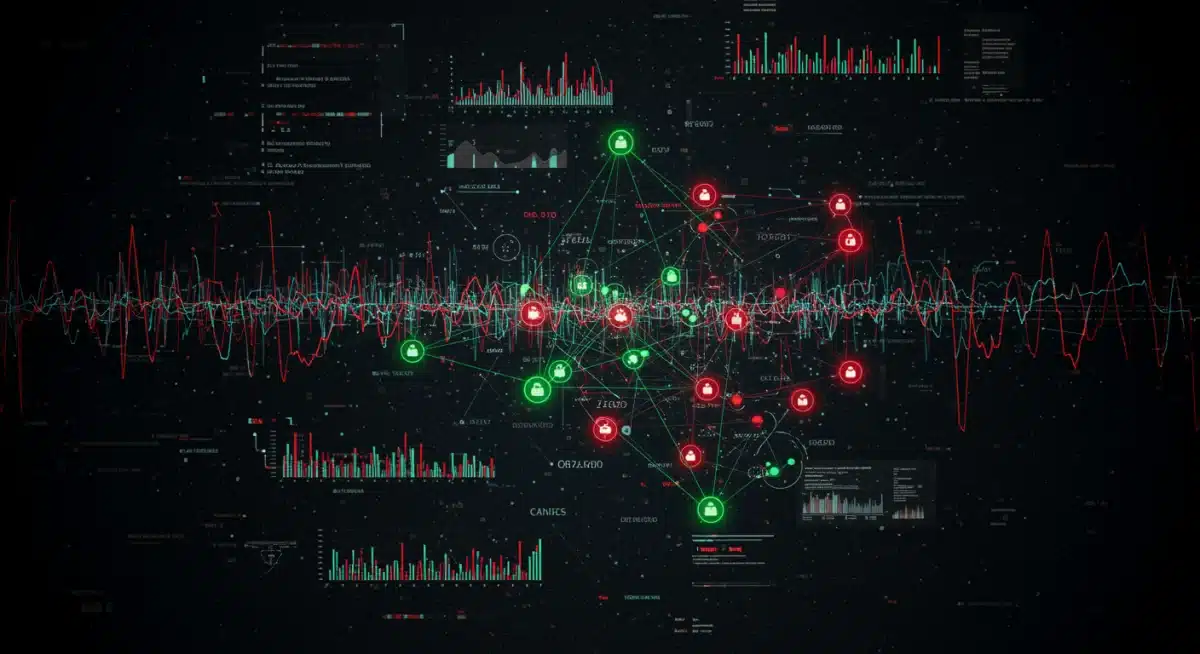
Furthermore, observing APT actors in a controlled environment provides a unique opportunity for threat intelligence gathering. Security analysts can learn about new zero-day exploits, custom malware, and novel evasion techniques used by adversaries. This insider knowledge is critical for adapting defence strategies and sharing intelligence across the cybersecurity community.
For US enterprises, integrating deception technology should be a priority. It offers a powerful, proactive layer of defence that complements traditional security controls, turning the tables on attackers by using their own stealth and persistence against them. This technique offers a unique advantage in understanding and neutralising APTs.
Supply Chain Integrity Monitoring and Zero Trust
The third critical area for enhanced APT detection in US enterprises is robust supply chain integrity monitoring, coupled with a comprehensive zero-trust architecture. APT actors are increasingly exploiting vulnerabilities in software supply chains, introducing malicious code at various stages of development or distribution, making detection extremely challenging.
A single compromised component or third-party vendor can serve as a backdoor into an organisation’s network, bypassing even the most sophisticated perimeter defences. Therefore, a holistic approach that scrutinises every link in the supply chain is paramount. This extends beyond software to hardware components, cloud services, and managed service providers.
Key Pillars of Supply Chain Security
- Software Bill of Materials (SBOM): Maintaining a complete and accurate inventory of all software components, including open-source libraries.
- Vendor Risk Management: Rigorous assessment and continuous monitoring of third-party security postures.
- Code Signing and Verification: Ensuring the authenticity and integrity of all software throughout its lifecycle.
Complementing supply chain integrity is the principle of zero trust. This security model dictates that no user, device, or application, whether inside or outside the network perimeter, should be implicitly trusted. Every access request is verified based on identity, context, and risk, regardless of its origin.
Implementing zero trust effectively means micro-segmentation of networks, strong multi-factor authentication, and continuous monitoring of all network activity. For APT detection, zero trust limits the lateral movement of an attacker even if they manage to breach an initial defence, containing the threat and buying crucial time for detection and response.
The combination of meticulous supply chain monitoring and a pervasive zero-trust framework creates a formidable barrier against APTs that seek to exploit trusted relationships. US enterprises must recognise that their attack surface extends far beyond their immediate network boundaries and act accordingly to secure these vital connections.
Integrating Threat Intelligence and Collaborative Defence
Effective APT detection is not solely about deploying advanced technologies; it also heavily relies on timely and actionable threat intelligence, coupled with a collaborative defence strategy. Sharing information about emerging APT TTPs, indicators of compromise (IoCs), and defensive strategies among US enterprises, government agencies, and cybersecurity vendors creates a collective shield against these sophisticated adversaries.
Threat intelligence feeds, whether open-source or commercial, provide crucial context about active campaigns, known vulnerabilities, and attacker profiles. Integrating this intelligence into existing security information and event management (SIEM) systems and security orchestration, automation, and response (SOAR) platforms allows for proactive threat hunting and rapid incident response.
The Benefits of Shared Intelligence
- Early Warning: Receiving alerts about threats targeting similar industries or technologies.
- Enhanced Context: Understanding the broader motivations and capabilities of APT groups.
- Faster Response: Leveraging pre-defined playbooks based on shared experiences to mitigate attacks quickly.
Beyond technical feeds, fostering a culture of collaboration is paramount. Industry-specific information sharing and analysis centres (ISACs) and government-led initiatives provide platforms for secure information exchange. This collective knowledge empowers individual organisations to anticipate attacks and strengthen their defences based on the experiences of others.
The siloed approach to cybersecurity is a weakness that APT actors readily exploit. By breaking down these silos and embracing a collaborative defence posture, US enterprises can collectively raise the bar for entry for APT groups, making it significantly harder for them to achieve their objectives. This integration of intelligence and cooperation is a force multiplier in the fight against advanced threats.
Overcoming Implementation Challenges and Future Outlook
While the described detection techniques offer immense potential, their successful implementation within US enterprises is not without challenges. These include the significant investment required in technology and talent, the complexity of integrating new systems with legacy infrastructure, and the ongoing need for skilled cybersecurity professionals to manage and interpret the data generated.
Organisations must develop a clear roadmap for adoption, prioritising techniques based on their specific risk profile and existing security maturity. Training and upskilling internal teams will be crucial, as will considering partnerships with specialised cybersecurity firms to bridge knowledge gaps and accelerate deployment.
Addressing Common Hurdles
- Talent Gap: Shortage of skilled cybersecurity professionals to manage advanced tools.
- Budget Constraints: High costs associated with cutting-edge technology and infrastructure.
- Integration Complexity: Ensuring seamless operation with existing security ecosystems.
Looking ahead, the landscape of APT detection will continue to evolve rapidly. Quantum computing, while still nascent, poses both a threat to current encryption standards and a potential future tool for even more sophisticated anomaly detection. Furthermore, the increasing reliance on cloud infrastructure will necessitate cloud-native detection solutions that can seamlessly integrate with distributed environments.
US enterprises must remain agile, continuously evaluating new technologies and adapting their strategies to stay ahead of the curve. The battle against APTs is a continuous one, demanding persistent innovation and a commitment to robust cybersecurity practices. The next 12 months will be critical in solidifying these advanced detection capabilities.
| Key Technique | Brief Description |
|---|---|
| AI-Driven Behavioural Analytics | Establishes normal network behaviour baselines and flags subtle deviations indicative of APTs using machine learning. |
| Deception Technology | Lures attackers into controlled decoy environments (honeypots) to observe TTPs and gather intelligence without risk. |
| Supply Chain Integrity & Zero Trust | Monitors third-party components and enforces strict access verification to prevent and contain supply chain attacks. |
Frequently Asked Questions About APT Detection
An APT is characterised by its highly targeted nature, prolonged presence within a network, and advanced stealth techniques. Unlike typical cyber attacks that aim for quick gains, APTs are designed for persistent access to exfiltrate data or cause long-term disruption, often by sophisticated, well-resourced adversaries.
Traditional antivirus relies heavily on signature-based detection, which is ineffective against APTs that use novel malware, zero-day exploits, and constantly adapt their attack methods. APTs are designed to evade these static defences, requiring more dynamic and behavioural analysis tools to identify their presence.
AI-driven behavioural analytics establishes a baseline of normal network and user activities. It then uses machine learning to identify subtle, anomalous deviations from this norm, which often indicate an APT. This approach can detect unknown threats and sophisticated evasion tactics that signature-based tools miss.
Deception technology, like honeypots, actively lures APT attackers into controlled, fake environments. This allows security teams to observe their tactics, tools, and procedures without risking real systems. It provides invaluable threat intelligence and generates high-fidelity alerts, reducing false positives and improving response.
APT actors frequently exploit vulnerabilities in the supply chain to gain initial access to target organisations. By compromising a software component or a third-party vendor, they can bypass direct defences. Robust supply chain integrity monitoring, combined with zero trust, closes these critical attack vectors for US enterprises.
Conclusion
The battle against Advanced Persistent Threats (APTs) is a perpetual arms race, demanding continuous innovation and adaptation from US enterprises. The implementation of AI-driven behavioural analytics, strategic deception technology, and comprehensive supply chain integrity monitoring, underpinned by a zero-trust philosophy, is not merely a recommendation but an urgent imperative for the next 12 months. By embracing these advanced detection techniques, organisations can significantly enhance their resilience, protect critical assets, and ensure the continuity of their operations in an increasingly hostile digital landscape. Proactive defence, informed by intelligent systems and collaborative insights, will be the hallmark of successful cybersecurity strategies moving forward.