CCPA vs CPRA: Key Differences & 2026 Consumer Rights Updates
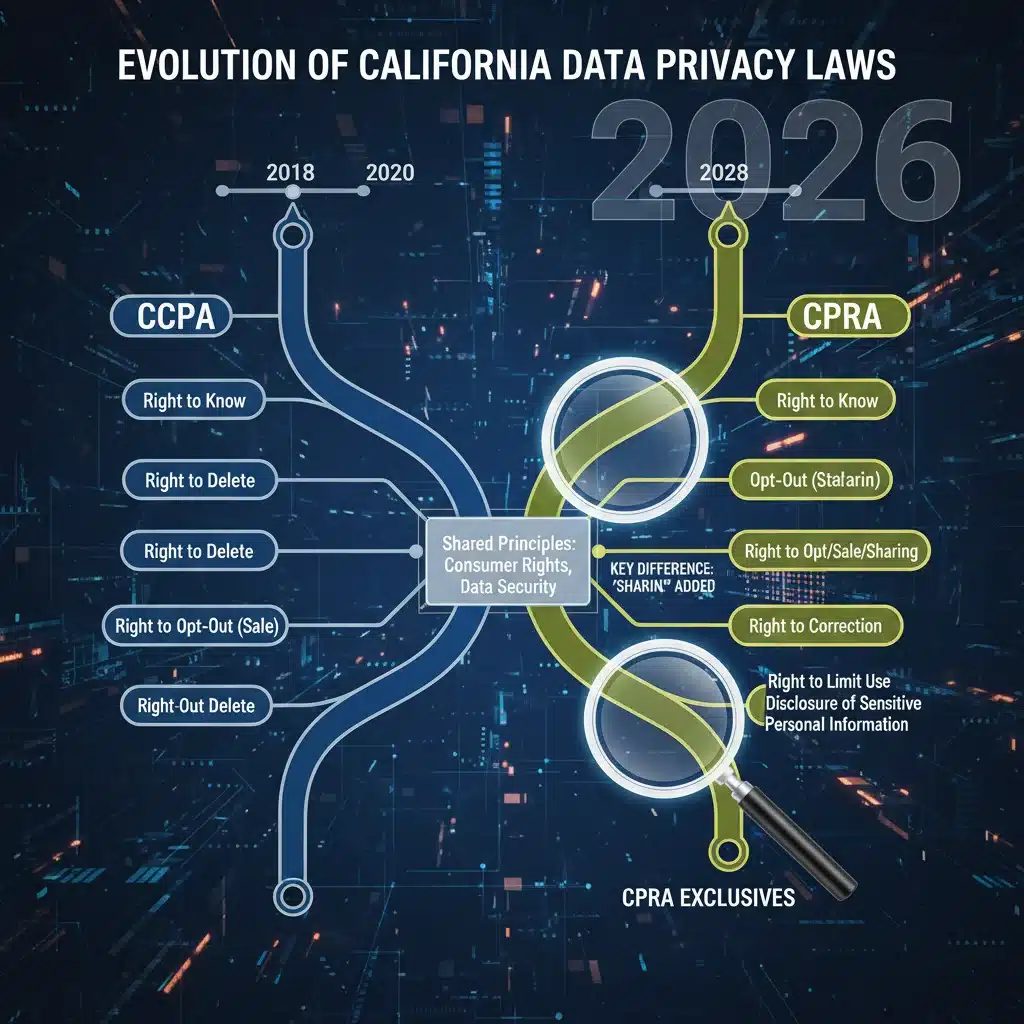
In the rapidly evolving landscape of data privacy, understanding your rights as a consumer is more critical than ever. For residents of the United States, particularly California, the acronyms CCPA and CPRA have become central to discussions about personal data protection. While the California Consumer Privacy Act (CCPA) laid foundational rights, the California Privacy Rights Act (CPRA) significantly expanded upon them, ushering in a new era of data governance.
As we approach 2026, the full implications of these legislative changes are becoming clearer, impacting not just businesses but every individual whose data is collected, processed, or shared. This comprehensive guide will dissect the CCPA CPRA Differences, highlighting the six most crucial distinctions US consumers need to grasp. We’ll delve into the nuances of these laws, examine recent updates, and equip you with the knowledge to navigate your data privacy rights effectively.
Unpacking the Evolution of US Data Privacy: From CCPA to CPRA
The journey of data privacy in the US has been a dynamic one, with California often leading the charge. The California Consumer Privacy Act (CCPA), enacted in 2018 and effective from January 1, 2020, was a landmark piece of legislation. It granted California consumers unprecedented control over their personal information, drawing parallels to Europe’s General Data Protection Regulation (GDPR). However, the digital landscape continued to shift, and with it, the need for more robust protections became evident.
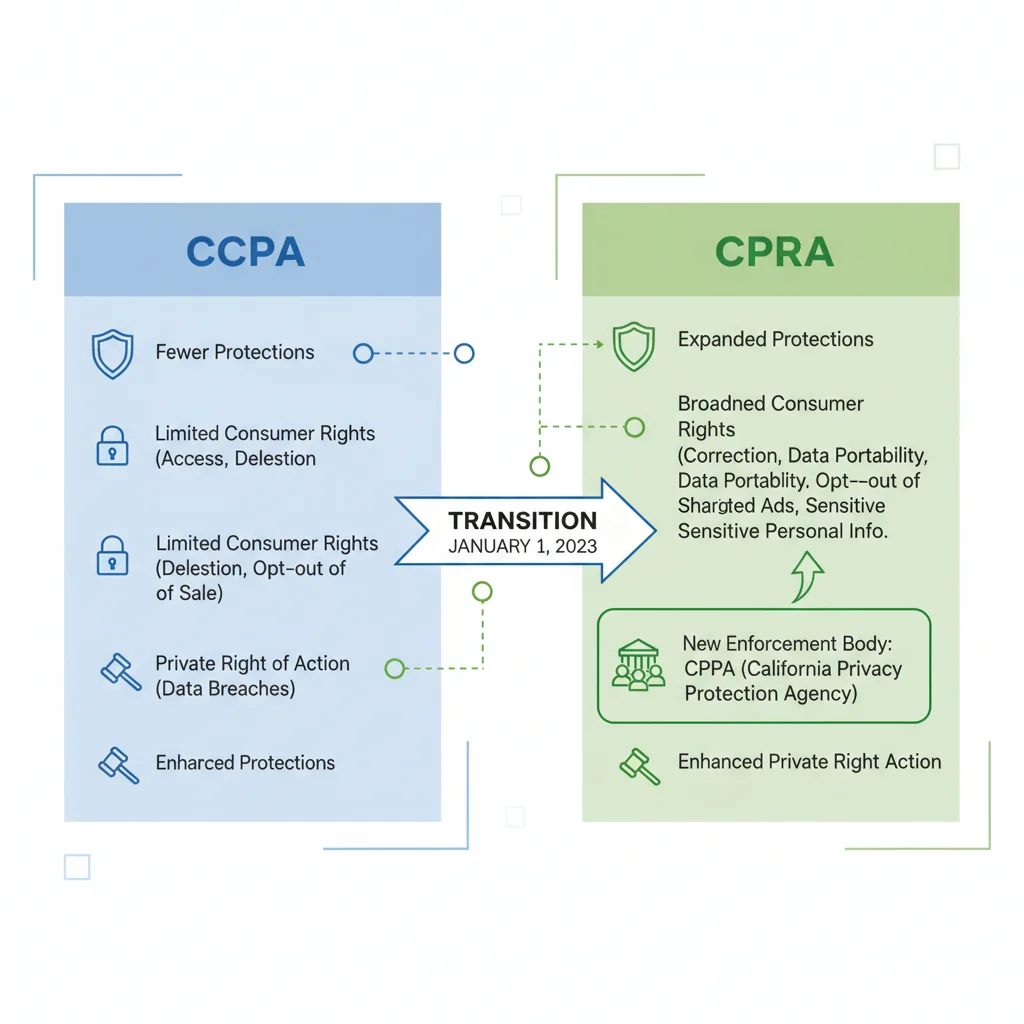
This need gave rise to the California Privacy Rights Act (CPRA), approved by voters in November 2020 and largely effective from January 1, 2023, with enforcement beginning July 1, 2023. The CPRA didn’t replace the CCPA entirely; rather, it amended and expanded it, creating a more comprehensive and stringent framework for data privacy. The full operationalisation of some aspects, and the ongoing evolution of regulatory guidance, means that understanding the CCPA CPRA Differences remains paramount, especially as we look towards how these laws will be applied and enforced through 2026 and beyond.
For US consumers, these legislative acts represent a significant shift in power dynamics, empowering individuals to demand transparency and control from the companies that handle their data. Businesses, in turn, face heightened responsibilities and stricter compliance obligations. Ignoring these differences can lead to severe penalties and reputational damage. Therefore, a clear understanding of the CCPA CPRA Differences is not just for legal professionals or businesses; it’s essential knowledge for every consumer in the digital age.
6 Key CCPA CPRA Differences US Consumers Need to Understand for 2026
While both the CCPA and CPRA aim to protect consumer privacy, the CPRA introduces several significant enhancements and modifications. Here are the six most critical distinctions that US consumers, particularly those in California, should be aware of as we head towards 2026 and beyond, ensuring they can fully exercise their data rights.
1. The Creation of the California Privacy Protection Agency (CPPA)
One of the most transformative CCPA CPRA Differences is the establishment of the California Privacy Protection Agency (CPPA). Under the CCPA, enforcement was primarily handled by the California Attorney General, who was also responsible for issuing regulations. This dual role often led to resource constraints and potential conflicts of interest.
The CPRA addresses this by creating the CPPA as an independent regulatory body. This agency is endowed with full administrative power, authority, and jurisdiction to implement and enforce the CPRA. Its responsibilities include:
- Issuing new regulations and updating existing ones.
- Investigating potential violations.
- Levying fines and penalties.
- Providing guidance to businesses and consumers.
What does this mean for consumers? It signifies a more robust and dedicated enforcement mechanism. The CPPA’s sole focus on privacy protection ensures that consumer complaints are addressed more efficiently and that businesses are held to a higher standard of accountability. This independence is a game-changer, promising more proactive enforcement and clearer guidance on consumer rights, solidifying the importance of understanding the CCPA CPRA Differences.
2. Expansion of “Personal Information” to Include “Sensitive Personal Information”
The CCPA defined “personal information” broadly, encompassing anything that identifies, relates to, describes, is reasonably capable of being associated with, or could reasonably be linked, directly or indirectly, with a particular consumer or household. The CPRA retains this definition but introduces a new, more protected category: “Sensitive Personal Information” (SPI).
SPI includes data such as:
- Social Security numbers, driver’s license numbers, passport numbers.
- Account log-in, financial account, debit card, or credit card numbers in combination with any required security or access code, password, or credentials allowing access to an account.
- Precise geolocation.
- Racial or ethnic origin, religious or philosophical beliefs, or union membership.
- Contents of a consumer’s mail, email, and text messages (unless the business is the intended recipient).
- Genetic data.
- Biometric information processed for the purpose of uniquely identifying a consumer.
- Health information.
- Information concerning a consumer’s sex life or sexual orientation.
This is a critical CCPA CPRA Differences because it grants consumers additional rights regarding their SPI. Consumers now have the right to limit the use and disclosure of their SPI for purposes other than those necessary to provide the goods or services requested. Businesses must provide clear mechanisms for consumers to exercise this right. This distinction elevates the protection of certain data types, acknowledging their potential for greater harm if misused.
3. New Consumer Right: The Right to Correct Inaccurate Personal Information
Under the CCPA, consumers had several key rights, including the right to know, the right to delete, and the right to opt-out of the sale of their personal information. The CPRA significantly enhances these by adding a new, crucial right: the right to correct inaccurate personal information.
This new right empowers consumers to request that businesses correct any inaccurate personal information they hold about them. Businesses are then obligated to use commercially reasonable efforts to correct the inaccurate personal information as directed by the consumer. This is a vital step towards ensuring data accuracy and integrity, which was a notable gap in the original CCPA framework. The right to correct gives consumers more active control over the quality of their data, reducing the risk of decisions being made about them based on incorrect information. This is a highly impactful CCPA CPRA Differences for individual data management.

4. Expanded Right to Opt-Out: “Sharing” and Limiting Use of Sensitive Personal Information
The CCPA introduced the right for consumers to opt-out of the “sale” of their personal information. The CPRA broadens this significantly by introducing the concept of “sharing” and the right to limit the use and disclosure of sensitive personal information.
- Right to Opt-Out of “Sharing”: The CPRA defines “sharing” as disclosing personal information to a third party for cross-context behavioral advertising, whether or not for monetary or other valuable consideration. This means that even if data isn’t explicitly sold for money, but is used for targeted advertising across different websites or services, consumers can opt-out. This closes a loophole where businesses could share data for advertising purposes without it being considered a “sale” under CCPA.
- Right to Limit Use and Disclosure of SPI: As mentioned, consumers now have the specific right to limit the use and disclosure of their sensitive personal information for purposes other than those necessary to perform the services or provide the goods reasonably expected by an average consumer. This provides a more granular control over the most sensitive types of data.
These expanded opt-out rights represent a substantial CCPA CPRA Differences, giving consumers more power to control how their data is used for advertising and other secondary purposes, moving beyond just monetary transactions.
5. Changes to the Definition of “Business” Subject to the Law
The CCPA applied to for-profit businesses that:
- Have annual gross revenues in excess of $25 million.
- Annually buy, receive for commercial purposes, sell, or share for commercial purposes, alone or in combination, the personal information of 50,000 or more California consumers, households, or devices.
- Derive 50% or more of their annual revenues from selling consumers’ personal information.
The CPRA modifies these thresholds, making them more stringent and expanding the scope to potentially include more businesses:
- The annual gross revenues threshold remains at $25 million.
- The threshold for processing consumer data is increased to 100,000 or more California consumers or households (up from 50,000 consumers, households, or devices). This change focuses on individuals and households, rather than including devices, which was sometimes ambiguous.
- The CPRA adds a new criterion: a business that derives 50% or more of its annual revenues from sharing consumers’ personal information. This aligns with the expanded definition of “sharing” for cross-context behavioral advertising.
This is a crucial CCPA CPRA Differences for businesses, as it might bring previously exempt entities under the CPRA’s purview. Consumers should also be aware that more businesses might now be subject to these privacy obligations, meaning their rights apply to a broader range of companies.
6. Introduction of Data Retention Limits and Purpose Limitation
While the CCPA implicitly encouraged data minimization, the CPRA explicitly introduces requirements for data retention limits and purpose limitation. This is a significant CCPA CPRA Differences that directly impacts how long businesses can hold onto your data and for what reasons.
The CPRA mandates that businesses:
- Collect personal information only for disclosed purposes.
- Not retain personal information for longer than is reasonably necessary for the disclosed purpose for which it was collected.
This means businesses must now implement clear data retention policies and inform consumers about how long their data will be kept. This prevents companies from indefinitely storing personal information “just in case” they might need it later. For consumers, this enhances privacy by reducing the risk of long-term data exposure and misuse, ensuring their data is only used for legitimate, stated purposes. It’s a proactive measure to limit the lifespan of personal data in corporate systems.
Recent Updates and What to Expect by 2026
The CPRA became largely effective on January 1, 2023, with enforcement by the CPPA commencing on July 1, 2023. However, the regulatory landscape is continuously evolving. The CPPA has been actively involved in rulemaking, issuing draft regulations and holding public hearings to refine and clarify various aspects of the law. These ongoing developments are crucial for understanding the full scope of CCPA CPRA Differences.
Key areas of recent focus and expected developments by 2026 include:
- Further Clarification on SPI Use: The CPPA is expected to provide more detailed guidance on what constitutes “necessary” use of Sensitive Personal Information and how businesses must implement the right to limit its use and disclosure. This will be vital for consumers to understand the boundaries of their control over their most sensitive data.
- Global Privacy Control (GPC) Enforcement: The CPPA has reaffirmed that businesses must honour Global Privacy Control (GPC) signals as a valid request to opt-out of the sale or sharing of personal information. Expect increased enforcement in this area, making it easier for consumers to universally express their privacy preferences.
- Contractual Obligations for Service Providers and Third Parties: The CPRA places stricter requirements on contracts between businesses and their service providers or third parties who receive personal information. These contracts must now include specific provisions to ensure the data is protected and used only for defined purposes. This provides an additional layer of security for consumer data, even when it leaves the direct control of the original business.
- Annual Audits and Risk Assessments: The CPRA introduces requirements for businesses whose processing of personal information presents a significant risk to consumer privacy or security to conduct annual cybersecurity audits and regular risk assessments. This proactive approach aims to prevent data breaches and privacy violations, directly benefiting consumers.
- Expansion to Employee Data: A significant update, which became fully effective in January 2023, is the extension of CPRA rights to employee, job applicant, and business-to-business (B2B) contact data. While not a direct consumer right in the traditional sense, it signifies a broader application of privacy principles across personal data types, impacting individuals in various capacities.
By 2026, the CPPA is anticipated to have a mature regulatory framework and a track record of enforcement actions. This will lead to a clearer understanding of best practices for businesses and more consistent protection for consumers. Staying informed about these updates is crucial for both parties to truly grasp the implications of the CCPA CPRA Differences and the evolving privacy landscape.
What These CCPA CPRA Differences Mean for US Consumers
The transition from CCPA to CPRA, with its ongoing refinements and enforcement by the CPPA, brings substantial implications for US consumers. Understanding these implications is key to leveraging your rights effectively.
Increased Control Over Your Data: The CPRA significantly enhances your ability to control your personal information. From the right to correct inaccuracies to the expanded opt-out rights for sharing and sensitive personal information, you have more levers to pull. This means less passive acceptance of how companies use your data and more active participation in its management.
Better Protection for Sensitive Information: The introduction of “Sensitive Personal Information” and specific rights associated with it offers a higher level of protection for data that, if misused, could lead to significant harm. This includes financial details, health information, and precise geolocation data, which are often targets for malicious actors or intrusive advertising.
More Robust Enforcement: The independent CPPA means that there is now a dedicated, well-resourced agency focused solely on protecting your privacy rights. This translates to a higher likelihood of complaints being investigated and businesses being held accountable for non-compliance. Consumers can expect more consistent and vigorous enforcement of the CCPA CPRA Differences.
Greater Transparency from Businesses: With stricter requirements around data retention, purpose limitation, and the need to honour GPC signals, businesses are compelled to be more transparent about their data practices. This transparency empowers you to make more informed decisions about who you share your data with and under what conditions.
Potential for Broader Impact: While the CPRA is a California law, its influence extends beyond state borders. Many national and international businesses that operate in California choose to apply CPRA-like standards across their entire customer base to simplify compliance. This means that even if you’re not in California, you might indirectly benefit from the heightened protections driven by the CCPA CPRA Differences.
In essence, the CPRA solidifies California’s position as a leader in data privacy, providing a blueprint for other states and even federal legislation. For consumers, it’s an invitation to be more proactive about their digital footprints and to demand the respect and protection their personal data deserves.
How to Exercise Your Enhanced Privacy Rights Under CPRA
Understanding the CCPA CPRA Differences is the first step; exercising your rights is the next. Here’s how US consumers can actively manage their data privacy under the CPRA:
- Review Privacy Policies: Businesses subject to CPRA must have clear and accessible privacy policies. Take the time to read them to understand what data is collected, why, and how it’s used and shared. Look for specific sections on CPRA rights.
- Look for “Do Not Sell or Share My Personal Information” Links: Most websites will feature a prominent link, often in the footer, allowing you to opt-out of the sale and sharing of your data for cross-context behavioral advertising. Click this link and follow the instructions.
- Utilise Global Privacy Control (GPC): Install a browser extension or use a browser that supports GPC. This signal automatically communicates your opt-out preference to websites you visit, provided they recognise and honour the GPC signal (which CPRA-compliant businesses are required to do).
- Exercise the Right to Limit Use of Sensitive Personal Information: If a business collects your SPI, they must provide a clear way for you to limit its use and disclosure. Look for a “Limit the Use of My Sensitive Personal Information” link or similar mechanism.
- Submit Data Access and Deletion Requests: If you want to know what data a business holds about you or wish to have it deleted, look for their designated request portal or contact information for privacy requests. Be prepared to verify your identity.
- Request Data Correction: If you find that a business holds inaccurate information about you, use their designated channels to request correction. Provide evidence of the inaccuracy if possible.
- File a Complaint with the CPPA: If you believe a business has violated your CPRA rights and has not adequately responded to your requests, you can file a complaint with the California Privacy Protection Agency.
Being proactive about your data privacy is crucial. The CPRA provides the tools; it’s up to consumers to use them. The more consumers exercise their rights, the more businesses will prioritise compliance and transparency, ultimately benefiting the entire digital ecosystem by highlighting the practical application of CCPA CPRA Differences.
Conclusion: Navigating the Future of Data Privacy with CCPA and CPRA
The journey from the CCPA to the CPRA marks a significant evolution in US data privacy law, particularly for consumers in California. The six key CCPA CPRA Differences we’ve explored – the establishment of the CPPA, the protection of Sensitive Personal Information, the right to correct data, expanded opt-out rights, modified business definitions, and data retention limits – collectively create a more robust and consumer-centric privacy framework.
As we move towards 2026, the CPPA’s regulations will mature, and enforcement actions will further clarify the practical application of these laws. For US consumers, this means an unprecedented level of control and transparency over their personal data. It’s no longer just about opting out of sales; it’s about actively managing, correcting, and limiting the use of your most personal information.
Businesses, on the other hand, face a higher bar for compliance, requiring comprehensive data governance strategies, transparent communication, and robust mechanisms for honouring consumer requests. The era of passive data collection and unchecked sharing is rapidly drawing to a close.
By understanding these crucial CCPA CPRA Differences and staying informed about ongoing updates, consumers can empower themselves to navigate the digital world with greater confidence and security. Your data is your digital identity, and with the CPRA, you have stronger rights than ever before to protect it.