NIST Cybersecurity Framework 2026: Practical Updates for Enterprise Protection

In the rapidly evolving landscape of digital threats, maintaining a robust cybersecurity posture is not merely an option but a critical imperative for every enterprise. As we approach 2026, the National Institute of Standards and Technology (NIST) continues to refine its Cybersecurity Framework (CSF), offering updated guidance to help organisations navigate the complexities of modern cyber risks. These latest NIST Cybersecurity Updates are designed to be more adaptive, comprehensive, and forward-looking, addressing emerging technologies and increasingly sophisticated attack vectors.
This article serves as your definitive 5-step guide to understanding and effectively implementing the latest NIST Cybersecurity Framework updates. Our focus is on providing practical solutions and actionable insights that will empower your enterprise to not only meet compliance requirements but also establish a proactive and resilient cybersecurity defence. From identifying critical assets to fostering a culture of continuous improvement, we will delve into each step, ensuring you are well-equipped to protect your digital infrastructure.
Understanding the Evolution of NIST Cybersecurity Updates
The NIST Cybersecurity Framework has long been a cornerstone for organisations seeking to manage and reduce cybersecurity risks. Its voluntary, risk-based approach has made it a popular choice across various sectors. However, the digital world never stands still, and neither does the NIST CSF. The 2026 updates reflect a deep understanding of the current threat landscape, including the proliferation of artificial intelligence (AI), the expansion of cloud computing, and the increasing sophistication of ransomware attacks. These NIST Cybersecurity Updates aim to provide a more agile and comprehensive framework, better suited to address these modern challenges.
Key drivers behind these updates include the need for enhanced supply chain risk management, improved data governance, and a greater emphasis on cyber resiliency. Organisations are no longer just concerned with preventing breaches; they must also plan for rapid detection, effective response, and swift recovery. The updated framework integrates these considerations more deeply, moving beyond a purely preventative mindset to embrace a holistic approach to cybersecurity.
For enterprises, understanding these evolutionary shifts is paramount. It means re-evaluating existing cybersecurity strategies, identifying gaps, and aligning current practices with the latest guidance. The goal is not just compliance, but genuine, demonstrable improvement in an organisation’s ability to withstand and recover from cyber incidents. The NIST Cybersecurity Updates provide the roadmap; it’s up to enterprises to embark on the journey.
Step 1: Re-evaluate and Refine Your Risk Management Strategy
The foundation of any effective cybersecurity programme lies in a robust risk management strategy. The latest NIST Cybersecurity Updates place an even greater emphasis on continuous risk assessment and dynamic adaptation. This step is about more than just identifying assets; it’s about understanding the interconnectedness of your systems, the potential impact of a breach, and the evolving nature of threats.
Conducting a Comprehensive Asset Inventory and Valuation
Begin by performing a detailed inventory of all your digital and physical assets. This includes hardware, software, data, intellectual property, and critical business processes. For each asset, determine its value to your organisation and the potential impact if it were compromised. This valuation should consider financial, reputational, operational, and legal consequences. The NIST Cybersecurity Updates highlight the importance of categorising information systems based on their criticality, allowing for prioritised protection efforts.
Threat Landscape Analysis and Vulnerability Assessments
Understanding who might attack you and how is crucial. Conduct regular threat landscape analyses to identify prevalent attack vectors, threat actors, and their motivations. Pair this with comprehensive vulnerability assessments and penetration testing to uncover weaknesses in your systems, applications, and configurations. The 2026 updates encourage a more proactive approach to threat intelligence, integrating real-time feeds and predictive analytics into your risk assessment processes.
Implementing a Dynamic Risk Register
A static risk register is a relic of the past. The updated framework advocates for a dynamic risk register that is continuously updated and reviewed. This register should not only list identified risks but also detail their likelihood, potential impact, current mitigation strategies, and the residual risk. Integrate this register with your incident response planning, so that high-priority risks trigger specific, pre-defined response protocols. This continuous monitoring and update mechanism is a core component of the enhanced NIST Cybersecurity Updates.
Establishing Clear Risk Tolerance Levels
Every organisation has a different appetite for risk. Clearly define your organisation’s risk tolerance levels, which will guide decision-making regarding cybersecurity investments and controls. This involves engaging with senior leadership to ensure that cybersecurity risks are understood within the broader context of business objectives. The NIST Cybersecurity Updates encourage a top-down approach to risk management, ensuring alignment between business strategy and cybersecurity posture.
Step 2: Enhance Protective Measures and Access Controls
With a refined understanding of your risks, the next step involves strengthening your protective measures. This is where the rubber meets the road in preventing successful cyberattacks. The latest NIST Cybersecurity Updates introduce more granular guidance on data protection, identity management, and secure configuration, reflecting the shift towards a zero-trust architecture.
Strengthening Data Protection and Encryption
Data is the lifeblood of most enterprises, making its protection paramount. Implement robust data classification schemes to identify sensitive information and apply appropriate protection mechanisms. This includes widespread use of encryption for data at rest and in transit, advanced data loss prevention (DLP) solutions, and secure data backup strategies. The NIST Cybersecurity Updates emphasise the importance of data integrity and availability, not just confidentiality.
Implementing Advanced Identity and Access Management (IAM)
Traditional perimeter-based security is no longer sufficient. The updated framework strongly advocates for advanced IAM solutions, including multi-factor authentication (MFA) for all users and systems, least privilege access principles, and continuous monitoring of user behaviour. Consider implementing a zero-trust model, where no user or device is inherently trusted, regardless of their location within the network. This shift is a central theme in the latest NIST Cybersecurity Updates, moving away from implicit trust to explicit verification.
Secure Configuration and Patch Management
Misconfigurations and unpatched vulnerabilities are common entry points for attackers. Establish rigorous secure configuration baselines for all systems and applications, enforcing them through automated tools. Implement a disciplined and timely patch management programme, prioritising critical updates. Regular audits of configurations and patch status are essential to maintain a secure posture. This proactive maintenance is a non-negotiable aspect of effective enterprise protection.
Network Security and Segmentation
Enhance network security through advanced firewalls, intrusion prevention systems (IPS), and network segmentation. Segmenting your network into smaller, isolated zones can limit the lateral movement of attackers in the event of a breach. Implement micro-segmentation where feasible to protect critical assets even more effectively. The NIST Cybersecurity Updates highlight the need for dynamic network controls that adapt to changing threat conditions.
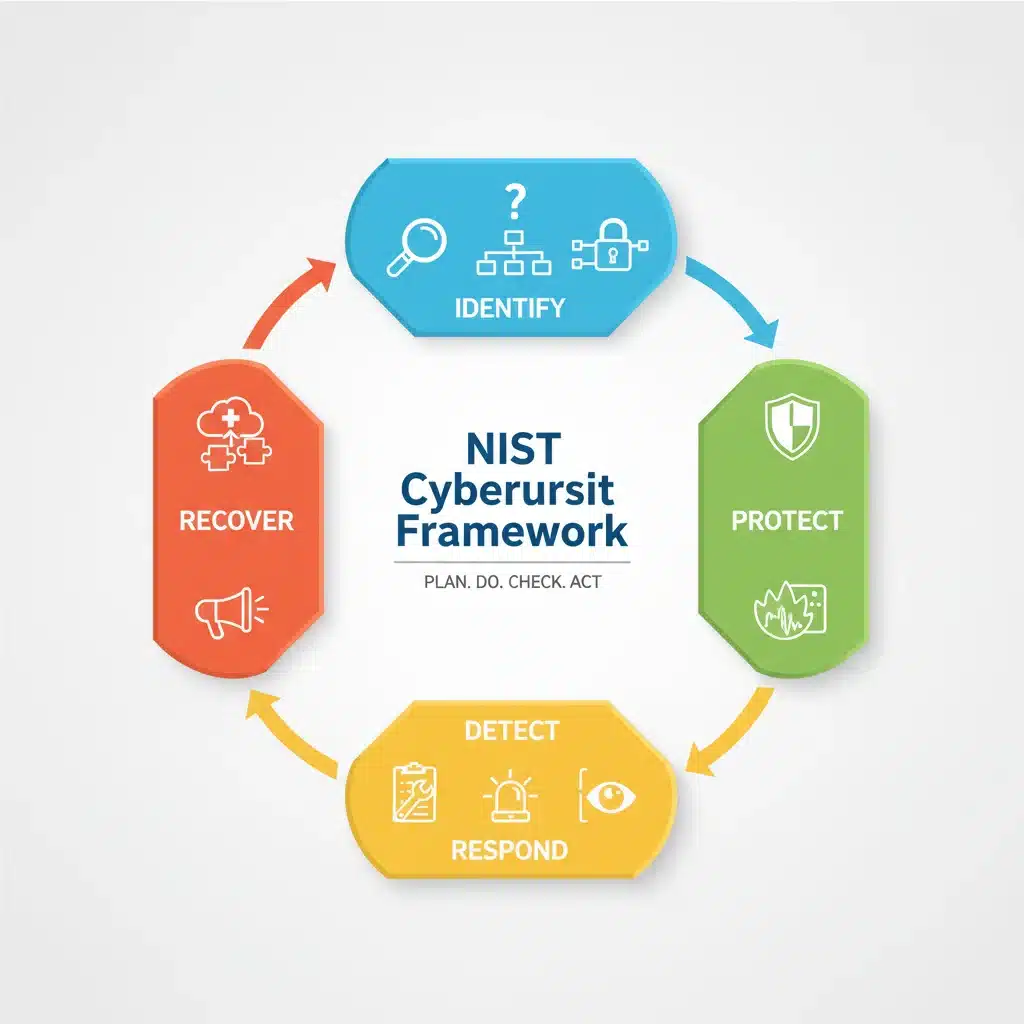
Step 3: Enhance Detection Capabilities and Continuous Monitoring
Even with the strongest protective measures, breaches can occur. The ability to detect threats quickly and accurately is crucial for minimising their impact. The latest NIST Cybersecurity Updates push for more sophisticated detection capabilities, leveraging automation, AI, and comprehensive logging.
Implementing Advanced Threat Detection Systems
Move beyond signature-based detection to incorporate advanced threat detection systems, such as Security Information and Event Management (SIEM) solutions, Endpoint Detection and Response (EDR) tools, and User and Entity Behavior Analytics (UEBA). These tools use AI and machine learning to identify anomalous behaviour and emerging threats that might bypass traditional defences. The NIST Cybersecurity Updates encourage the integration of these technologies for a more holistic view of your security posture.
Comprehensive Logging and Auditing
Establish a comprehensive logging strategy that captures relevant security events across your entire IT environment. Centralise logs in a secure, tamper-proof repository for analysis and forensic investigations. Regular auditing of these logs is essential for identifying suspicious activities and ensuring compliance. The framework underscores that effective detection relies heavily on the quality and completeness of your log data.
Continuous Security Monitoring and Alerting
Implement 24/7 continuous security monitoring, either through an in-house Security Operations Centre (SOC) or a managed security service provider (MSSP). Configure intelligent alerting mechanisms that prioritise critical events and reduce alert fatigue. The goal is to detect threats in real-time, allowing for immediate intervention. The NIST Cybersecurity Updates emphasise the importance of timely and accurate alerting to prevent minor incidents from escalating into major breaches.
Threat Intelligence Integration
Integrate external threat intelligence feeds into your detection systems. This allows your organisation to stay informed about emerging threats, vulnerabilities, and attack campaigns. By understanding the tactics, techniques, and procedures (TTPs) used by threat actors, you can proactively adjust your detection rules and improve your ability to identify sophisticated attacks. This proactive intelligence gathering is a hallmark of the updated NIST Cybersecurity Updates.
Step 4: Develop and Refine Incident Response Plans
No matter how robust your defences, a cyber incident is a matter of ‘when,’ not ‘if.’ A well-defined and regularly tested incident response plan is critical for minimising damage and recovering swiftly. The 2026 NIST Cybersecurity Updates place a greater emphasis on agility, communication, and continuous improvement in incident response.
Establishing a Dedicated Incident Response Team
Form a dedicated incident response team (IRT) with clearly defined roles, responsibilities, and communication protocols. This team should include representatives from IT, legal, communications, and senior management to ensure a coordinated response. The NIST Cybersecurity Updates highlight the importance of cross-functional collaboration during a crisis.
Developing Comprehensive Incident Response Playbooks
Create detailed incident response playbooks for various types of cyber incidents, such as ransomware attacks, data breaches, and denial-of-service (DoS) attacks. These playbooks should outline step-by-step procedures for detection, containment, eradication, recovery, and post-incident analysis. Include communication templates for internal and external stakeholders. The framework encourages the use of automated incident response tools to streamline these processes.
Regular Testing and Drills
An incident response plan is only as good as its last test. Conduct regular tabletop exercises, simulations, and live drills to test the effectiveness of your plans and identify areas for improvement. These exercises should involve all relevant stakeholders and simulate realistic attack scenarios. The NIST Cybersecurity Updates stress that continuous testing is vital for maintaining a high level of preparedness.
Post-Incident Analysis and Lessons Learned
After every incident, whether real or simulated, conduct a thorough post-incident analysis. Identify what went well, what could have been done better, and what changes are needed to prevent similar incidents in the future. Document lessons learned and incorporate them into your incident response plans and overall cybersecurity strategy. This continuous feedback loop is a core principle of the updated NIST Cybersecurity Updates, driving ongoing improvement.

Step 5: Implement Robust Recovery and Resilience Strategies
The final step in this guide, and a critical component of the latest NIST Cybersecurity Updates, focuses on your organisation’s ability to recover from a cyber incident and maintain operational resilience. This means going beyond simply restoring data to ensuring business continuity and learning from past events to strengthen future defences.
Developing and Testing Business Continuity and Disaster Recovery Plans
Integrate your cybersecurity recovery efforts with broader business continuity (BC) and disaster recovery (DR) plans. This ensures that critical business functions can continue to operate during and after a cyber incident. Regularly test your BC/DR plans to verify their effectiveness and identify any gaps. The NIST Cybersecurity Updates highlight the interconnectedness of these plans, ensuring a holistic approach to organisational resilience.
Secure Backup and Restoration Procedures
Implement a comprehensive and secure data backup strategy. This should include offsite, immutable backups to protect against ransomware and other data corruption events. Regularly test your restoration procedures to ensure that data can be recovered quickly and accurately. The framework emphasises that secure, verifiable backups are non-negotiable for effective recovery.
Communication and Stakeholder Management During Recovery
Effective communication is crucial during the recovery phase. Maintain open and transparent communication with internal stakeholders, customers, regulators, and the public. Have pre-approved communication templates and channels in place. This helps manage expectations, maintain trust, and mitigate reputational damage. The NIST Cybersecurity Updates stress the importance of a clear and consistent communication strategy.
Continuous Improvement and Adaptation
Cybersecurity is not a static state but a continuous journey. The latest NIST Cybersecurity Updates strongly advocate for a culture of continuous improvement. Regularly review your cybersecurity posture, assess the effectiveness of your controls, and adapt your strategies in response to new threats, technologies, and business requirements. This includes staying informed about emerging NIST guidance and industry best practices. Post-incident reviews should consistently feed into this improvement cycle, ensuring that every challenge becomes an opportunity for growth and enhanced resilience.
Looking Ahead: The Future of Enterprise Cybersecurity with NIST
The 2026 NIST Cybersecurity Updates represent a significant stride towards building more resilient and adaptive enterprises. They move beyond a reactive stance, promoting a proactive and continuously evolving approach to cybersecurity. By following this 5-step guide, organisations can not only align with the latest framework but also cultivate a robust security culture that pervades every aspect of their operations.
The emphasis on supply chain risk management, AI integration, and heightened data governance means that cybersecurity is no longer solely the domain of the IT department. It is a strategic business imperative that requires leadership buy-in, cross-functional collaboration, and ongoing investment. As cyber threats continue to grow in sophistication and scale, adherence to these NIST Cybersecurity Updates will be a distinguishing factor for enterprises that thrive in the digital age.
Embrace these changes not as a burden, but as an opportunity to strengthen your enterprise’s foundations, protect your most valuable assets, and ensure long-term sustainability in an increasingly interconnected world. The journey to enhanced cybersecurity is continuous, and the NIST framework provides an invaluable compass to guide your way.