AI Cyber Threats in US by Mid-2026: Countering Attacks
By mid-2026, the US faces an escalating wave of AI-powered cyber threats, demanding advanced, proactive defence strategies and insider knowledge to effectively counter these increasingly sophisticated and autonomous attacks.
As we approach mid-2026, the digital battleground is shifting dramatically. The rise of AI-powered cyber threats in the US by mid-2026: insider knowledge on countering sophisticated attacks has become an urgent concern, forcing organisations and governments to rethink their cybersecurity postures. Are we truly prepared for this new era of intelligent adversaries?
The Evolving Landscape of AI-Powered Cyber Threats
The integration of artificial intelligence into cyber warfare is no longer a futuristic concept; it is our present reality. AI-powered tools are transforming how attacks are conceived, executed, and scaled, making traditional defence mechanisms increasingly obsolete. These advanced threats leverage machine learning to adapt, learn, and bypass security protocols with unprecedented efficiency.
This evolution means that attackers can automate reconnaissance, identify vulnerabilities faster, and even craft highly personalised phishing campaigns that are virtually indistinguishable from legitimate communications. The sheer volume and sophistication of these threats are overwhelming current human-centric security operations.
Automated Attack Vectors
AI’s ability to process vast amounts of data allows for the rapid identification of weak points in even the most robust systems. This automation extends to various attack vectors, making them more potent and harder to detect.
- Phishing and Social Engineering: AI crafts highly convincing, context-aware messages.
- Malware Development: AI generates polymorphic malware that evades signature-based detection.
- Vulnerability Exploitation: AI probes systems to discover and exploit zero-day vulnerabilities.
- Network Penetration: AI adapts attack paths in real-time to navigate complex networks.
Understanding these evolving attack vectors is the first step in building resilient defences. The challenge lies not just in identifying the threats, but in anticipating their next move, a task for which AI itself is becoming indispensable on the defensive side.
Understanding the Adversary: How AI Amplifies Cyber Attacks
To effectively counter AI-powered cyber threats, we must first comprehend the mechanisms through which AI amplifies these attacks. It’s not merely about speed; it’s about intelligence, adaptability, and autonomy. AI enables threat actors to move beyond static, pre-programmed attacks to dynamic, learning assaults that can bypass even advanced security measures.
The speed at which AI can analyse system weaknesses and execute exploits dramatically shortens the window of opportunity for defenders. This acceleration means that human intervention often comes too late, long after significant damage has been inflicted. Moreover, AI can learn from defensive responses, refining its tactics to become more effective in subsequent attempts.
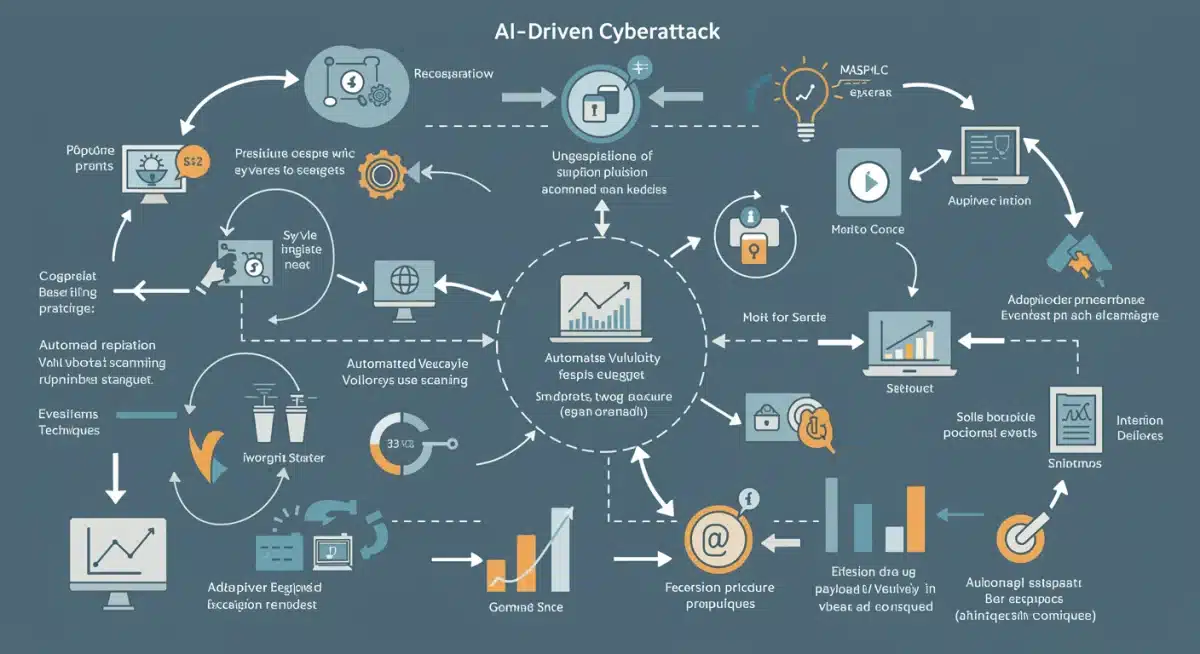
This adaptive capability transforms a simple breach attempt into a persistent, evolving threat. Attackers can leverage AI to maintain stealth, expand their footprint within a compromised network, and exfiltrate data without triggering alarms. The autonomy of these AI systems also means they can operate for extended periods, conducting sophisticated campaigns with minimal human oversight.
Key Enhancements from AI in Attacks
AI provides several critical advantages to cyber attackers, making their operations more efficient and impactful. These enhancements are what differentiate modern AI-driven attacks from traditional methods.
- Enhanced Reconnaissance: AI can rapidly scan vast swathes of the internet and internal networks to identify potential targets and vulnerabilities, far beyond human capabilities.
- Adaptive Exploitation: Machine learning algorithms can dynamically adjust attack payloads and methods based on real-time feedback from target systems, increasing success rates.
- Automated Evasion: AI can generate unique attack signatures, making it difficult for traditional intrusion detection systems to recognise and block malicious activity.
- Sophisticated Decision-Making: AI can make complex strategic decisions during an attack, such as choosing optimal paths for data exfiltration or identifying high-value targets within a network.
The essence of countering these threats lies in understanding AI’s dual role: as a formidable weapon in the hands of adversaries and as an indispensable tool for defence. Recognising these capabilities is vital for developing effective counter-strategies.
Proactive Defence Strategies for the US Cybersecurity Landscape
As AI cyber threats become more prevalent, a reactive defence posture is no longer sufficient. The US cybersecurity landscape demands proactive strategies that anticipate and mitigate attacks before they can cause significant harm. This involves a multi-layered approach, integrating advanced technologies with improved human expertise and policy frameworks.
One primary aspect of proactive defence is the continuous monitoring and analysis of threat intelligence. By leveraging AI and machine learning on the defensive side, organisations can identify emerging attack patterns, predict potential vulnerabilities, and implement preventative measures. This shift from detection to prediction is crucial in the face of rapidly evolving AI-driven threats.
Implementing AI in Defensive Measures
AI is not just for attackers; it’s a powerful ally for defenders too. Utilising AI in defensive measures allows for faster response times and more accurate threat identification.
- AI-Powered Threat Detection: Machine learning algorithms can analyse network traffic and system logs to identify anomalies indicative of sophisticated attacks, often before human analysts.
- Automated Incident Response: AI can automate parts of the incident response process, such as isolating compromised systems or deploying patches, significantly reducing potential damage.
- Predictive Analytics: AI models can forecast future attack vectors and vulnerabilities based on historical data and current threat intelligence, allowing for pre-emptive security enhancements.
- Behavioural Analytics: AI can establish baselines for normal user and system behaviour, flagging deviations that might indicate a breach or insider threat.
Beyond technology, proactive defence includes robust employee training programs, emphasising awareness of social engineering tactics and the importance of strong security hygiene. A human firewall, combined with AI-driven tools, forms a more resilient defence against the intelligent adversaries of mid-2026.
Insider Knowledge: Countering Sophisticated AI Attacks Effectively
Insider knowledge is paramount when it comes to effectively countering sophisticated AI cyber threats. This isn’t just about technical expertise; it involves understanding the attacker’s mindset, their motivations, and the operational frameworks they might employ. It’s about thinking like the adversary to stay one step ahead.
To gain this insider advantage, cybersecurity professionals must continuously engage in detailed threat intelligence gathering, including dark web monitoring and analysis of compromised systems. This intelligence provides invaluable insights into emerging AI tools, methodologies, and targets preferred by threat actors. Furthermore, fostering a culture of information sharing among organisations and government agencies strengthens the collective defence.
Strategies for Gaining the Edge
Cultivating insider knowledge requires a multifaceted approach that goes beyond traditional cybersecurity practices.
- Adversary Emulation: Regularly conduct simulated attacks using AI tools to understand how adversaries might exploit vulnerabilities in your systems.
- Threat Hunting: Proactively search for hidden threats within your network, rather than waiting for alerts, often using AI-assisted tools to sift through vast amounts of data.
- Continuous Learning and Adaptation: Stay updated on the latest AI advancements, both offensive and defensive, through research, training, and industry collaboration.
- Building AI-Resilient Architectures: Design systems with inherent resilience against AI-driven attacks, incorporating principles like zero trust and micro-segmentation.
By integrating these strategies, organisations can transform their defence from a passive barrier into an active, intelligent shield capable of anticipating and neutralising even the most sophisticated AI-powered cyber campaigns. This proactive mindset, fuelled by deep insider knowledge, is the cornerstone of effective cybersecurity in the coming years.
The Role of Government and Industry Collaboration
The escalating nature of AI cyber threats demands a unified response that transcends individual organisational boundaries. Government and industry collaboration is not merely beneficial; it is essential for building a robust national cybersecurity posture in the US by mid-2026. No single entity possesses all the resources or expertise to tackle this complex challenge alone.
Effective collaboration involves sharing threat intelligence in real-time, coordinating defensive strategies, and developing common standards and best practices. Government agencies, with their broad visibility and regulatory power, can facilitate information exchange and fund critical research. Industry leaders, on the other hand, bring cutting-edge technological innovation and practical experience from the front lines of cyber defence.
This partnership also extends to joint training initiatives and exercises, ensuring that both public and private sectors are prepared for large-scale, coordinated AI-driven attacks. By pooling resources and knowledge, the US can create a more resilient and adaptive cybersecurity ecosystem, better equipped to face future threats.
Key Areas of Collaboration
Successful collaboration will focus on several critical areas to maximise collective impact against AI-powered cyber adversaries.
- Standardised Threat Intelligence Sharing: Establishing platforms and protocols for rapid, secure, and actionable intelligence exchange between all stakeholders.
- Joint Research and Development: Funding and collaborating on projects to develop advanced AI-driven defensive technologies and counter-measures.
- Policy and Regulatory Alignment: Creating consistent cybersecurity policies and regulations that encourage best practices across all sectors without stifling innovation.
- Workforce Development: Investing in joint programmes to train and retain a skilled cybersecurity workforce capable of understanding and combating AI-powered threats.
Ultimately, a strong partnership between government and industry forms the bedrock of national cybersecurity resilience. This collaborative spirit is vital for ensuring that the US remains at the forefront of cyber defence against the intelligent threats of tomorrow.
Preparing for Mid-2026: Future-Proofing Your Cyber Defences
As mid-2026 rapidly approaches, the imperative to future-proof cyber defences against AI cyber threats becomes increasingly clear. This involves not only adopting the latest technologies but also cultivating a forward-thinking mindset that anticipates future attack methodologies. Organisations must move beyond a static defence model to one that is dynamic, scalable, and inherently adaptive.
Future-proofing entails a continuous cycle of assessment, adaptation, and innovation. This means regularly auditing existing security infrastructure, identifying potential weaknesses that AI could exploit, and investing in advanced AI-driven security solutions. It also requires fostering a culture of cyber resilience, where every employee understands their role in maintaining security and is equipped to respond to evolving threats.
The goal is to build systems that can not only withstand current AI-powered attacks but also evolve to counteract novel threats that have yet to emerge. This proactive posture is the only sustainable way to protect critical infrastructure and sensitive data in an increasingly AI-driven threat landscape.
Essential Steps for Future-Proofing
To effectively prepare for the challenges of mid-2026 and beyond, organisations should focus on several key initiatives.
- Embrace AI-Native Security: Integrate security solutions that are built with AI at their core, capable of learning and adapting to new threats autonomously.
- Invest in Quantum-Resistant Cryptography: Begin exploring and implementing cryptographic solutions that can withstand attacks from future quantum computers, which AI could leverage.
- Develop Autonomous Defensive Systems: Research and deploy systems capable of independent threat detection and response, reducing reliance on human intervention for initial containment.
- Regularly Update and Patch: Maintain a rigorous patching and update schedule to close known vulnerabilities before AI can exploit them.
By adopting these forward-looking strategies, organisations can significantly enhance their resilience against the sophisticated and rapidly evolving AI-powered cyber threats that are set to dominate the cybersecurity landscape by mid-2026. The time to act is now, to ensure a secure digital future.
| Key Aspect | Brief Description |
|---|---|
| AI Attack Amplification | AI enhances cyberattacks through automation, adaptability, and speed, making them harder to detect and counter. |
| Proactive Defence | Shifting from reactive to predictive security, leveraging AI for early threat detection and mitigation. |
| Insider Knowledge | Understanding attacker mindsets and leveraging threat intelligence for effective counter-strategies. |
| Collaboration Imperative | Government and industry must collaborate to share intelligence and develop unified defence strategies. |
Frequently Asked Questions About AI Cyber Threats
AI-powered cyber threats are dangerous due to their ability to automate attacks, adapt to defence mechanisms in real-time, and operate autonomously. This increases their speed, scale, and sophistication, making them incredibly difficult for traditional, human-led security systems to detect and neutralise effectively.
Organisations can leverage AI for advanced threat detection, predictive analytics, and automated incident response. AI systems can analyse vast datasets to identify anomalies, forecast potential attack vectors, and initiate rapid containment actions, thereby augmenting human security teams and improving overall resilience.
Insider knowledge refers to a deep understanding of attacker methodologies, motivations, and the evolving tools they use, including AI. It involves proactive threat intelligence, adversary emulation, and continuous learning to anticipate and outmanoeuvre sophisticated AI-driven cyber campaigns.
Collaboration is crucial because no single entity can tackle the scale and complexity of AI cyber threats alone. Sharing threat intelligence, coordinating defensive strategies, and pooling resources between government agencies and industry leaders creates a more unified, resilient national cybersecurity posture.
To future-proof, organisations should adopt AI-native security solutions, invest in quantum-resistant cryptography, develop autonomous defensive systems, and maintain rigorous patching schedules. This proactive approach ensures defences can evolve to counteract emerging AI-powered threats effectively.
Conclusion
The digital frontier is undeniably being redefined by the rapid evolution of AI, bringing with it both unprecedented opportunities and formidable threats. As we navigate towards mid-2026, the imperative to understand and counteract AI cyber threats in the US will only intensify. This article has illuminated the sophisticated nature of these intelligent attacks, underscoring the critical need for proactive defence strategies, deep insider knowledge of adversary tactics, and robust collaboration between government and industry. By embracing AI in defence, fostering continuous learning, and building resilient, adaptive security architectures, the US can hope to safeguard its digital infrastructure and maintain its cybersecurity integrity against the intelligent adversaries of tomorrow.