US Cyber Command’s 2025 Threat Assessment: What 15% of Businesses Miss

The US Cyber Command’s 2025 threat assessment provides critical insights into evolving cyber dangers, revealing that a concerning 15% of businesses are neglecting vital defence strategies, thereby exposing themselves to severe, often preventable, security breaches.
The digital landscape is constantly shifting, and staying ahead of cyber threats is paramount for any organisation. The latest insights from the US Cyber Command’s 2025 Threat Assessment offer a sobering look at the evolving dangers, particularly highlighting what a significant portion of businesses are currently overlooking. This insider knowledge is crucial for bolstering defences and protecting critical assets in an increasingly hostile online environment.
Understanding the Evolving Cyber Threat Landscape
The nature of cyber warfare is dynamic, with adversaries constantly refining their tactics. The US Cyber Command’s assessment for 2025 underscores a marked increase in the sophistication and frequency of attacks, moving beyond simple data breaches to more complex, multi-vector assaults aimed at disrupting critical infrastructure and supply chains.
This section delves into the fundamental shifts observed in the threat landscape, providing a foundational understanding of the challenges businesses now face. It’s no longer just about protecting data; it’s about safeguarding operational continuity and national security.
The Rise of State-Sponsored Actors and Advanced Persistent Threats
State-sponsored groups are at the forefront of this evolution, employing highly sophisticated techniques and ample resources. Their objectives often extend beyond financial gain, targeting intellectual property, national defence secrets, and critical national infrastructure. These Advanced Persistent Threats (APTs) are characterised by their stealth, persistence, and ability to adapt to defensive measures.
- Espionage and Intellectual Property Theft: Nation-states are actively engaged in stealing sensitive commercial and governmental data.
- Disruption of Critical Infrastructure: Attacks on energy grids, water systems, and communication networks pose significant societal risks.
- Cyber Warfare Capabilities: Development and deployment of tools designed to degrade or destroy an adversary’s digital capabilities.
The Proliferation of Ransomware-as-a-Service (RaaS)
Ransomware continues to be a dominant threat, but its evolution into a service model (RaaS) has democratised access to these destructive tools. This lowers the barrier to entry for less skilled attackers, leading to a broader range of targets and increased overall risk. Businesses of all sizes are now potential victims, not just large corporations.
Understanding these shifts is the first step towards building resilient cyber defences. The evolving nature of these threats demands a proactive and adaptive approach, moving beyond traditional perimeter security to a more comprehensive, layered strategy.
In conclusion, the cyber threat landscape is becoming more complex and dangerous. The emergence of highly capable state-sponsored actors and the widespread availability of sophisticated attack tools like RaaS necessitate a re-evaluation of current cybersecurity postures. Businesses must recognise these profound changes to adequately prepare for the challenges of 2025 and beyond.
The Overlooked 15%: Common Cybersecurity Blind Spots
Despite the escalating threats, the US Cyber Command’s assessment highlights a concerning statistic: 15% of businesses are consistently overlooking critical cybersecurity vulnerabilities. These blind spots are not always due to a lack of resources, but often stem from a misunderstanding of modern attack vectors or an overreliance on outdated security paradigms.
Identifying and addressing these common oversights is paramount for strengthening an organisation’s overall security posture. Many businesses focus on external threats while neglecting internal weaknesses that attackers frequently exploit.
Insufficient Employee Training and Awareness
Human error remains one of the weakest links in cybersecurity. Many businesses fail to invest adequately in ongoing, comprehensive cybersecurity training for their employees. Phishing, social engineering, and weak password practices are still prevalent entry points for attackers, often due to a lack of awareness.
- Phishing Simulation Exercises: Regular testing helps employees recognise and report suspicious emails.
- Strong Password Policies: Enforcement of multi-factor authentication (MFA) and complex password requirements.
- Social Engineering Awareness: Training on identifying and resisting manipulative tactics used by attackers.
Neglecting Supply Chain Security
The interconnected nature of modern business means that a breach in a third-party vendor can directly impact an organisation. Many businesses focus solely on their internal security, failing to adequately vet the cybersecurity practices of their suppliers, partners, and service providers. This oversight creates a significant attack surface for sophisticated adversaries.
Attackers increasingly target weaker links in the supply chain to gain access to larger, more secure organisations. A thorough assessment of vendor security protocols is no longer optional but a critical component of a robust cybersecurity strategy. Without this, even the most secure internal systems can be compromised through trusted connections.
In essence, these overlooked areas represent significant vulnerabilities that malicious actors are eager to exploit. Addressing insufficient employee training and bolstering supply chain security are not merely best practices; they are essential defensive measures that the 15% of businesses are critically missing, leaving them exposed to predictable yet preventable attacks.
The Economic and Reputational Impact of Overlooked Threats
The consequences of overlooking critical cybersecurity threats extend far beyond immediate operational disruption. The economic and reputational damage can be catastrophic, leading to significant financial losses, erosion of customer trust, and long-term business instability. The US Cyber Command’s assessment implicitly warns against the severe repercussions of complacency.
Businesses that fail to address the vulnerabilities highlighted in the assessment risk not only compliance penalties but also an irreversible blow to their brand image and market position. The cost of a breach far outweighs the investment in preventative measures.
Financial Costs of a Cyberattack
A successful cyberattack can trigger a cascade of financial burdens. These include direct costs such as incident response, recovery efforts, legal fees, and regulatory fines. Indirect costs, such as lost revenue due to downtime, decreased productivity, and increased insurance premiums, often far exceed the direct expenses.
- Incident Response and Forensics: Hiring specialists to contain and investigate the breach.
- Legal and Regulatory Fines: Penalties for non-compliance with data protection laws (e.g., GDPR, CCPA).
- Reputation Management: Costs associated with public relations campaigns to restore public trust.
Damage to Brand Reputation and Customer Trust
Perhaps the most insidious consequence of a cyber breach is the damage to a company’s reputation. Once trust is lost, it is incredibly difficult to regain. Customers are increasingly aware of data privacy issues and are likely to abandon businesses that demonstrate a lax approach to security. This can lead to a significant loss of market share and long-term competitive disadvantage.
The long-term effects on customer loyalty and brand perception can cripple a business, even if it recovers operationally. The market remembers breaches, and competitors are quick to capitalise on a rival’s misfortune. Proactive cybersecurity is therefore not just a technical requirement, but a fundamental business imperative for survival and growth.
Ultimately, the economic and reputational fallout from cyberattacks underscores the urgency of addressing overlooked threats. The insights from the US Cyber Command’s 2025 assessment serve as a stark reminder that neglecting cybersecurity is a gamble with incredibly high stakes, potentially jeopardising a business’s entire future.
Leveraging Insider Knowledge: Proactive Defence Strategies
For businesses to move beyond the 15% that are overlooking critical threats, actively leveraging insider knowledge from reports like the US Cyber Command’s 2025 assessment is essential. This means translating high-level intelligence into actionable, proactive defence strategies that are tailored to an organisation’s specific risk profile.
Proactive defence shifts the focus from reactive damage control to preventative measures, anticipating threats before they materialise. This approach requires continuous monitoring, intelligence gathering, and a commitment to adapting security protocols.
Implementing a Zero Trust Architecture
One of the most effective proactive strategies is the adoption of a Zero Trust architecture. This model operates on the principle of “never trust, always verify,” meaning no user or device, whether inside or outside the network perimeter, is granted automatic access to resources. Every access attempt is authenticated and authorised.
- Micro-segmentation: Dividing networks into smaller segments to limit lateral movement of attackers.
- Multi-Factor Authentication (MFA): Requiring multiple forms of verification for user access.
- Continuous Monitoring: Regularly assessing user and device behaviour for anomalies.
Enhancing Threat Intelligence Sharing
Collaboration and information sharing are vital components of a robust proactive defence. Businesses should actively participate in threat intelligence sharing communities, both public and private, to gain real-time insights into emerging threats, attack methodologies, and indicators of compromise (IoCs). This collective defence approach strengthens the security posture of all participants.
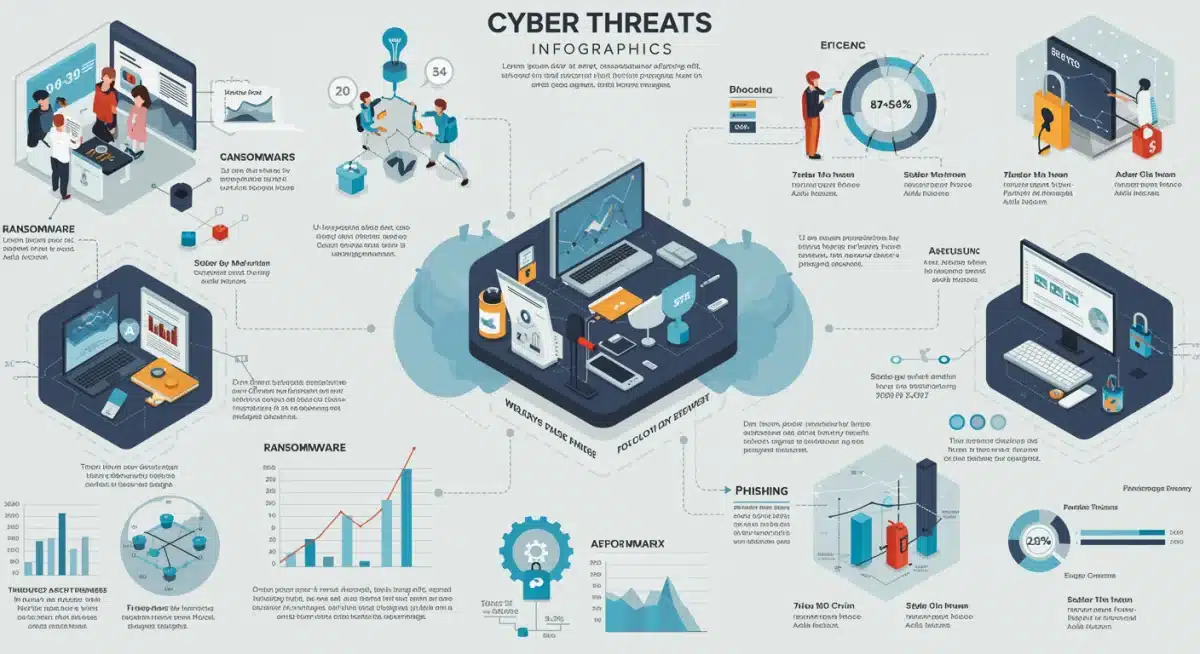
Leveraging insider knowledge effectively means integrating threat intelligence into security operations, enabling faster detection and response. This involves not only consuming intelligence but also contributing to the collective understanding of the threat landscape. Such proactive measures are crucial for moving beyond the reactive stance that characterizes many vulnerable businesses.
In summary, proactive defence strategies, particularly the implementation of Zero Trust and active participation in threat intelligence sharing, are critical for businesses to effectively counter the sophisticated threats outlined in the US Cyber Command’s 2025 assessment. These measures empower organisations to anticipate and mitigate risks rather than merely reacting to breaches.
The Role of AI and Machine Learning in Cyber Defence
As cyber threats become more complex and voluminously distributed, traditional security measures often struggle to keep pace. This is where Artificial Intelligence (AI) and Machine Learning (ML) emerge as indispensable tools in modern cyber defence, offering capabilities that significantly enhance detection, analysis, and response mechanisms.
The US Cyber Command’s assessment implicitly points towards the need for advanced automated solutions to handle the scale and speed of 2025’s cyber challenges. AI and ML are no longer futuristic concepts but essential components of a layered security strategy.
Automated Threat Detection and Anomaly Recognition
AI and ML algorithms excel at processing vast amounts of data to identify patterns and anomalies that human analysts might miss. They can rapidly detect indicators of compromise (IoCs), predict potential attacks based on historical data, and flag suspicious activities in real-time. This capability is crucial for identifying novel threats that don’t match known signatures.
- Behavioural Analytics: Identifying deviations from normal user or system behaviour.
- Malware Analysis: Automating the identification and classification of new malware variants.
- Network Intrusion Detection: Real-time monitoring for unusual traffic patterns indicative of an attack.
Enhancing Incident Response and Automation
Beyond detection, AI and ML can significantly improve incident response times. Automated systems can initiate containment actions, triage alerts, and even suggest remediation steps, reducing the time from detection to resolution. This automation frees up human analysts to focus on more complex strategic tasks.
The integration of AI into Security Orchestration, Automation, and Response (SOAR) platforms is transforming how organisations handle security incidents. These intelligent systems can learn from past incidents, continuously improving their response capabilities and making security operations more efficient and effective against sophisticated attacks.
In conclusion, AI and Machine Learning are revolutionising cyber defence by providing unprecedented capabilities for automated threat detection, anomaly recognition, and incident response. Embracing these technologies is vital for businesses to effectively combat the advanced and evolving cyber threats outlined in the US Cyber Command’s 2025 assessment, moving past the limitations of manual processes.
Building Cyber Resilience: Beyond Prevention and Detection
While prevention and detection are crucial, true cyber resilience encompasses an organisation’s ability to withstand, recover from, and adapt to cyberattacks. The US Cyber Command’s 2025 assessment suggests that breaches are inevitable; therefore, the focus must shift not only to stopping attacks but also to ensuring business continuity when they occur.
Building resilience involves a holistic approach that integrates robust recovery plans, continuous improvement, and the ability to operate under duress. This goes beyond simply having backups; it’s about strategic planning for worst-case scenarios.
Developing Robust Incident Response and Recovery Plans
A well-defined and regularly tested incident response plan is the cornerstone of cyber resilience. This plan should detail roles, responsibilities, communication protocols, and technical steps for containing, eradicating, and recovering from a cyberattack. Regular drills and simulations are essential to ensure its effectiveness.
- Business Continuity Planning (BCP): Strategies to maintain critical business functions during and after an incident.
- Disaster Recovery (DR): Procedures for restoring data and systems from backups.
- Communication Strategy: Plans for informing stakeholders, regulators, and the public during a breach.
Continuous Improvement and Adaptive Security
Cyber resilience is not a one-time achievement but an ongoing process. Organisations must continuously monitor their security posture, assess new threats, and adapt their defences accordingly. This involves regular security audits, vulnerability assessments, and penetration testing to identify and remediate weaknesses before they are exploited.
An adaptive security model allows businesses to evolve their defences in response to new intelligence and attack techniques. This agility is critical in a threat landscape where adversaries are constantly innovating. It ensures that security measures remain relevant and effective against the latest threats, fostering a culture of continuous improvement.
In conclusion, building cyber resilience is about preparing for the inevitable. It involves developing comprehensive incident response and recovery plans, alongside a commitment to continuous improvement and adaptive security. This proactive approach ensures that businesses can not only withstand cyberattacks but also emerge stronger, minimising the long-term impact on operations and reputation.
Strategic Investments for Future Cybersecurity
To effectively address the challenges highlighted in the US Cyber Command’s 2025 assessment, businesses must make strategic investments in cybersecurity. These investments should not be viewed as mere expenses but as critical enablers of business continuity, innovation, and competitive advantage in the digital age.
Strategic investment goes beyond purchasing the latest security software; it encompasses people, processes, and technology, all working in concert to create a robust defence ecosystem. Prioritising these areas will differentiate resilient organisations from those belonging to the vulnerable 15%.
Investing in Human Capital and Expertise
The cybersecurity talent gap is a significant challenge. Businesses must invest in attracting, training, and retaining skilled cybersecurity professionals. This includes competitive salaries, ongoing professional development, and fostering a culture that values security expertise. A strong internal team is invaluable for managing complex threats.
- Cybersecurity Training Programmes: Upskilling existing IT staff in security best practices.
- Talent Recruitment: Actively seeking out and hiring experienced cybersecurity analysts and engineers.
- Security Awareness Culture: Promoting a security-first mindset across the entire organisation.
Prioritising Security-by-Design Principles
Integrating security considerations from the very beginning of product development and system design is a strategic investment that pays dividends. “Security-by-design” ensures that vulnerabilities are addressed early in the lifecycle, reducing the cost and effort of remediation later on. This proactive approach minimises the attack surface inherent in new technologies.
This principle applies to all new projects, from software development to infrastructure deployment. By embedding security into the foundational layers, businesses can build inherently more resilient systems that are less susceptible to the types of attacks detailed in the US Cyber Command’s assessment. It’s a fundamental shift from retrofitting security to building it in from the ground up.
In conclusion, strategic investments in human capital and the adoption of security-by-design principles are fundamental for future cybersecurity. These investments ensure that organisations are not only equipped with the right technology but also possess the expertise and foundational integrity to withstand the sophisticated and evolving threats of 2025 and beyond.
| Key Insight | Brief Description |
|---|---|
| Evolving Threats | State-sponsored attacks and RaaS are increasing in sophistication and prevalence. |
| 15% Overlook | Businesses neglect employee training and supply chain security, creating vulnerabilities. |
| Proactive Defence | Zero Trust architecture and enhanced threat intelligence sharing are crucial. |
| AI Integration | AI and ML are essential for automated threat detection and faster incident response. |
Frequently Asked Questions About Cyber Command’s Assessment
The assessment primarily focuses on identifying evolving cyber threats, including state-sponsored attacks and the proliferation of ransomware, alongside highlighting critical vulnerabilities that a significant percentage of businesses are currently failing to address effectively, underscoring the shift towards more sophisticated, disruptive attacks.
Many businesses overlook these measures due to insufficient employee training, a lack of focus on supply chain security, and an overreliance on outdated security models. This often stems from a misunderstanding of modern attack vectors and the interconnectedness of their digital ecosystems, leaving them exposed to preventable breaches.
The biggest financial risks include significant costs for incident response, legal fees, regulatory fines, and lost revenue due to operational downtime. Additionally, indirect costs like decreased productivity and increased insurance premiums contribute substantially to the overall financial burden, often crippling businesses.
Businesses can leverage AI and ML for automated threat detection, anomaly recognition, and faster incident response. These technologies process vast data volumes to identify patterns, predict attacks, and initiate containment actions, significantly enhancing the efficiency and effectiveness of security operations against complex threats.
‘Cyber resilience’ refers to an organisation’s ability to withstand, recover from, and adapt to cyberattacks, even when prevention fails. It involves robust incident response plans, business continuity strategies, and continuous improvement in security posture, ensuring operational continuity despite inevitable threats.
Conclusion
The US Cyber Command’s 2025 Threat Assessment serves as a critical wake-up call for businesses across all sectors. The insights reveal an increasingly sophisticated and pervasive threat landscape, where state-sponsored actors and accessible ransomware tools pose significant risks. Alarmingly, a substantial 15% of businesses are failing to implement essential cybersecurity measures, particularly in areas like employee training and supply chain security, leaving them dangerously vulnerable. Addressing these oversights is not merely a technical necessity but a strategic imperative to safeguard against severe economic and reputational damage. By embracing proactive defence strategies, such as Zero Trust architectures, leveraging advanced AI and Machine Learning capabilities, and fostering true cyber resilience through robust recovery plans and continuous adaptation, organisations can move beyond mere compliance to build formidable defences. The future of business security hinges on the ability to internalise this insider knowledge and translate it into actionable, comprehensive cybersecurity strategies that protect assets, maintain trust, and ensure long-term stability in the face of evolving digital threats.