CSPM: Boosting US Cloud Threat Detection by 25% in 2025

Cloud Security Posture Management (CSPM) is poised to significantly enhance threat detection capabilities within US cloud environments, targeting a 25% improvement by 2025 through continuous monitoring and automated remediation.
In an increasingly digital world, the security of cloud environments is paramount, particularly for organisations operating within the United States. The challenge of safeguarding vast data landscapes from evolving threats demands sophisticated solutions. This article explores how cloud security posture management (CSPM) is set to revolutionise threat detection in US cloud environments, with a practical goal of enhancing capabilities by 25% by 2025.
The evolving landscape of cloud security in the US
The rapid adoption of cloud services across US businesses has brought unprecedented agility and scalability, but also a complex array of security challenges. Traditional security perimeters are no longer sufficient, as workloads and data reside outside the corporate network. Understanding this evolving landscape is the first step towards robust protection.
Organisations in the US are grappling with a dynamic threat environment, where attackers constantly seek vulnerabilities in cloud configurations. Misconfigurations, identity and access management (IAM) issues, and non-compliance with regulatory standards represent significant attack vectors. These challenges are compounded by the shared responsibility model, where cloud providers secure the cloud itself, but customers are responsible for security in the cloud.
Key cloud security challenges
- Misconfigurations: Often the root cause of data breaches, incorrect settings in cloud services can expose sensitive data.
- Identity and access management (IAM) complexities: Managing permissions across vast cloud infrastructures can lead to over-privileged accounts or orphaned credentials.
- Compliance and regulatory burdens: Adhering to standards like HIPAA, PCI DSS, and NIST requires continuous monitoring and reporting.
- Visibility gaps: Lack of a unified view across multi-cloud or hybrid cloud environments can obscure potential threats.
Addressing these challenges effectively requires a proactive and automated approach. Relying solely on manual audits or reactive incident response is no longer sustainable for the scale and pace of modern cloud operations. The sheer volume of cloud resources and configurations makes human oversight prone to error and inefficiency.
The conclusion drawn from this analysis is clear: a comprehensive and automated strategy is essential for any US entity leveraging cloud infrastructure. Without it, the risk of security incidents and non-compliance significantly increases, potentially leading to financial penalties, reputational damage, and loss of customer trust.
Understanding Cloud Security Posture Management (CSPM)
Cloud Security Posture Management (CSPM) provides continuous monitoring, identification, and remediation of security and compliance risks in cloud environments. It acts as a central nervous system for cloud security, offering visibility and control over an organisation’s cloud posture. CSPM tools automatically detect misconfigurations, policy violations, and compliance gaps across various cloud services.
The core functionality of CSPM lies in its ability to assess configurations against established security benchmarks and regulatory frameworks. This includes checking for open storage buckets, overly permissive security groups, unencrypted data, and weak access controls. By automating these checks, CSPM significantly reduces the manual effort and human error associated with maintaining a secure cloud environment.
How CSPM operates
- Continuous monitoring: CSPM tools constantly scan cloud environments for new resources, configuration changes, and potential vulnerabilities.
- Risk identification: They use predefined rules and AI-driven analytics to identify misconfigurations, policy violations, and compliance risks.
- Prioritised alerts: Alerts are generated with context and severity, allowing security teams to focus on the most critical issues first.
- Automated remediation: Some CSPM solutions offer automated or guided remediation steps to fix identified issues swiftly.
The implementation of CSPM is not merely about finding problems; it’s about establishing a robust framework that prevents issues before they become critical. It shifts security from a reactive model to a proactive one, enabling organisations to maintain a strong security posture at all times. This proactive stance is vital for US businesses, given the increasing sophistication of cyber threats.
In essence, CSPM provides a holistic view of cloud security, ensuring that all cloud resources adhere to security best practices and regulatory requirements. It empowers security teams with the necessary tools to manage complex cloud infrastructures efficiently and effectively, safeguarding sensitive data and maintaining operational integrity.
Practical solutions for enhancing threat detection
To achieve the ambitious goal of enhancing threat detection by 25% in US cloud environments by 2025, practical and actionable solutions must be implemented. CSPM plays a pivotal role here, offering a suite of capabilities that directly contribute to improved threat detection and response.
One primary solution involves leveraging CSPM for real-time visibility into cloud assets and configurations. This continuous assessment allows for immediate detection of any deviations from baseline security policies. When a new resource is provisioned with an insecure configuration, CSPM can flag it instantly, preventing potential attack vectors from being exploited.
Key practical applications of CSPM
- Automated compliance checks: Ensure continuous adherence to industry standards and regulatory mandates, reducing audit preparation time and risk.
- Configuration drift detection: Identify unauthorised or accidental changes to cloud configurations that could introduce vulnerabilities.
- Vulnerability management: Integrate with vulnerability scanning tools to identify and prioritise software vulnerabilities within cloud workloads.
- Identity and access management (IAM) governance: Monitor and enforce least privilege principles, detecting excessive permissions or dormant accounts.
Furthermore, integrating CSPM with other security tools, such as Security Information and Event Management (SIEM) and Security Orchestration, Automation, and Response (SOAR) platforms, amplifies its effectiveness. This integration creates a unified security operations centre (SOC) that can correlate security events, automate responses, and streamline incident management processes. For US organisations, this means a more agile and efficient defence against cyber threats.
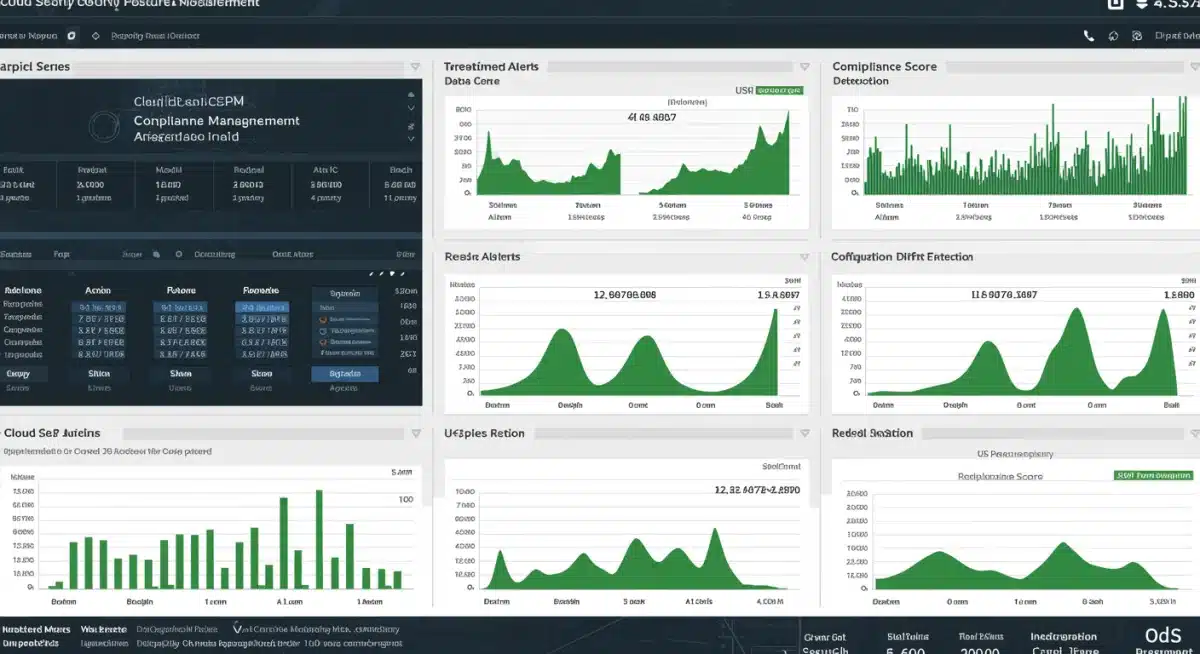
By implementing these practical CSPM solutions, organisations can significantly reduce their attack surface, improve their ability to detect threats early, and respond more effectively. This proactive posture is critical for meeting the 25% enhancement target and building resilience against future cyberattacks.
Compliance and regulatory adherence with CSPM
For US organisations, navigating the complex web of compliance requirements is a constant challenge. Regulations such as HIPAA for healthcare, PCI DSS for payment card data, and NIST frameworks for federal agencies demand stringent security controls and continuous monitoring. CSPM tools are indispensable in achieving and maintaining this compliance.
CSPM platforms offer built-in compliance frameworks and policies that can be mapped directly to specific regulatory requirements. This capability automates the process of auditing cloud environments against these standards, identifying any gaps or violations. Instead of manual checks that are time-consuming and error-prone, CSPM provides continuous, automated assessments.
Meeting US regulatory standards
- HIPAA: CSPM ensures that protected health information (PHI) stored in the cloud is adequately secured and access controlled.
- PCI DSS: It helps maintain the security of cardholder data environments by enforcing strict configuration policies.
- NIST frameworks: CSPM aids in implementing and monitoring security controls aligned with NIST guidelines, crucial for government contractors and federal agencies.
- SOC 2: Provides continuous assurance that cloud systems meet trust service criteria related to security, availability, processing integrity, confidentiality, and privacy.
The ability of CSPM to generate detailed compliance reports is also a significant advantage. These reports provide auditable evidence of an organisation’s security posture, simplifying the compliance audit process and demonstrating due diligence to regulators. This not only reduces the burden on internal teams but also builds trust with customers and partners.
Ultimately, CSPM transforms compliance from a periodic, reactive exercise into an ongoing, proactive state. By continuously monitoring and enforcing compliance, US businesses can avoid costly fines, legal repercussions, and reputational damage associated with regulatory non-adherence, thereby strengthening their overall security posture.
Integrating CSPM into existing security operations
The true power of CSPM is unleashed when it is seamlessly integrated into an organisation’s broader security operations. A standalone CSPM solution, while beneficial, provides only a partial view of the security landscape. Integration with existing tools creates a cohesive and more effective security ecosystem.
One critical integration point is with Security Information and Event Management (SIEM) systems. CSPM alerts and findings can be fed into SIEMs, allowing security analysts to correlate cloud security events with other security logs from on-premises systems, endpoints, and applications. This unified view provides richer context for threat detection and incident response.
Benefits of integration
- Enhanced threat intelligence: Combining CSPM data with threat intelligence feeds provides a more accurate picture of potential risks.
- Automated incident response: Integrating with SOAR platforms allows for automated remediation workflows based on CSPM-identified issues.
- Centralised visibility: A single pane of glass for all security-related events, reducing alert fatigue and improving response times.
- Improved collaboration: Facilitates better communication and coordination between security, development, and operations teams.
Furthermore, integrating CSPM with DevOps pipelines enables a ‘shift-left’ security approach. Security checks and policy enforcement can be incorporated earlier in the development lifecycle, preventing insecure configurations from ever reaching production environments. This proactive measure is particularly valuable in fast-paced US tech companies.
The successful integration of CSPM into existing security operations ensures that cloud security is not an isolated function but an intrinsic part of the overall security strategy. This holistic approach is essential for achieving the targeted 25% enhancement in threat detection and maintaining a resilient security posture in the dynamic US cloud landscape.
The future of CSPM and threat detection in the US
Looking ahead to 2025 and beyond, the role of CSPM in enhancing threat detection in US cloud environments will become even more critical. As cloud adoption continues to grow and cyber threats evolve, CSPM solutions are expected to advance significantly, incorporating more sophisticated capabilities.
One key area of development is the integration of artificial intelligence (AI) and machine learning (ML) for more intelligent threat detection. AI/ML algorithms can analyse vast amounts of cloud configuration data, identify anomalous patterns that indicate emerging threats, and predict potential vulnerabilities before they are exploited. This predictive capability will be a game-changer for US organisations.
Emerging trends in CSPM
- AI-driven threat prediction: Utilising AI to anticipate and mitigate threats based on historical data and real-time analysis.
- Automated policy enforcement: More robust automation for not just detecting but also enforcing security policies across multi-cloud environments.
- Cloud-native application protection platforms (CNAPP): CSPM evolving into broader platforms that include cloud workload protection (CWPP) and cloud infrastructure entitlement management (CIEM).
- Enhanced supply chain security: Extending CSPM capabilities to assess the security posture of third-party cloud services and integrations.
The expansion of CSPM into CNAPP signifies a move towards comprehensive cloud-native security, providing a unified approach to protecting applications, workloads, and infrastructure. This holistic view is essential for US businesses that rely heavily on cloud-native architectures and microservices.
The future of CSPM is bright, promising more intelligent, automated, and integrated security solutions. By embracing these advancements, US organisations can not only meet but exceed the 25% enhancement target for threat detection, ensuring their cloud environments remain secure and resilient against the cyber threats of tomorrow.
| Key Aspect | Brief Description |
|---|---|
| Proactive Security | CSPM shifts security from reactive to proactive, preventing issues before exploitation. |
| Automated Compliance | Ensures continuous adherence to US regulatory standards like HIPAA and PCI DSS. |
| Enhanced Visibility | Provides a unified view of cloud security posture across multi-cloud environments. |
| Future Advancements | AI/ML integration and CNAPP evolution for predictive threat detection. |
Frequently asked questions about CSPM
CSPM is a set of tools and practices designed to continuously monitor cloud environments for misconfigurations, compliance violations, and security risks. It helps organisations maintain a strong security posture by identifying and remediating issues proactively, safeguarding data and resources.
CSPM improves threat detection by providing real-time visibility into cloud asset configurations and changes. It automatically flags deviations from security policies and compliance standards, allowing security teams to quickly identify and address potential vulnerabilities before they can be exploited by attackers.
Absolutely. CSPM is highly relevant for multi-cloud environments, as it offers a unified view of security posture across various cloud providers. This is crucial for US organisations that often utilise multiple cloud platforms, ensuring consistent security policies and compliance across their entire cloud footprint.
The main benefits include continuous compliance with regulatory standards, reduced risk from misconfigurations, enhanced visibility into cloud assets, automated identification and remediation of security issues, and improved overall threat detection capabilities, leading to a more resilient security posture.
AI and ML will significantly enhance CSPM by enabling more intelligent threat prediction and automated policy enforcement. These technologies will allow CSPM tools to analyse vast data sets, identify complex attack patterns, and proactively mitigate risks, making cloud security even more robust and adaptive.
Conclusion
The journey towards a 25% enhancement in threat detection for US cloud environments by 2025 is not merely aspirational; it is an achievable and necessary undertaking. Cloud security posture management (CSPM) stands at the forefront of this effort, offering the tools and methodologies required to navigate the complex security landscape of modern cloud computing. By embracing continuous monitoring, automated compliance, and intelligent integrations, organisations can build a resilient defence against evolving cyber threats. The proactive nature of CSPM ensures that security is baked into the cloud infrastructure, rather than being an afterthought, thereby safeguarding critical data and maintaining operational integrity in an increasingly interconnected digital world.