Threat Intelligence Platforms: 2025 Comparison for US Organisations

This article offers a comprehensive 2025 comparison of leading threat intelligence platforms, specifically tailored for US organisations to enhance their detection capabilities against evolving cyber threats.
In the rapidly evolving landscape of cyber warfare, US organisations face an unprecedented array of sophisticated threats. To effectively combat these dangers, robust threat intelligence platforms have become indispensable tools, providing the critical insights needed to predict, detect, and respond to malicious activities. As we look towards 2025, understanding the nuances of these platforms and their detection capabilities is paramount for maintaining a strong defensive posture.
The Evolving Threat Landscape and the Need for TIPs
The digital realm is a constant battlefield, with adversaries continually refining their tactics, techniques, and procedures (TTPs). US organisations, ranging from critical infrastructure to financial institutions and government agencies, are prime targets. The sheer volume and complexity of cyber threats necessitate a proactive approach, moving beyond reactive incident response to preventative measures.
Threat intelligence platforms (TIPs) serve as the central nervous system for modern cybersecurity operations, aggregating vast amounts of raw data from myriad sources. This data, once processed and analysed, transforms into actionable intelligence, allowing security teams to understand who is attacking them, how they are doing it, and what their motivations are. Without a robust TIP, organisations risk operating in the dark, vulnerable to threats they neither anticipate nor comprehend.
The Shift from Reactive to Proactive Defence
Historically, cybersecurity was largely reactive, focusing on responding to breaches after they occurred. However, the escalating costs and reputational damage associated with successful attacks have forced a paradigm shift. Proactive defence, powered by threat intelligence, is now the standard. This involves anticipating threats before they materialise, understanding attacker methodologies, and hardening defences accordingly.
- Early Warning Systems: TIPs provide alerts on emerging threats and vulnerabilities.
- Strategic Defence Planning: Intelligence informs the development of long-term security strategies.
- Resource Optimisation: Directing security resources to the most critical areas based on threat assessments.
- Reduced Attack Surface: Proactively patching vulnerabilities and misconfigurations identified through intelligence.
The ability to integrate external threat feeds with internal telemetry is crucial. By correlating external indicators of compromise (IoCs) with internal network activity, organisations can identify potential intrusions early, often before significant damage is done. This integration is a cornerstone of effective threat detection capabilities.
In conclusion, the modern threat landscape demands more than just basic security tools. It requires intelligent, adaptive, and comprehensive solutions that can keep pace with sophisticated adversaries. TIPs are not merely data repositories; they are strategic assets that empower US organisations to transform raw data into a formidable defensive advantage, ensuring resilience against an ever-growing array of cyber threats.
Key Features and Capabilities of Leading TIPs in 2025
As we approach 2025, threat intelligence platforms have matured significantly, offering a sophisticated suite of features designed to enhance detection capabilities. These platforms are no longer just about collecting data; they are about contextualising it, making it relevant, and integrating it seamlessly into existing security operations.
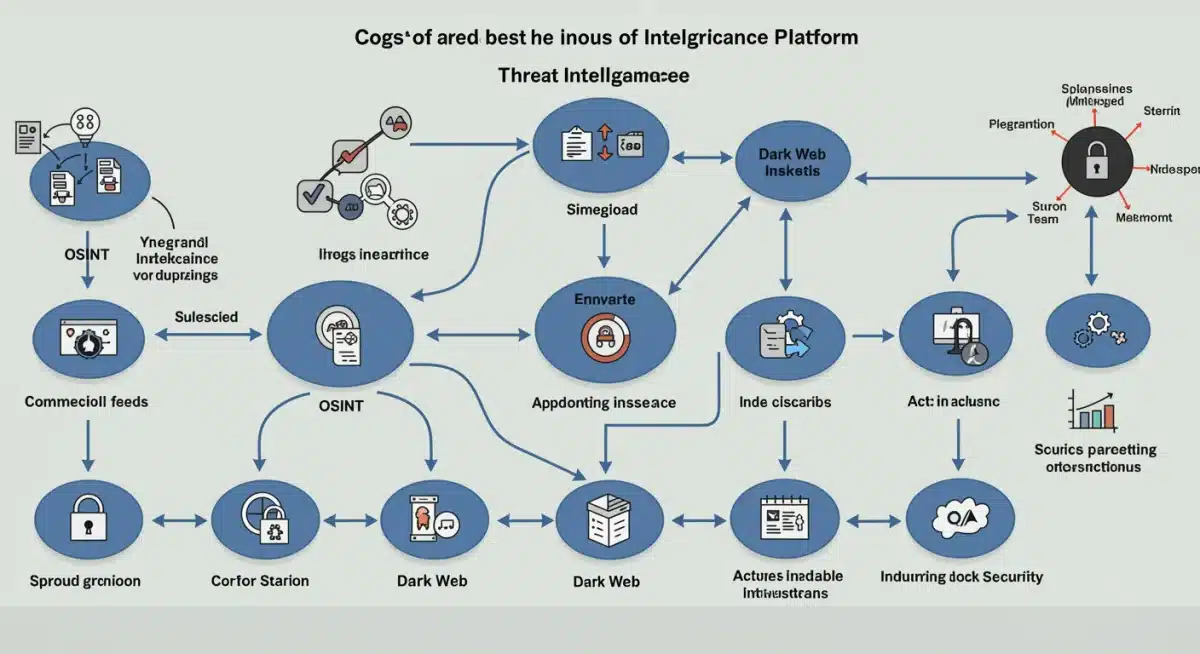
The leading TIPs distinguish themselves through their ability to provide comprehensive threat lifecycle management, from collection and normalisation to analysis, dissemination, and enforcement. This integrated approach ensures that intelligence is not only gathered efficiently but also acted upon effectively across the entire security stack.
Data Ingestion and Normalisation
A fundamental capability of any effective TIP is its ability to ingest data from a multitude of sources. This includes open-source intelligence (OSINT), commercial threat feeds, dark web monitoring, industry-specific sharing groups, and even internal telemetry. Once ingested, this raw data must be normalised and de-duplicated to eliminate redundancies and present a unified view.
- Automated Data Collection: APIs and connectors for diverse threat feeds.
- Indicator of Compromise (IoC) Management: Efficient handling of IPs, domains, hashes, and URLs.
- Taxonomy and Tagging: Standardising threat data for consistent categorisation.
- Contextual Enrichment: Adding geopolitical, industry, or attack campaign context to raw data.
Without proper normalisation, the sheer volume of data can overwhelm security teams, leading to alert fatigue and missed threats. Leading platforms employ advanced machine learning algorithms to automate much of this process, ensuring that only high-fidelity, relevant intelligence reaches analysts.

Analysis and Prioritisation
Beyond ingestion, the true value of a TIP lies in its analytical capabilities. Platforms must be able to correlate disparate pieces of information, identify patterns, and prioritise threats based on their potential impact and relevance to the organisation. This often involves leveraging AI and machine learning to sift through noise and highlight critical intelligence.
Effective prioritisation ensures that security teams focus their efforts on the most significant threats, preventing resources from being wasted on low-impact alerts. The ability to generate customisable dashboards and reports also allows organisations to tailor their intelligence consumption to specific roles and needs within the security team.
In summary, the key capabilities of leading TIPs in 2025 revolve around comprehensive data management, advanced analytical tools, and seamless integration. These features collectively empower US organisations to not only detect threats more effectively but also to understand and proactively mitigate them before they can inflict harm.
Top Threat Intelligence Platforms for US Organisations in 2025
Choosing the right threat intelligence platform is a critical decision for any US organisation. The market offers a variety of robust solutions, each with its strengths. For 2025, several platforms consistently stand out for their comprehensive capabilities, integration options, and relevance to the US threat landscape.
When evaluating these platforms, organisations must consider factors such as the breadth of threat data sources, the sophistication of analytical tools, ease of integration with existing security infrastructure, and compliance with US regulatory requirements. The best platform is one that aligns perfectly with an organisation’s specific threat model and operational needs.
Palo Alto Networks Cortex XSOAR
Cortex XSOAR is more than just a TIP; it’s a security orchestration, automation, and response (SOAR) platform with integrated threat intelligence. Its strengths lie in its ability to automate intelligence ingestion, enrichment, and response actions. For US organisations, its extensive integration ecosystem and incident response playbooks are highly valuable.
- Integrated SOAR Capabilities: Automates many aspects of threat intelligence workflows.
- Extensive App Ecosystem: Connects with hundreds of security tools and threat feeds.
- MITRE ATT&CK Framework Mapping: Helps contextualise threats within known adversary tactics.
- US Government Focus: Strong compliance and features for government and critical infrastructure.
Its ability to centralise threat intelligence and automate responses can significantly reduce mean time to detect (MTTD) and mean time to respond (MTTR), making it a powerful tool for large enterprises and government agencies.
Mandiant Advantage
Mandiant Advantage (formerly FireEye Threat Intelligence) leverages Mandiant’s unparalleled frontline intelligence from its incident response engagements. This provides US organisations with highly relevant, human-vetted intelligence on active threats and adversary groups targeting the region. Its focus on adversary behaviour and motivations is a key differentiator.
Mandiant Advantage offers deep insights into specific threat actors, their TTPs, and their targets, allowing organisations to anticipate attacks rather than just react to them. This intelligence is particularly valuable for sectors frequently targeted by state-sponsored or highly sophisticated cyber criminals.
In conclusion, platforms like Cortex XSOAR and Mandiant Advantage represent the pinnacle of threat intelligence capabilities for US organisations in 2025. Their unique strengths cater to different operational needs, but both provide foundational elements for robust threat detection and response.
Integration and Interoperability with Existing Security Stacks
A threat intelligence platform, no matter how powerful, is only as effective as its ability to integrate with an organisation’s broader security ecosystem. In 2025, seamless interoperability is a non-negotiable requirement for US organisations looking to maximise their threat detection capabilities. Without it, intelligence remains siloed, hindering proactive defence and efficient response.
Integration involves connecting the TIP with various security tools such as Security Information and Event Management (SIEM) systems, Endpoint Detection and Response (EDR) solutions, firewalls, intrusion prevention systems (IPS), and Security Orchestration, Automation, and Response (SOAR) platforms. This creates a unified and automated security posture where intelligence flows freely and drives action.
Importance of API-First Design
Modern TIPs are built with an API-first approach, recognising that flexibility and extensibility are crucial for integration. Robust APIs allow organisations to programmatically pull and push intelligence, automate workflows, and create custom integrations tailored to their unique environments.
- Automated Indicator Feeds: Pushing IoCs directly to firewalls and EDRs.
- Contextual Enrichment: Pulling internal telemetry into the TIP for correlation.
- Custom Workflow Automation: Triggering actions in other security tools based on intelligence.
- Data Synchronisation: Ensuring consistent threat data across all security components.
This level of programmatic access ensures that security teams can operationalise threat intelligence without manual effort, significantly speeding up detection and response times.
SIEM and SOAR Integration
The synergy between TIPs, SIEMs, and SOAR platforms is particularly important. SIEMs collect and analyse log data from across the organisation, while TIPs provide the external context needed to make sense of this data. When integrated, IoCs from the TIP can be used to enrich SIEM alerts, providing analysts with immediate context about potential threats.
SOAR platforms then take this a step further by automating the response actions. For example, if a TIP identifies a malicious IP address, a SOAR platform can automatically block that IP on firewalls, initiate a scan on endpoints, and create an incident ticket in the SIEM, all without human intervention. This level of automation is vital for handling the scale and speed of modern cyber attacks.
Therefore, when selecting a TIP, US organisations must thoroughly evaluate its integration capabilities, ensuring it can seamlessly connect with their existing security infrastructure to create a truly intelligent and adaptive defence system. The future of threat detection lies in this interconnectedness.
Measuring the Effectiveness of Threat Intelligence for Detection
Investing in a threat intelligence platform is a significant commitment, and US organisations need to understand how to measure its efficacy, particularly concerning its impact on detection capabilities. Effective measurement goes beyond simply counting the number of alerts; it delves into the quality, relevance, and actionability of the intelligence provided.
Measuring effectiveness requires a clear understanding of an organisation’s security objectives and how threat intelligence contributes to achieving them. It involves defining key performance indicators (KPIs) that directly reflect improvements in detection, response, and overall security posture.
Key Performance Indicators (KPIs) for TIPs
Several metrics can help evaluate the impact of a TIP on detection capabilities. These KPIs provide tangible evidence of the platform’s value and help justify ongoing investment.
- Mean Time to Detect (MTTD): How quickly threats are identified. A lower MTTD indicates better detection.
- Mean Time to Respond (MTTR): How quickly threats are contained and remediated.
- Reduction in False Positives: High-quality intelligence should reduce irrelevant alerts.
- Increased Threat Coverage: The ability to detect a broader range of threats.
- Contextualisation of Alerts: The percentage of alerts enriched with relevant threat intelligence.
By tracking these metrics over time, organisations can identify trends, assess the ROI of their TIP, and make informed decisions about optimising their threat intelligence strategy. Continuous monitoring and adjustment are essential to ensure the platform remains aligned with evolving threats.
Operationalising Intelligence and Feedback Loops
The true measure of a TIP’s effectiveness is its ability to be operationalised. This means that the intelligence it provides is not just consumed but actively used to make security decisions and drive automated actions. Establishing strong feedback loops is also crucial, where insights from incident response are fed back into the TIP to refine future intelligence gathering and analysis.
Furthermore, regular tabletop exercises and simulations can help test the effectiveness of the threat intelligence in a controlled environment. These exercises can reveal gaps in detection capabilities or areas where intelligence could be more effectively integrated into workflows. Continuous improvement is a hallmark of a mature threat intelligence program.
In conclusion, measuring the effectiveness of threat intelligence is a continuous process that involves defining clear KPIs, operationalising intelligence, and establishing feedback loops. For US organisations, this rigorous evaluation ensures that their TIP investment translates into tangible improvements in their ability to detect and neutralise cyber threats.
Challenges and Future Trends in Threat Intelligence for US Organisations
While threat intelligence platforms offer significant advantages, US organisations still face challenges in fully leveraging their potential. Moreover, the landscape of cyber threats and defence mechanisms is constantly evolving, necessitating a keen eye on future trends to stay ahead of adversaries.
One of the primary challenges is the sheer volume of data. While TIPs are designed to manage this, the quality and relevance of intelligence can vary. Organisations must invest in the expertise to curate and validate intelligence, ensuring that it is actionable and not just noise. Another hurdle is the integration complexity with legacy systems, which can be a significant barrier for some.
Addressing Data Overload and Alert Fatigue
The abundance of threat data can lead to information overload and alert fatigue among security analysts. This is where advanced analytics, machine learning, and AI within TIPs play a crucial role in filtering out noise and prioritising truly critical intelligence.
- AI-Driven Prioritisation: Automatically ranking threats based on relevance and impact.
- Contextual Filtering: Tailoring intelligence feeds to an organisation’s specific industry and assets.
- Automation of Triage: Using SOAR capabilities to handle low-fidelity alerts automatically.
- Skill Development: Training analysts to effectively interpret and act on intelligence.
Effective management of data overload ensures that security teams can focus their attention on the most significant threats, improving overall detection efficiency and reducing burnout.
Emerging Trends in Threat Intelligence
Looking ahead to 2025 and beyond, several trends are shaping the future of threat intelligence. These advancements promise to further enhance detection capabilities for US organisations.
One significant trend is the increasing emphasis on machine-readable threat intelligence (MRTI) standards, such as STIX/TAXII. These standards facilitate the automated sharing and consumption of intelligence, fostering greater collaboration among organisations and across national borders. Another trend is the rise of explainable AI (XAI) in threat analysis, which aims to provide transparency into how AI models arrive at their conclusions, building trust and enabling better decision-making.
Furthermore, the integration of physical security intelligence with cyber threat intelligence is gaining traction, particularly for critical infrastructure. Understanding the convergence of these two domains provides a more holistic view of potential risks. Finally, the focus on supply chain intelligence will intensify, as adversaries increasingly target weaker links in the supply chain to compromise primary targets.
In conclusion, while challenges persist, the future of threat intelligence is bright with innovations aimed at making detection more precise, proactive, and integrated. US organisations that embrace these trends will be better positioned to defend against the sophisticated cyber threats of tomorrow.
Strategic Considerations for Adopting a TIP in the US Context
For US organisations considering the adoption or upgrade of a threat intelligence platform, several strategic considerations are paramount. These go beyond technical specifications and delve into the broader operational, regulatory, and financial aspects that impact the effective implementation and utilisation of a TIP.
A successful TIP deployment requires not just the right technology but also a clear strategy, skilled personnel, and alignment with organizational goals. Without these elements, even the most advanced platform may fail to deliver its full potential in enhancing detection capabilities.
Compliance and Regulatory Landscape
The US regulatory environment, with its myriad of industry-specific and national security mandates, significantly impacts TIP selection and deployment. Organisations must ensure that their chosen platform supports compliance requirements, whether it’s NIST, CMMC, HIPAA, or financial regulations.
- Data Residency: Ensuring threat data processing and storage comply with US laws.
- Information Sharing: Adhering to legal frameworks for sharing intelligence with government agencies or industry peers.
- Audit Trails: Platforms must provide comprehensive logging for compliance audits.
- Supply Chain Risk Management: Assessing the security posture of TIP vendors themselves.
Compliance is not merely a checkbox; it’s a foundational element that ensures legal and ethical operation, critical for maintaining trust and avoiding penalties.
Building an Intelligence-Driven Security Culture
Technology alone cannot solve all security challenges. US organisations must foster a culture where threat intelligence is valued, understood, and actively used by all relevant stakeholders. This involves training, communication, and leadership buy-in.
Security teams need to be trained not just on how to use the TIP, but also on how to interpret intelligence, make informed decisions, and contribute to the intelligence cycle. This includes understanding adversary TTPs, geopolitical contexts, and the specific threat landscape relevant to their industry. Integrating intelligence into daily operations, from security operations centers (SOCs) to risk management teams, ensures that it becomes an integral part of the decision-making process.
Ultimately, the strategic adoption of a TIP in the US context involves a holistic approach that considers technology, people, processes, and compliance. By meticulously planning and executing their threat intelligence strategy, US organisations can significantly enhance their detection capabilities and build a resilient defence against the cyber threats of 2025 and beyond.
| Key Aspect | Brief Description |
|---|---|
| Evolving Threats | US organisations face highly sophisticated and dynamic cyber threats, necessitating advanced detection. |
| TIP Capabilities | Leading platforms offer comprehensive data ingestion, normalisation, analysis, and prioritisation. |
| Key Platforms | Palo Alto Networks Cortex XSOAR and Mandiant Advantage are top choices for US organisations. |
| Strategic Adoption | Requires alignment with US compliance, culture, and integration with existing security stacks. |
Frequently Asked Questions about Threat Intelligence Platforms
A Threat Intelligence Platform (TIP) is a software solution that aggregates, normalises, and analyses threat data from various sources. It transforms raw data into actionable intelligence, enabling organisations to proactively detect, prevent, and respond to cyber threats more effectively.
For US organisations, TIPs are crucial due to the escalating volume and sophistication of cyber threats, including state-sponsored attacks. They provide the necessary foresight and context to defend critical infrastructure and sensitive data, ensuring compliance with evolving regulatory landscapes and maintaining national security.
TIPs enhance detection by correlating external threat indicators with internal network activity, identifying patterns of attack, and prioritising threats based on relevance and impact. This proactive approach reduces the mean time to detect (MTTD) and helps security teams focus on high-fidelity alerts, preventing critical breaches.
Key features for a 2025 TIP include robust data ingestion and normalisation, advanced AI/ML-driven analytics for prioritisation, seamless integration with SIEM/SOAR and EDR, and strong support for MITRE ATT&CK framework mapping. Compliance with US regulations and an extensive threat feed ecosystem are also vital.
Main challenges include managing data overload, ensuring intelligence relevance, integrating with complex legacy security stacks, and fostering a security culture that effectively leverages intelligence. Skill shortages in interpreting and operationalising threat data also pose a significant hurdle for many US entities.
Conclusion
The imperative for robust threat detection capabilities in US organisations has never been greater. As we’ve explored, threat intelligence platforms are foundational to achieving this, offering a proactive and intelligent defence against an ever-evolving cyber threat landscape. The 2025 comparison highlights leading solutions that excel in data integration, advanced analytics, and seamless interoperability. By strategically adopting and effectively operationalising TIPs, coupled with continuous measurement and adaptation to emerging trends, US organisations can significantly enhance their security posture, safeguarding critical assets and maintaining resilience in the face of persistent cyber challenges.