Securing IoT Devices in US Smart Infrastructure: 2025 Threats

Securing IoT devices in US smart infrastructure against four key emerging threats in 2025 requires advanced strategies including robust authentication, AI-driven anomaly detection, and comprehensive supply chain integrity measures to ensure operational resilience.
As the United States accelerates its embrace of smart infrastructure, the imperative to bolster cybersecurity for its burgeoning network of Internet of Things (IoT) devices becomes paramount. Securing IoT devices is no longer a peripheral concern but a foundational requirement for the nation’s critical systems, especially as we look towards 2025 and the sophisticated threats that lie ahead.
The Evolving Landscape of IoT Threats in US Infrastructure
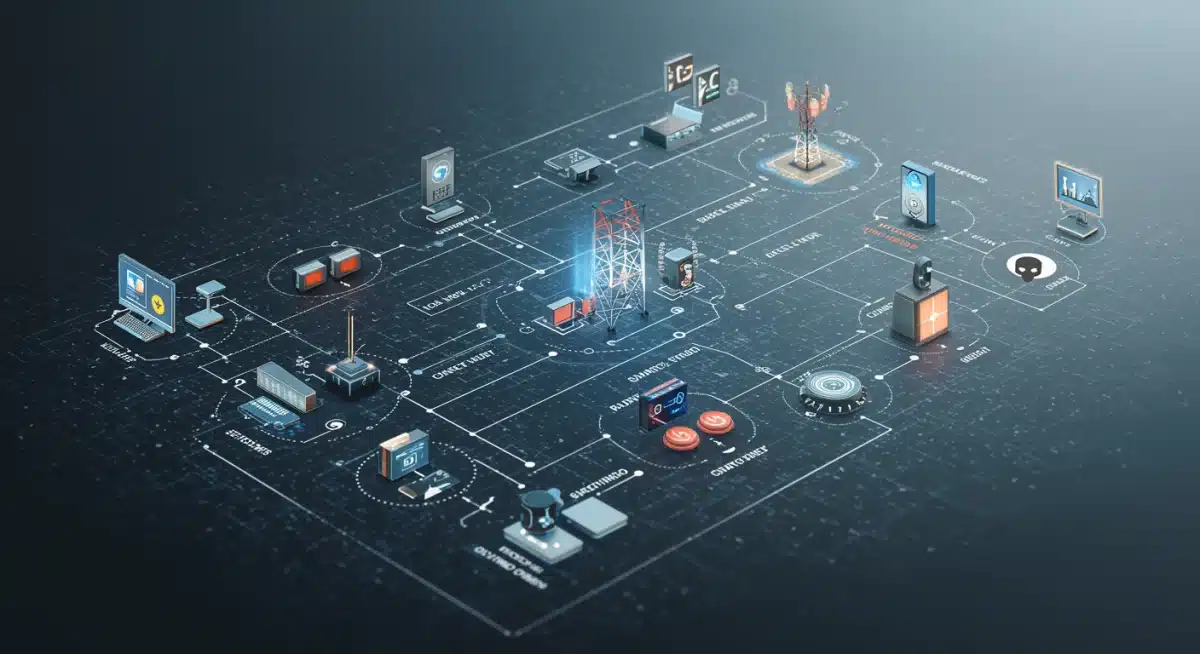
The deployment of IoT devices across US smart infrastructure, from smart grids and transportation systems to intelligent buildings and public safety networks, promises unprecedented efficiency and connectivity. However, this interconnectedness also introduces a vast attack surface, making these systems attractive targets for malicious actors. Understanding the evolving threat landscape is the first step towards effective mitigation.
Cybercriminals, state-sponsored entities, and even hacktivists are continuously refining their tactics, moving beyond simple denial-of-service attacks to more insidious and persistent threats. These can compromise data integrity, disrupt essential services, and even endanger public safety. The sheer volume and diversity of IoT devices make traditional security models inadequate.
The Proliferation of Edge Devices and Data Vulnerabilities
The rapid expansion of edge computing in IoT environments means that more data processing occurs closer to the source, reducing latency but also multiplying potential entry points for attackers. Each edge device, whether a sensor in a smart bridge or a camera in a public space, represents a potential vulnerability if not properly secured.
- Unsecured edge devices can be exploited for initial access to broader networks.
- Local data processing can expose sensitive information if not encrypted end-to-end.
- Lack of standardised security protocols across diverse edge hardware complicates defence.
- Physical tampering with edge devices remains a significant, often overlooked, risk.
The decentralised nature of IoT infrastructure, while offering resilience against single points of failure, simultaneously presents a complex challenge for centralised security management. Organisations must adopt a holistic security posture that accounts for every node in the network, from the cloud to the absolute edge.
In conclusion, the evolving threat landscape for IoT in US infrastructure demands a proactive and adaptive approach. Recognising the unique vulnerabilities introduced by widespread deployment and edge computing is crucial for developing robust and resilient security frameworks that can withstand the sophisticated attacks of the future.
Threat 1: Sophisticated Supply Chain Attacks on IoT Components
One of the most insidious threats emerging for IoT devices in US smart infrastructure by 2025 is the sophisticated supply chain attack. Unlike direct attacks on operational systems, these vulnerabilities are introduced much earlier in the device’s lifecycle, often during manufacturing or distribution, making them incredibly difficult to detect and eradicate.
These attacks can involve embedding malicious hardware components, injecting compromised firmware, or altering software during updates. The goal is often to create backdoors, exfiltrate data, or enable future sabotage. Given the globalised nature of hardware and software development, the supply chain presents a complex and tempting target for adversaries.
Mitigating Supply Chain Risks: A Multi-Layered Approach
Addressing supply chain vulnerabilities requires a comprehensive and multi-layered strategy that spans the entire lifecycle of IoT devices. It’s not enough to secure the end product; every stage, from design to deployment, must be scrutinised and protected. This involves rigorous vetting of suppliers and continuous monitoring of components.
- Implement strict vendor assessment and continuous auditing processes for all suppliers.
- Utilise hardware root of trust mechanisms to verify device authenticity and integrity.
- Employ secure boot processes to ensure only trusted software runs on devices.
- Conduct thorough independent security testing and penetration testing on hardware and firmware.
Furthermore, organisations should consider implementing blockchain-based solutions for supply chain transparency, allowing immutable records of component origins and modifications. This distributed ledger technology can provide an auditable trail, making it harder for malicious alterations to go unnoticed.
In essence, mitigating sophisticated supply chain attacks demands vigilance from procurement to decommissioning. By integrating robust verification processes and leveraging advanced technologies, US smart infrastructure can build a stronger defence against these deeply embedded threats, ensuring the integrity and trustworthiness of its IoT ecosystem.
Threat 2: AI-Powered Evasion and Autonomous Malware
The advent of artificial intelligence (AI) is a double-edged sword in cybersecurity. While AI offers powerful tools for defence, it also empowers attackers to develop highly sophisticated and autonomous malware capable of evading traditional security measures. By 2025, AI-powered evasion techniques and autonomous malware will pose a significant threat to securing IoT devices in US smart infrastructure.
These advanced threats can learn from security systems, adapt their behaviour to bypass detection, and even autonomously propagate across networks without human intervention. This makes them incredibly difficult to identify and contain, leading to prolonged breaches and widespread disruption. The speed at which these threats can operate far exceeds human response capabilities.
Defending Against Intelligent Adversaries with AI-Driven Security
To combat AI-powered evasion and autonomous malware, security systems must also leverage advanced AI and machine learning capabilities. This involves moving beyond signature-based detection to anomaly detection and predictive analytics, allowing systems to identify unusual behaviour patterns that indicate an attack in progress, even if the specific malware signature is unknown.
- Deploy AI-driven intrusion detection and prevention systems that learn and adapt.
- Implement behavioural analytics to identify deviations from normal IoT device operation.
- Utilise federated learning to share threat intelligence across diverse IoT deployments without centralising sensitive data.
- Develop automated incident response playbooks that can activate in real-time to contain threats.
The key to effective defence lies in the ability of security systems to not only detect but also predict and respond to threats with minimal human oversight. This requires continuous training of AI models with diverse threat data and the establishment of robust, automated response mechanisms. Human analysts can then focus on higher-level strategic defence and threat hunting.
Ultimately, countering AI-powered threats demands an equally intelligent defence. By embracing AI and machine learning in security operations, US smart infrastructure can build a proactive and resilient defence posture, capable of identifying and mitigating the sophisticated, autonomous attacks predicted for 2025.
Threat 3: Exploitation of Legacy Systems and Unpatched Vulnerabilities
Despite advancements in IoT security, a persistent and growing threat to US smart infrastructure by 2025 will be the exploitation of legacy systems and unpatched vulnerabilities. Many critical infrastructure components have long operational lifespans, meaning older, less secure devices often remain integrated into modern networks. These older systems frequently lack the security features of newer devices and may no longer receive critical security updates.
Attackers actively scan for these known weaknesses, as they represent low-hanging fruit for gaining unauthorised access. Once a legacy system is compromised, it can serve as a pivot point to move laterally within the network, eventually reaching more critical and sensitive operational technology (OT) systems. The challenge is exacerbated by the difficulty and cost associated with upgrading or replacing foundational infrastructure components.
Strategies for Securing Outdated Infrastructure
Addressing the vulnerabilities in legacy systems requires a pragmatic and strategic approach, focusing on isolation, monitoring, and compensatory controls. While complete replacement might not always be feasible, significant improvements can be made to enhance their security posture within the broader smart infrastructure ecosystem.
- Implement network segmentation to isolate legacy IoT devices from critical operational networks.
- Deploy virtual patching solutions to protect systems against known vulnerabilities without modifying original code.
- Utilise continuous vulnerability scanning and penetration testing specifically targeting older devices.
- Establish robust anomaly detection and behaviour monitoring to identify suspicious activities originating from legacy systems.
Furthermore, organisations should develop a clear roadmap for gradual modernisation, prioritising the replacement of the most vulnerable legacy components. Investing in advanced threat intelligence can also help identify new exploits targeting older systems, allowing for proactive defence measures. It’s a continuous process of risk assessment and mitigation.
In summary, the threat from legacy systems and unpatched vulnerabilities will remain significant. By strategically isolating, monitoring, and gradually modernising these components, US smart infrastructure can effectively reduce its exposure to this pervasive threat, ensuring continued operational integrity and security against known exploits.
Threat 4: Quantum Computing’s Impact on Current Encryption Standards
Looking ahead to 2025 and beyond, the nascent but rapidly advancing field of quantum computing presents a profound, existential threat to current cryptographic standards. While practical, large-scale quantum computers capable of breaking widely used encryption algorithms like RSA and ECC are not yet commonplace, their development trajectory suggests they could pose a significant risk to securing IoT devices in US smart infrastructure in the near future.
The security of much of our digital communication and data storage relies on the computational difficulty of factoring large numbers or solving elliptic curve problems. Quantum algorithms, such as Shor’s algorithm, could render these problems trivial for a sufficiently powerful quantum computer. This would undermine the confidentiality, integrity, and authenticity of data across all smart infrastructure components, from sensor readings to control commands.
Preparing for the Post-Quantum Cryptography Era
The transition to post-quantum cryptography (PQC) is a critical, long-term strategic imperative for US smart infrastructure. Given the long deployment cycles of many IoT devices, it is essential to begin planning and implementing quantum-resistant solutions now, well in advance of the full maturation of quantum computing capabilities. This proactive approach will minimise disruption and ensure future security.
- Monitor the development of post-quantum cryptographic standards from NIST and other leading bodies.
- Begin pilot programmes for integrating PQC algorithms into new IoT device designs and communication protocols.
- Develop crypto-agility strategies that allow for easy swapping of cryptographic algorithms as new standards emerge.
- Invest in research and development for quantum-resistant hardware and software solutions tailored for IoT.
The ‘harvest now, decrypt later’ threat, where encrypted data is stolen today with the intention of decrypting it once quantum computers are available, underscores the urgency. Data with long-term confidentiality requirements must be protected with quantum-resistant methods as soon as possible. This involves a fundamental shift in how encryption is approached and deployed across the entire infrastructure.
In conclusion, while quantum computing’s full impact is still some years away, the threat it poses to current encryption is undeniable. Proactive planning and investment in post-quantum cryptography are essential to future-proof US smart infrastructure, ensuring that the confidential communications and data integrity of IoT devices remain secure against this emerging technological challenge.
Integrated Security Frameworks for IoT Resilience
Addressing the multifaceted threats to securing IoT devices in US smart infrastructure requires more than isolated solutions; it demands the adoption of integrated security frameworks. These frameworks provide a holistic and systematic approach to cybersecurity, ensuring that all layers of the infrastructure, from individual sensors to cloud platforms, are protected in a coordinated manner. A fragmented security approach leaves critical gaps that adversaries can exploit.
An integrated framework should encompass policy, technology, and human elements, fostering a culture of security awareness alongside robust technical controls. It must be adaptable, capable of evolving with new threats and technological advancements, rather than being a static set of rules. This allows for resilience in the face of an ever-changing threat landscape.
Components of a Robust Integrated Security Framework
Building a truly resilient IoT security framework involves several key components working in concert. These elements ensure comprehensive coverage and allow for a dynamic response to emerging threats. Each component plays a vital role in strengthening the overall security posture and reducing the attack surface for adversaries.
- Implement Zero Trust architectures, verifying every user and device before granting access, regardless of their location.
- Establish comprehensive identity and access management (IAM) for all IoT devices and their users.
- Utilise Security Information and Event Management (SIEM) systems for centralised logging, monitoring, and analysis of security events.
- Develop strong incident response plans and conduct regular drills to ensure preparedness for cyberattacks.
Furthermore, continuous threat intelligence integration is crucial. By subscribing to and actively utilising up-to-date threat feeds, organisations can gain insights into emerging attack vectors and vulnerabilities, allowing them to proactively adjust their defences. This intelligence-driven approach moves security from reactive to predictive, significantly enhancing resilience.
Ultimately, an integrated security framework serves as the backbone for protecting US smart infrastructure. By combining advanced technologies, robust policies, and a skilled workforce, these frameworks enable organisations to build a defence that is not only strong but also agile enough to counter the sophisticated and diverse threats targeting IoT devices in 2025 and beyond.
The Role of Regulatory Compliance and International Collaboration
Beyond technological solutions, the effective securing of IoT devices in US smart infrastructure is heavily reliant on robust regulatory compliance and proactive international collaboration. As cyber threats transcend national borders, a unified approach to standards and information sharing becomes indispensable. Without clear guidelines and cooperative efforts, individual security measures risk being undermined by broader systemic weaknesses.
Regulatory bodies, both governmental and industry-specific, play a crucial role in establishing baseline security requirements, fostering best practices, and ensuring accountability. This creates a level playing field for manufacturers and operators, elevating the overall security posture of the entire ecosystem. International collaboration, on the other hand, allows for shared intelligence and coordinated responses to global cyber threats.
Key Aspects of Policy and Partnership for IoT Security
Strengthening the policy and partnership dimensions of IoT security involves several critical actions. These initiatives are designed to create an environment where security is prioritised from the outset and where collective defence mechanisms can be effectively deployed against sophisticated adversaries. It moves beyond individual responsibility to a more systemic, cooperative model.
- Develop and enforce national IoT security standards and certifications for devices deployed in critical infrastructure.
- Promote information sharing and threat intelligence exchange between government agencies, private industry, and international partners.
- Invest in public-private partnerships to foster innovation in IoT security research and development.
- Establish clear legal and ethical guidelines for data collection, usage, and security in smart infrastructure.
The harmonisation of international security standards is particularly vital, especially given the global supply chains of IoT components. By aligning on common security benchmarks, the risk of vulnerabilities being introduced at the manufacturing stage can be significantly reduced. This also facilitates more seamless and secure cross-border operation of smart infrastructure elements.
In conclusion, regulatory compliance and international collaboration are not merely supplementary but fundamental pillars for securing IoT devices in US smart infrastructure. By establishing clear policies, fostering robust partnerships, and engaging in global information sharing, the US can build a more resilient and secure digital environment, protecting its critical assets from an increasingly interconnected world of threats.
| Key Threat | Mitigation Strategy |
|---|---|
| Supply Chain Attacks | Rigorous vendor vetting, hardware root of trust, and continuous auditing. |
| AI-Powered Malware | AI-driven anomaly detection, behavioural analytics, and automated responses. |
| Legacy System Exploits | Network segmentation, virtual patching, and continuous vulnerability scanning. |
| Quantum Computing Threat | Proactive adoption of post-quantum cryptography and crypto-agility strategies. |
Frequently Asked Questions About IoT Security
By 2025, primary threats include sophisticated supply chain attacks, AI-powered evasion and autonomous malware, exploitation of legacy systems, and the potential impact of quantum computing on current encryption standards. These threats demand advanced, proactive cybersecurity measures to protect critical national assets.
Effective mitigation involves rigorous vendor assessment, continuous auditing of suppliers, implementing hardware root of trust mechanisms, and employing secure boot processes. Blockchain for supply chain transparency can also help track components and prevent malicious alterations from going unnoticed.
AI is crucial for defence against intelligent threats. AI-driven intrusion detection, behavioural analytics, and federated learning enable anomaly detection and predictive analysis, allowing systems to identify and respond to sophisticated, autonomous malware in real-time, exceeding human response capabilities.
Legacy systems often lack modern security features and may no longer receive critical updates, making them easy targets for exploitation. Compromised legacy devices can act as entry points for attackers to move laterally within the network, ultimately threatening more critical operational technology systems.
Quantum computers could break current encryption algorithms like RSA and ECC, undermining data confidentiality and integrity. The solution is proactive adoption of post-quantum cryptography (PQC) standards and developing crypto-agility strategies to ensure future-proof security for IoT devices.
Conclusion
The journey to effectively securing IoT devices within US smart infrastructure by 2025 is complex, yet unequivocally vital. The emerging threats—from sophisticated supply chain attacks and AI-powered malware to legacy system vulnerabilities and the looming quantum computing challenge—demand an integrated, proactive, and adaptive cybersecurity posture. By investing in robust technical solutions, fostering strong regulatory frameworks, and promoting international collaboration, the United States can build a resilient digital foundation for its critical infrastructure. This continuous effort will not only safeguard national assets but also ensure the uninterrupted delivery of essential services, fostering trust and stability in an increasingly interconnected world.