Digital Footprint 2025: Reduce Online Data Exposure by 20%

Your Digital Footprint in 2025: A Step-by-Step Guide to Reducing Your Online Data Exposure by 20% (PRACTICAL SOLUTIONS, FINANCIAL IMPACT) is essential for safeguarding personal information and mitigating financial risks in an increasingly interconnected world.
In an era where our lives are inextricably linked to the digital realm, understanding and managing your digital footprint 2025 is no longer optional; it is imperative. Every click, every search, every online interaction leaves a trace, contributing to a vast personal data profile that can be exploited. This guide offers practical, step-by-step solutions to help you reduce your online data exposure by a significant 20% by 2025, highlighting the tangible financial and privacy benefits of such proactive measures.
Understanding Your Digital Footprint and Its Risks
Your digital footprint encompasses all the unique, identifiable data you leave behind as you use the internet. This includes everything from your social media posts to your online purchases, search history, and even your location data. In 2025, the sheer volume and granularity of this data present unprecedented risks, making it crucial to comprehend its scope and potential dangers.
The risks associated with an expansive digital footprint are multifaceted. Identity theft, targeted advertising, and privacy breaches are just the tip of the iceberg. Malicious actors can leverage this data for sophisticated phishing attacks, financial fraud, and even real-world harassment. Furthermore, companies often use this data to influence consumer behaviour, sometimes in ways that are not immediately apparent or beneficial to the individual. Understanding these risks is the first step towards taking control.
The Pervasiveness of Data Collection
Modern digital services are designed to collect as much data as possible, often under the guise of improving user experience. From free email services to social networking platforms, the ‘cost’ of these services is often your data. This pervasive collection means that even seemingly innocuous online activities contribute to your digital profile.
- Social Media Activity: Posts, likes, shares, direct messages, and even time spent on platforms.
- Browsing History: Websites visited, search queries, cookies, and tracking pixels.
- Online Transactions: Purchase history, payment methods, shipping addresses, and product preferences.
- Mobile Device Data: Location data, app usage patterns, contacts, and device identifiers.
Recognising the extent of this data harvesting is paramount. It allows individuals to make informed decisions about which services they use and how they interact with them, thereby laying the groundwork for effective data minimisation strategies. Without this foundational understanding, efforts to reduce one’s digital footprint will likely be less effective.
In summary, a comprehensive understanding of your digital footprint and the inherent risks is fundamental. This knowledge empowers you to identify vulnerable areas and implement targeted strategies to protect your personal information in an increasingly data-driven world.
Assessing Your Current Digital Exposure: A Data Audit
Before you can effectively reduce your online data exposure, you must first understand its current extent. A thorough data audit involves systematically reviewing where your personal information resides online and how it is being used. This process can be eye-opening, revealing data points you may have forgotten about or were unaware were being collected.
Start by making a comprehensive list of all online accounts, services, and applications you use. This includes social media, online shopping sites, email providers, cloud storage, banking apps, and any other platform requiring personal information. For each item on your list, consider what type of data you have shared and how frequently you use the service.
Tools and Techniques for Data Discovery
Several tools and techniques can assist you in uncovering your digital footprint. Utilising these can provide a clearer picture of your online presence and highlight areas requiring immediate attention.
- Privacy Dashboards: Many major tech companies (Google, Facebook, Microsoft) offer privacy dashboards where you can review and manage the data they collect.
- Data Broker Search: Websites like Have I Been Pwned can check if your email address has been compromised in data breaches, indicating where your data might be exposed.
- Browser Extensions: Privacy-focused browser extensions can show you which trackers are active on websites you visit.
Beyond automated tools, manual checks are invaluable. Perform a thorough search of your name, email addresses, and phone numbers on major search engines to see what publicly available information surfaces. This can reveal old profiles, forgotten posts, or data that has been inadvertently made public. The goal is to identify all potential sources of data exposure, no matter how small.
By meticulously auditing your online presence, you gain the necessary insight to formulate a targeted strategy for reduction. This assessment is not a one-time task but an ongoing process that should be revisited periodically to ensure continued privacy and security.
Strategic Data Minimisation: The 20% Reduction Goal
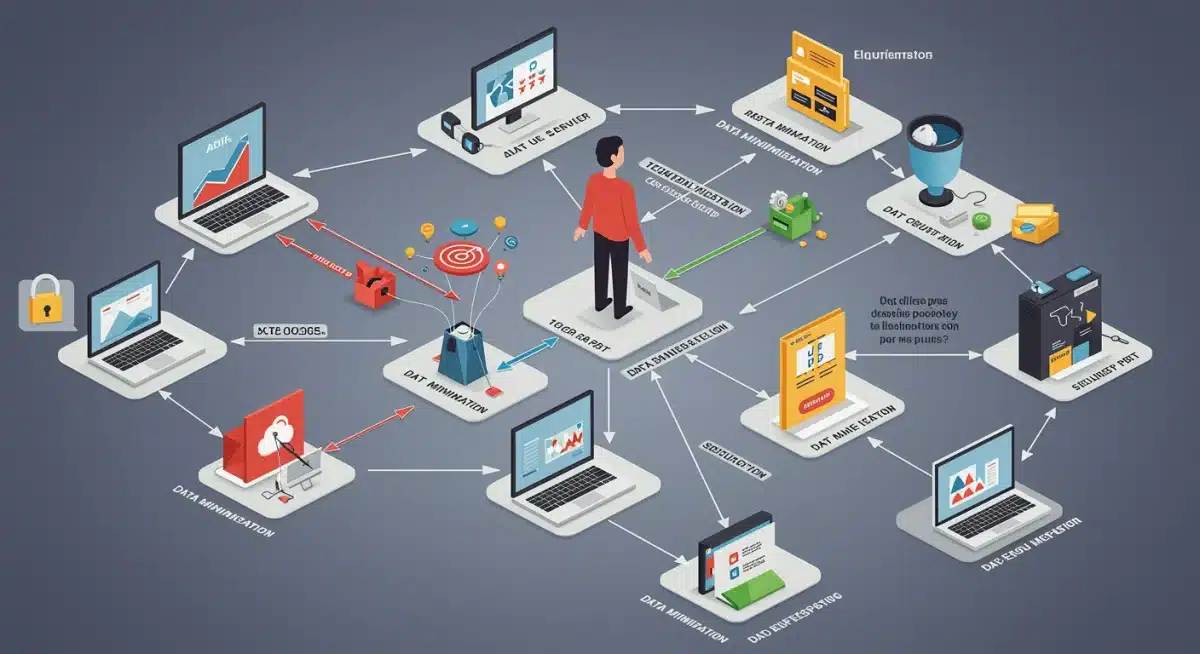
Achieving a 20% reduction in online data exposure by 2025 requires a strategic, multi-pronged approach focused on data minimisation. This principle advocates for collecting and retaining only the data that is genuinely necessary for a specific purpose, and for as short a time as possible. Applying this to your personal digital life involves conscious choices about what you share and how you interact online.
One primary area for reduction is through account deletion. Many individuals maintain accounts on platforms they no longer use, creating unnecessary data repositories. Identifying and deactivating these dormant accounts immediately reduces your overall data surface area. Similarly, reviewing privacy settings on active accounts and opting out of unnecessary data collection is crucial.

Practical Steps for Reducing Data Footprint
Implementing practical steps is key to reaching the 20% reduction target. These actions range from simple adjustments to more comprehensive changes in your digital habits.
- Delete Unused Accounts: Systematically close accounts on social media, shopping sites, and other services you no longer actively use.
- Adjust Privacy Settings: On all active platforms, review and tighten privacy settings to limit data sharing with third parties and restrict public visibility.
- Opt-Out of Data Collection: Where possible, opt out of personalised advertising and data sharing agreements with service providers.
- Use Privacy-Enhancing Browsers and Search Engines: Switch to browsers like Brave or Firefox with enhanced tracking protection, and search engines like DuckDuckGo that do not track your queries.
- Limit App Permissions: Regularly review and revoke unnecessary permissions granted to mobile applications, especially access to location, contacts, and photos.
Another effective strategy involves being more discerning about the information you provide when signing up for new services. Ask yourself if the requested data is truly essential for the service to function. Often, providing minimal information is sufficient, thereby preventing over-sharing from the outset. This mindful approach to data input significantly contributes to reducing your overall exposure.
By consistently applying these data minimisation principles, you can make substantial progress towards your 20% reduction goal. This not only enhances your privacy but also makes you a less attractive target for data breaches and exploitation.
The Financial Impact of Reducing Data Exposure
While the primary motivation for reducing your digital footprint might be privacy, the financial benefits are equally compelling and often underestimated. A smaller, more controlled digital footprint directly translates into reduced financial risk and potential savings. The link between data exposure and financial vulnerability is becoming increasingly clear in 2025.
Think about identity theft: the financial and emotional toll can be immense. Recovering from identity theft can involve legal fees, lost wages, and significant time investment. By reducing the data available to potential thieves, you significantly lower your risk of becoming a victim. This preventative measure is far more cost-effective than dealing with the aftermath of a breach.
Quantifying the Savings and Risk Mitigation
The financial impact can be quantified in several ways, making the case for data reduction even stronger. Proactive steps can lead to direct savings and improved financial security.
- Reduced Fraud Risk: Less personal data available online means fewer opportunities for fraudsters to open accounts in your name or make unauthorised purchases. This can save you from potential financial losses and the hassle of disputing fraudulent charges.
- Lower Insurance Premiums: Some insurance providers are beginning to offer lower premiums for policies related to identity theft or cyber insurance if individuals can demonstrate robust data protection practices.
- Avoidance of Targeted Scams: With less data, you become a less attractive target for highly personalised phishing and scam attempts that often lead to financial losses.
- Improved Credit Score Protection: Preventing identity theft directly protects your credit score from being damaged by fraudulent activities, which can impact loan applications, mortgage rates, and more.
Beyond direct financial savings, there’s the intangible benefit of peace of mind. Knowing that your personal and financial information is better protected allows you to navigate the digital world with greater confidence. This reduced stress and anxiety about potential financial harm is a significant, albeit immeasurable, benefit of a smaller digital footprint. Investing time in data reduction is, in essence, an investment in your financial future and security.
Ultimately, safeguarding your digital footprint in 2025 is a powerful financial decision. It moves you from a reactive stance, dealing with crises, to a proactive one, preventing them, thereby securing your assets and ensuring long-term financial stability.
Implementing Stronger Security Measures
Reducing your digital footprint goes hand-in-hand with implementing robust security measures. Even with meticulous data minimisation, some data exposure is inevitable. Therefore, fortifying the security around your remaining digital assets is critical. By 2025, standard password practices are no longer sufficient; a multi-layered approach is essential.
The foundation of strong security lies in unique, complex passwords for every single online account. Reusing passwords is one of the biggest vulnerabilities, as a breach on one site can compromise all others. Password managers are indispensable tools for generating and securely storing these complex credentials, making strong password hygiene manageable.
Essential Security Protocols for 2025
To truly secure your online presence, integrate these protocols into your daily digital routine. They provide a significant barrier against unauthorised access and data breaches.
- Multi-Factor Authentication (MFA): Enable MFA on all accounts that offer it. This adds an extra layer of security, typically requiring a code from your phone or a physical key, making it exponentially harder for attackers to gain access even if they have your password.
- Regular Software Updates: Keep all operating systems, web browsers, and applications updated. Updates often include critical security patches that protect against newly discovered vulnerabilities.
- Use a Virtual Private Network (VPN): A VPN encrypts your internet connection, especially useful when using public Wi-Fi, preventing eavesdroppers from intercepting your data.
- Antivirus and Anti-Malware Software: Ensure your devices are protected with reputable security software that is regularly updated and scans for threats.
- Secure Email Practices: Be wary of suspicious emails and links. Implement email encryption where sensitive information is exchanged.
Beyond these technical measures, cultivating a mindset of caution and scepticism online is crucial. Phishing attempts are becoming increasingly sophisticated, and social engineering remains a potent threat. Always verify the authenticity of requests for personal information, even if they appear to come from trusted sources. A moment of doubt can prevent a major security incident.
By combining data minimisation with these advanced security measures, you create a formidable defence against the evolving threats of the digital landscape. This dual approach ensures both a smaller attack surface and stronger protection for the data that remains.
Navigating Privacy Regulations and Rights in 2025
In 2025, the landscape of digital privacy regulations continues to evolve, offering individuals more rights and control over their personal data. Understanding these regulations, such as GDPR in Europe and various state-level privacy laws in the US, empowers you to assert your rights and demand greater transparency from companies regarding data collection and usage. This knowledge is a powerful tool in reducing your digital footprint.
While the United States does not have a single overarching federal privacy law akin to GDPR, states like California (CCPA/CPRA), Virginia (VCDPA), and Colorado (CPA) have enacted significant legislation. These laws grant consumers rights such as the right to know what personal information is collected, the right to delete personal information, and the right to opt-out of the sale of personal information. Familiarising yourself with the specific regulations applicable to you is paramount.
Exercising Your Data Rights Effectively
Knowing your rights is only half the battle; actively exercising them is where the real impact lies. Companies are legally obligated to respond to your requests, and ignoring them can lead to significant penalties.
- Right to Access: Request copies of all personal data a company holds about you. This can reveal surprising amounts of information.
- Right to Deletion: Ask companies to delete your personal data. This is particularly useful for old accounts or data you no longer wish to be stored.
- Right to Opt-Out: Instruct companies not to sell or share your personal information with third parties for marketing or other purposes.
- Right to Correction: Request that inaccurate personal data be corrected.
Many companies now provide dedicated portals or contact forms for submitting these requests. Be persistent if your initial requests are not met with a satisfactory response. Documenting your interactions can be helpful in case you need to escalate your concerns to regulatory bodies. This active engagement with privacy regulations not only protects your data but also encourages companies to adopt more transparent and ethical data practices.
By leveraging these privacy regulations, you become an active participant in managing your digital footprint rather than a passive observer. This proactive approach significantly contributes to the goal of reducing your online data exposure by 20% by 2025, reinforcing your control over your digital identity.
Sustaining Your Digital Privacy Efforts Long-Term
Reducing your digital footprint is not a one-time event but an ongoing commitment. The digital landscape is constantly evolving, with new technologies, services, and data collection methods emerging regularly. To maintain a 20% reduction in online data exposure by 2025 and beyond, a sustained effort and adaptive strategy are crucial. This involves regular reviews, continuous learning, and a proactive mindset.
One key aspect of long-term sustainability is establishing a routine for privacy checks. Just as you might review your financial statements monthly, dedicating time to audit your digital presence periodically ensures that new data points aren’t accumulating unnoticed. This could involve quarterly reviews of privacy settings, annual account purges, or simply staying informed about new privacy tools and best practices.
Habits for Ongoing Digital Hygiene
Cultivating specific habits can integrate digital privacy seamlessly into your lifestyle, making it less of a chore and more of a natural part of your online interactions.
- Regular Privacy Audits: Schedule quarterly reviews of your social media privacy settings, app permissions, and Google/Apple privacy dashboards.
- Mindful Sharing: Adopt a ‘think before you post’ mentality. Consider the long-term implications of any information you share online, especially personal details.
- Stay Informed: Keep up-to-date with the latest cybersecurity threats, data breaches, and privacy regulations. Follow reputable sources for digital privacy news.
- Educate Others: Share your knowledge with family and friends. A collective effort towards digital privacy creates a safer online environment for everyone.
- Embrace Privacy-Focused Alternatives: Whenever possible, opt for services and products that prioritise user privacy by design, such as end-to-end encrypted messaging apps or privacy-respecting browsers.
Furthermore, consider the balance between convenience and privacy. While some online services offer immense convenience, they often come at the cost of your data. Making conscious decisions about this trade-off, and opting for more privacy-centric alternatives where possible, is a hallmark of a sustainable privacy strategy. This doesn’t mean abandoning all digital services, but rather choosing them wisely.
By embedding these practices into your digital life, you not only achieve your 20% reduction goal but also build a resilient and enduring framework for protecting your personal information. Sustained effort ensures that your digital footprint remains manageable and secure for years to come.
| Key Action | Brief Description |
|---|---|
| Data Audit | Identify and list all online accounts and data exposure points. |
| Minimisation Strategies | Delete unused accounts, adjust privacy settings, and opt-out of data sharing. |
| Enhanced Security | Implement MFA, unique passwords, and regular software updates. |
| Financial Impact | Reduce fraud risk and protect financial stability through better data hygiene. |
Frequently Asked Questions About Digital Privacy
A digital footprint refers to the unique trail of data you leave online. Managing it in 2025 is crucial because increased data collection by companies and malicious actors poses significant risks like identity theft, financial fraud, and privacy breaches. Proactive management helps mitigate these dangers and protects your personal information.
To reduce your online data exposure, start by auditing all your online accounts. Then, delete unused accounts, adjust privacy settings on active platforms, opt-out of data collection, and use privacy-focused browsers. Consistently applying these data minimisation strategies will help you achieve your 20% reduction goal.
Reducing your digital footprint offers significant financial benefits, primarily by lowering your risk of identity theft and financial fraud. This can prevent direct monetary losses, protect your credit score, potentially reduce insurance premiums, and save you from the time and stress associated with recovering from breaches.
Effective security measures include enabling multi-factor authentication (MFA) on all accounts, using unique and strong passwords managed by a password manager, regularly updating all software, employing a VPN for secure browsing, and maintaining up-to-date antivirus software. These layers of protection are vital in 2025.
Privacy regulations like GDPR and CCPA empower you with rights such as the right to access, delete, and opt-out of the sale of your personal data. By exercising these rights, you can demand transparency from companies, control how your data is handled, and reduce your exposure, holding organisations accountable for their data practices.
Conclusion
Taking control of your digital footprint in 2025 is an essential journey towards greater personal privacy and financial security. By systematically auditing your online presence, implementing strategic data minimisation techniques, and fortifying your digital defences with robust security measures, you can realistically achieve a 20% reduction in online data exposure. This proactive approach not only safeguards your personal information from the increasing threats of identity theft and fraud but also empowers you to navigate the digital world with confidence and peace of mind. The financial and personal benefits of such vigilance are immeasurable, making the effort a worthwhile investment in your future. Embrace these steps to ensure a more private and secure digital life.