Zero-Day Exploits: New Detection Frameworks for US Digital Infrastructure

By 2025, advanced zero-day exploit detection frameworks are becoming essential for proactive protection of US digital infrastructure, leveraging AI, behavioural analysis, and predictive intelligence to counter sophisticated, unknown cyber threats effectively.
In the dynamic landscape of cyber warfare, Zero-Day Exploits: New Detection Frameworks in 2025 for Proactive Protection of US Digital Infrastructure (RECENT UPDATES) are no longer merely a topic of academic discussion but a pressing reality for national security. These elusive threats, unknown to vendors and security professionals alike, represent the pinnacle of cyber risk, demanding innovative and adaptive defences.
Understanding the Zero-Day Threat Landscape in 2025
The digital age has brought unparalleled connectivity and innovation, but with it, a heightened vulnerability to sophisticated cyber-attacks. Zero-day exploits, which leverage unknown software vulnerabilities, pose a particularly insidious threat. In 2025, their prevalence and sophistication have escalated, targeting critical US digital infrastructure with alarming frequency.
These exploits often bypass traditional signature-based detection systems, which rely on known threat patterns. The covert nature of zero-days means that by the time a vulnerability is discovered and patched, significant damage may have already been inflicted. This necessitates a shift from reactive defence mechanisms to proactive, predictive models.
Evolving Attack Vectors
The methods employed by threat actors are continuously evolving, making zero-day detection a moving target. Attackers are increasingly leveraging:
- Supply chain compromises, embedding malicious code deep within trusted software.
- Advanced social engineering, tricking users into executing payloads that exploit unknown flaws.
- AI-driven exploit generation, automating the discovery of vulnerabilities at an unprecedented pace.
The sheer volume and complexity of these attacks underscore the urgency for novel detection frameworks. The US digital infrastructure, encompassing everything from financial systems to energy grids, represents a prime target, making robust defence paramount.
Understanding the current zero-day threat landscape is the foundational step in developing effective countermeasures. It highlights the need for a multi-layered, intelligent approach that can adapt to the rapid evolution of cyber threats.
The Imperative for Proactive Protection of US Digital Infrastructure
Protecting US digital infrastructure from zero-day exploits is not merely a matter of IT security; it is a critical component of national security and economic stability. The interconnected nature of modern systems means that a successful attack on one sector can have cascading effects across the entire nation.
Traditional security models, based on identifying and responding to known threats, are insufficient against zero-days. Proactive protection involves anticipating potential vulnerabilities and detecting anomalous behaviour before an exploit can fully manifest. This paradigm shift is essential for maintaining operational continuity and public trust.
Economic and National Security Stakes
The potential impact of a zero-day attack on critical infrastructure is immense. Consider the following:
- Disruption of essential services, such as power grids or communication networks.
- Theft of sensitive national data, compromising intelligence and defence capabilities.
- Economic destabilisation through attacks on financial markets or industrial control systems.
Beyond the immediate damage, successful zero-day attacks can erode public confidence in digital systems and undermine national resilience. Therefore, investing in advanced detection frameworks is not just an expense but a strategic imperative.
The proactive protection of US digital infrastructure demands continuous vigilance, significant investment in cutting-edge technology, and a collaborative approach involving government, industry, and academia. It’s about building resilience into the very fabric of our digital society.
AI and Machine Learning: Pillars of Next-Gen Detection
Artificial Intelligence (AI) and Machine Learning (ML) are at the forefront of the new generation of zero-day exploit detection frameworks. Their ability to process vast amounts of data, identify subtle anomalies, and learn from evolving threat patterns makes them indispensable tools in the fight against unknown vulnerabilities.
Unlike traditional methods, AI/ML models do not rely on pre-defined signatures. Instead, they establish baselines of normal system behaviour and flag deviations that could indicate an ongoing or impending zero-day attack. This behavioural analysis is crucial for catching threats that have never been seen before.
Advanced Algorithmic Approaches
Several AI/ML techniques are being refined for zero-day detection:
- Anomaly Detection: Utilising unsupervised learning to identify unusual patterns in network traffic, system calls, and user behaviour.
- Predictive Analytics: Employing deep learning models to forecast potential attack vectors based on historical data and emerging threat intelligence.
- Natural Language Processing (NLP): Analysing threat intelligence reports and code repositories to identify linguistic patterns associated with exploit development.
These advanced algorithms enable systems to move beyond simple pattern matching, offering a more nuanced and adaptive defence. The continuous learning capabilities of ML models ensure that detection frameworks can evolve alongside the threats they are designed to counter.
The integration of AI and ML into zero-day detection frameworks represents a significant leap forward, providing the US digital infrastructure with a more intelligent and resilient defence against increasingly sophisticated cyber adversaries.
Behavioural Analysis and Heuristic Models for Early Warning
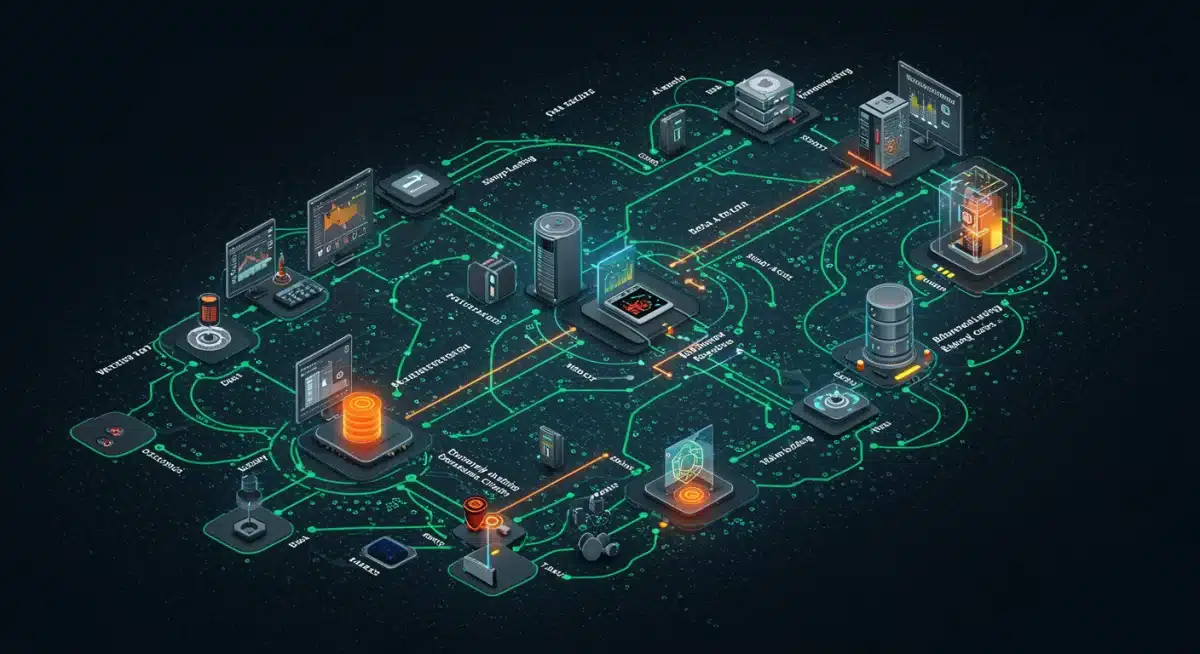
Beyond signature-based methods, behavioural analysis and heuristic models offer a powerful layer of defence against zero-day exploits. These approaches focus on identifying suspicious activities or deviations from established norms, rather than specific malicious code. This allows for the detection of novel threats that would otherwise go unnoticed.
Behavioural analysis involves monitoring system processes, network interactions, and user activities for any unusual patterns. Heuristic models, on the other hand, use a set of rules and algorithms to evaluate the likelihood of an activity being malicious, even if it doesn’t match a known threat signature.
Key Techniques in Action
Effective behavioural and heuristic detection relies on:
- Process Monitoring: Observing how programs interact with the operating system and other applications for unusual calls or resource requests.
- Network Flow Analysis: Detecting abnormal data flows, unusual port usage, or unexpected communication patterns.
- User and Entity Behaviour Analytics (UEBA): Establishing baselines for individual users and entities, then flagging activities that deviate significantly from these norms.
These techniques provide an early warning system, allowing security teams to investigate and mitigate potential threats before they can fully compromise systems. The focus shifts from what is known to be bad, to what simply looks out of place.
The combination of behavioural analysis and heuristic models forms a robust early warning system, significantly enhancing the capability of zero-day detection frameworks to protect critical US digital infrastructure.
Threat Intelligence Sharing and Collaborative Defence Initiatives
In the fight against zero-day exploits, no single entity can stand alone. Threat intelligence sharing and collaborative defence initiatives are becoming increasingly vital components of effective protection strategies. By sharing insights, vulnerabilities, and attack methodologies, organisations can collectively build a more comprehensive and resilient defence.
The US government, alongside private sector partners, is actively promoting platforms and protocols for rapid and secure exchange of threat intelligence. This collaborative ecosystem ensures that emerging threats are identified, analysed, and disseminated quickly, reducing the window of opportunity for attackers.
Key Collaborative Efforts
Several initiatives are gaining traction:
- Information Sharing and Analysis Centres (ISACs): Sector-specific hubs for sharing cybersecurity threats and best practices.
- Government-Industry Partnerships: Formal and informal collaborations between federal agencies and private companies to address critical infrastructure security.
- Open Source Intelligence (OSINT): Leveraging publicly available information to identify potential vulnerabilities and attacker trends.
These collaborative efforts foster a collective defence posture, where the insights gained from one incident can immediately benefit numerous other entities. This network effect is particularly powerful against zero-day exploits, which often target multiple organisations using similar tactics.
Threat intelligence sharing and collaborative defence are indispensable for strengthening the overall security posture of US digital infrastructure, ensuring a more unified and informed response to zero-day threats.
Challenges and Future Outlook for Zero-Day Detection in 2025
Despite significant advancements, the landscape of zero-day exploit detection in 2025 still presents formidable challenges. The arms race between attackers and defenders continues, with each innovation on one side spurring a counter-innovation on the other. Staying ahead requires constant adaptation and foresight.
One primary challenge is the sheer volume of data that needs to be analysed to detect subtle anomalies. This often leads to alert fatigue, where security teams are overwhelmed by false positives, potentially obscuring genuine threats. Another is the increasing sophistication of polymorphic and obfuscated malware, designed specifically to evade detection.
Anticipating Future Trends
Looking ahead, several trends will shape the future of zero-day detection:
- Quantum Computing Threats: The emergence of quantum computing could render current encryption methods obsolete, necessitating entirely new cryptographic and detection paradigms.
- Edge AI for Detection: Deploying AI models closer to the data source (at the edge) for faster, more localised threat identification.
- Automated Remediation: Developing systems that can not only detect but also automatically respond to and mitigate zero-day exploits without human intervention.
These future developments will require significant investment in research and development, as well as a continuous drive for innovation. The goal is to create truly resilient and self-healing digital infrastructures capable of withstanding the most advanced attacks.
The challenges in zero-day detection are substantial, but the ongoing advancements and future outlook suggest a pathway towards more resilient and intelligent defence mechanisms for US digital infrastructure.
Implementing Robust Zero-Day Protection Strategies
Implementing robust zero-day protection strategies requires a multi-faceted approach that integrates technology, policy, and human expertise. It’s not enough to deploy advanced detection tools; these must be supported by a strong security culture and continuous improvement processes. The goal is to create an adaptive defence ecosystem that minimises the attack surface and maximises detection capabilities.
Organisations must move beyond a purely technical focus, embracing a holistic view of cybersecurity that includes regular security audits, employee training, and incident response planning. This ensures that when a zero-day exploit inevitably emerges, the infrastructure is prepared to detect, contain, and recover from it efficiently.
Essential Strategic Components
Key elements of a comprehensive zero-day protection strategy include:
- Continuous Vulnerability Management: Regularly scanning and patching systems, even for known vulnerabilities, reduces the overall attack surface.
- Zero Trust Architecture: Implementing a ‘never trust, always verify’ model, where every user and device must be authenticated and authorised regardless of their location.
- Security Awareness Training: Educating employees about social engineering tactics and safe computing practices, as humans often represent the weakest link.
Furthermore, incident response plans must be regularly tested and refined. A well-rehearsed plan can significantly reduce the impact of a zero-day attack, ensuring a swift and effective recovery. This proactive stance is critical for safeguarding national assets.
By integrating these strategic components, US digital infrastructure can build a formidable defence against zero-day exploits, transforming from a reactive posture to one of proactive resilience and continuous protection.
| Key Aspect | Brief Description |
|---|---|
| AI/ML Detection | Leveraging artificial intelligence and machine learning for anomaly detection and predictive analytics against unknown threats. |
| Behavioural Analysis | Monitoring system and network activities for deviations from normal patterns to identify suspicious behaviour. |
| Threat Intelligence Sharing | Collaborative efforts among organisations and government to share threat data and enhance collective defence. |
| Proactive Strategies | Emphasising continuous vulnerability management, Zero Trust models, and incident response planning. |
Frequently Asked Questions About Zero-Day Detection
A zero-day exploit refers to a cyber-attack that leverages a software vulnerability unknown to the vendor or the public. It’s called ‘zero-day’ because the developers have zero days to fix it before it’s exploited in the wild, making it particularly dangerous and hard to detect.
Zero-day exploits are difficult to detect because they exploit unknown vulnerabilities. Traditional security systems rely on signatures of known threats. Without a pre-existing signature, these attacks can bypass conventional defences, requiring more advanced, behavioural, or AI-driven detection methods.
AI and Machine Learning help by analysing vast datasets to identify anomalous patterns in system behaviour, network traffic, and code execution. They can establish baselines of normal activity and flag deviations that might indicate a zero-day attack, even without a specific signature.
Threat intelligence sharing is crucial as it allows organisations to pool information about emerging threats, vulnerabilities, and attack methodologies. This collaborative approach enables faster identification and dissemination of protective measures, reducing the overall exposure to zero-day risks across various sectors.
The ‘Zero Trust’ model operates on the principle of ‘never trust, always verify’. It assumes that threats can originate from inside or outside the network. It requires strict identity verification for every user and device attempting to access resources, significantly limiting the impact of a zero-day exploit if an attacker gains initial access.
Conclusion
The landscape of cybersecurity in 2025 is unequivocally defined by the persistent and evolving threat of zero-day exploits. For the proactive protection of US digital infrastructure, the shift towards advanced detection frameworks is not merely an option but a critical necessity. By embracing artificial intelligence, machine learning, and sophisticated behavioural analysis, coupled with robust threat intelligence sharing and a commitment to Zero Trust principles, the nation can build a more resilient and impenetrable digital defence. The journey is continuous, demanding constant innovation and collaboration, but the imperative to safeguard vital infrastructure against unseen threats remains paramount for national security and economic stability.